At least five Wisconsin institutions issued lead-pipe replacement solicitations in the last 30 days, the highest monthly rate since mid-2025, and two of them, Oshkosh and Racine, had no prior lead-pipe procurement history in the database. The acceleration is not a coincidence. The Bipartisan Infrastructure Law's lead-service-line capitalization grants expire after federal fiscal year 2026, on September 30, 2026. The Trump administration's proposed FY2027 budget would cut EPA state revolving loan funds by 90%. Cities that have spent years securing state funding approval are now racing to turn paper commitments into actual construction contracts before both deadlines land at once.
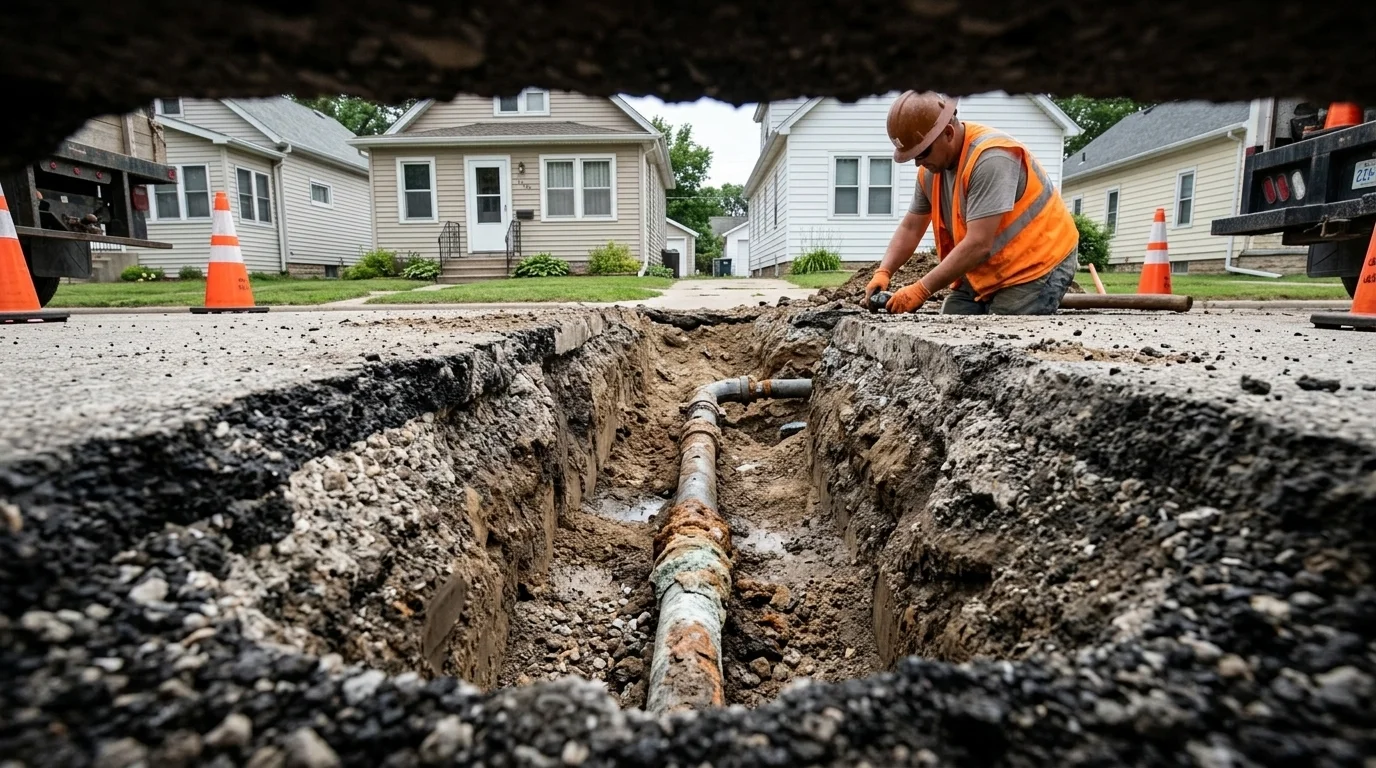
Oshkosh is the sharpest illustration of how that pressure translates into action. Contract 26-26, issued in the last month, solicits bids to replace up to 220 private-side lead water service lines across Census Tracts 4, 7, and 12 in a city of 66,000 people. It is the city's first lead-pipe RFP in over a year. Racine, a Lake Michigan industrial city of 76,000, followed with a lead-related infrastructure inspection RFP on August 12, 2026, also its first procurement move in more than twelve months. Neither city is new to the problem. Both are in the category of older Wisconsin municipalities that built dense water infrastructure before the 1986 federal ban on lead pipes. What is new is the paperwork clearing.
The administrative rhythm explains the timing. Wisconsin's DNR-administered Safe Drinking Water Loan Program acts as a funding intermediary: federal BIL dollars arrive in Madison, then flow to municipalities through a formal loan and principal-forgiveness pipeline. Cities that made the DNR's SFY 2026 Lead Service Line Replacement Program Funding List, published December 10, 2025, received their green light only then. Six to eight months of design work, engineering review, and bid document preparation put first RFPs at mid-2026 almost mechanically. The current uptick in solicitations is the procurement phase of a funding cycle that began in late 2025, not a sudden awakening.
Source: NationGraph.
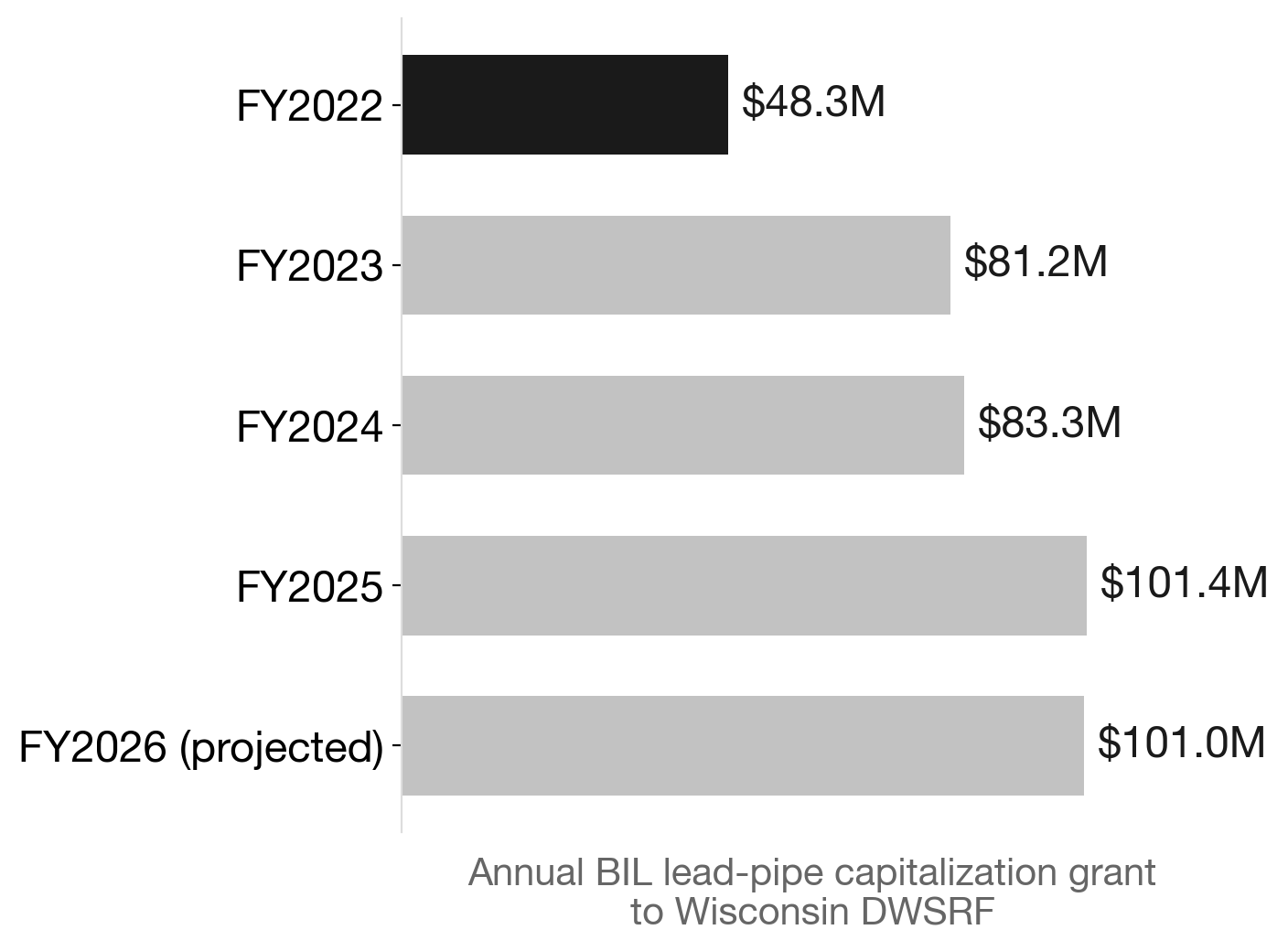
What makes this moment urgent is the gap between money appropriated and money actually flowing through pipes and pavement. Wisconsin holds more than $364 million in active DWSRF grant commitments across four BIL tranches from fiscal years 2022 through 2025. The FY2025 tranche alone totals $148 million, and has disbursed only $510,000 so far. Construction draw-downs, not grant awards, move that number. Every RFP issued now is a mechanism for pulling that unspent balance into the real economy before the authorization window closes.
The EPA added urgency from the other direction. On May 20, 2026, the agency announced $94.3 million in fresh DWSRF funds for Wisconsin, part of a $2.9 billion national distribution. Wisconsin has received cumulative BIL lead-pipe funds of roughly $408 million since 2022. But as Wisconsin Public Radio reported on May 21, the Trump FY2027 budget proposes a 90% cut to the EPA state revolving loan funds that would normally replenish the state's capacity after BIL expires. That proposal, if it holds through congressional appropriations, would not eliminate existing commitments, money already awarded to Wisconsin stays awarded, but it would sharply curtail what comes next for the roughly 132,000 known public-side lead service lines, 128,000 known private-side lines, and more than 208,000 lines of unknown material that Wisconsin's DNR still has on its books.
The DNR's own SFY 2026 guidance included a quiet signal of strain: "due to continued high demand for financial assistance, funding capacity limitations may impact" the current cycle. Even this last tranche may be oversubscribed, meaning cities that delay procurement risk losing their place.
For residents in Oshkosh's Census Tracts 4, 7, and 12, the immediate consequence of Contract 26-26 is a construction crew showing up to replace the connection between the city main and their home, at no direct cost to the household. Private-side replacement has historically been the harder half of the problem: homeowners own the line from the curb to their tap, and coordinating simultaneous public- and private-side work requires both municipal contracts and resident cooperation. Oshkosh's contract targets that harder half directly.
The next signal to watch is bid award timing. RFPs issued in August typically close in 30 to 45 days. If Oshkosh and Racine award construction contracts before late September, they clear the BIL deadline with room to begin work. If procurement stalls, the question becomes whether DNR can carry commitments into FY2027 under existing grant authority while Congress decides what, if anything, replaces the revolving fund.