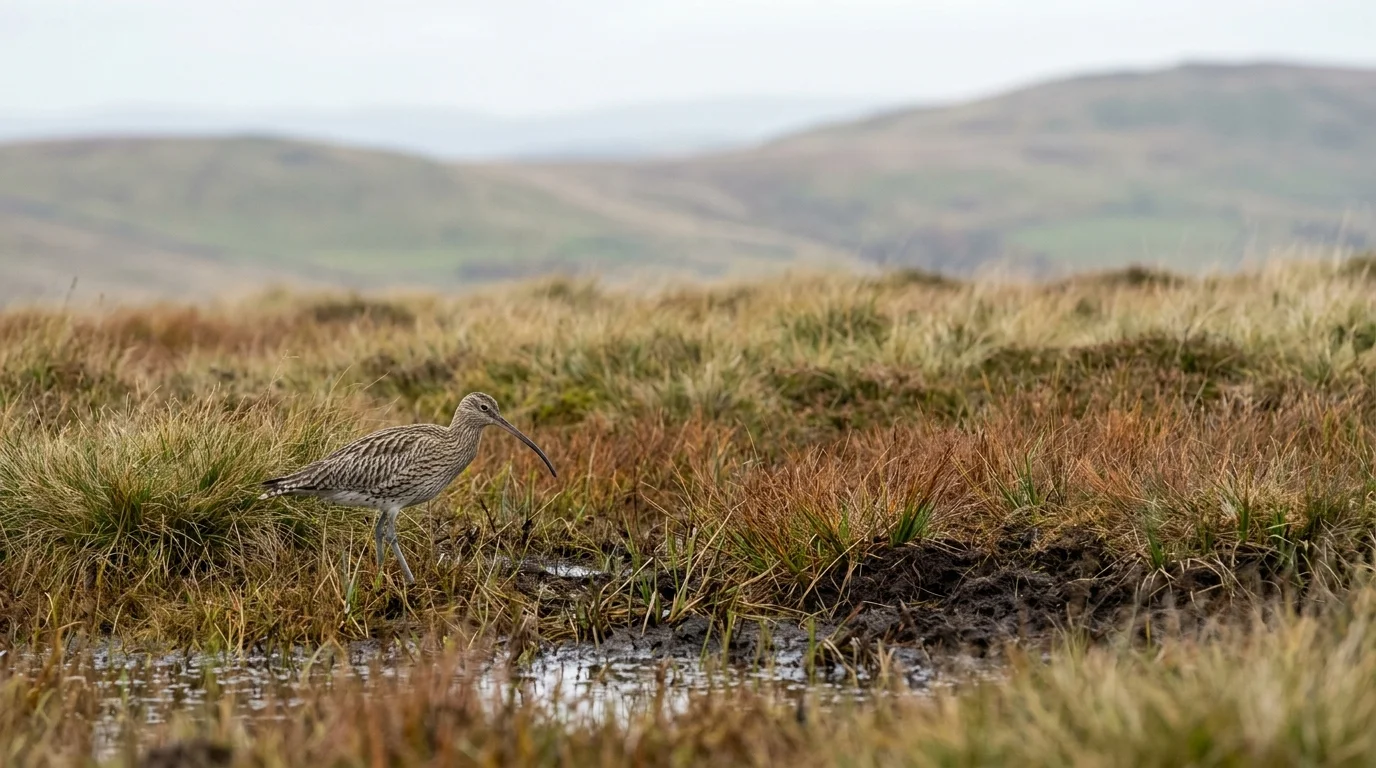
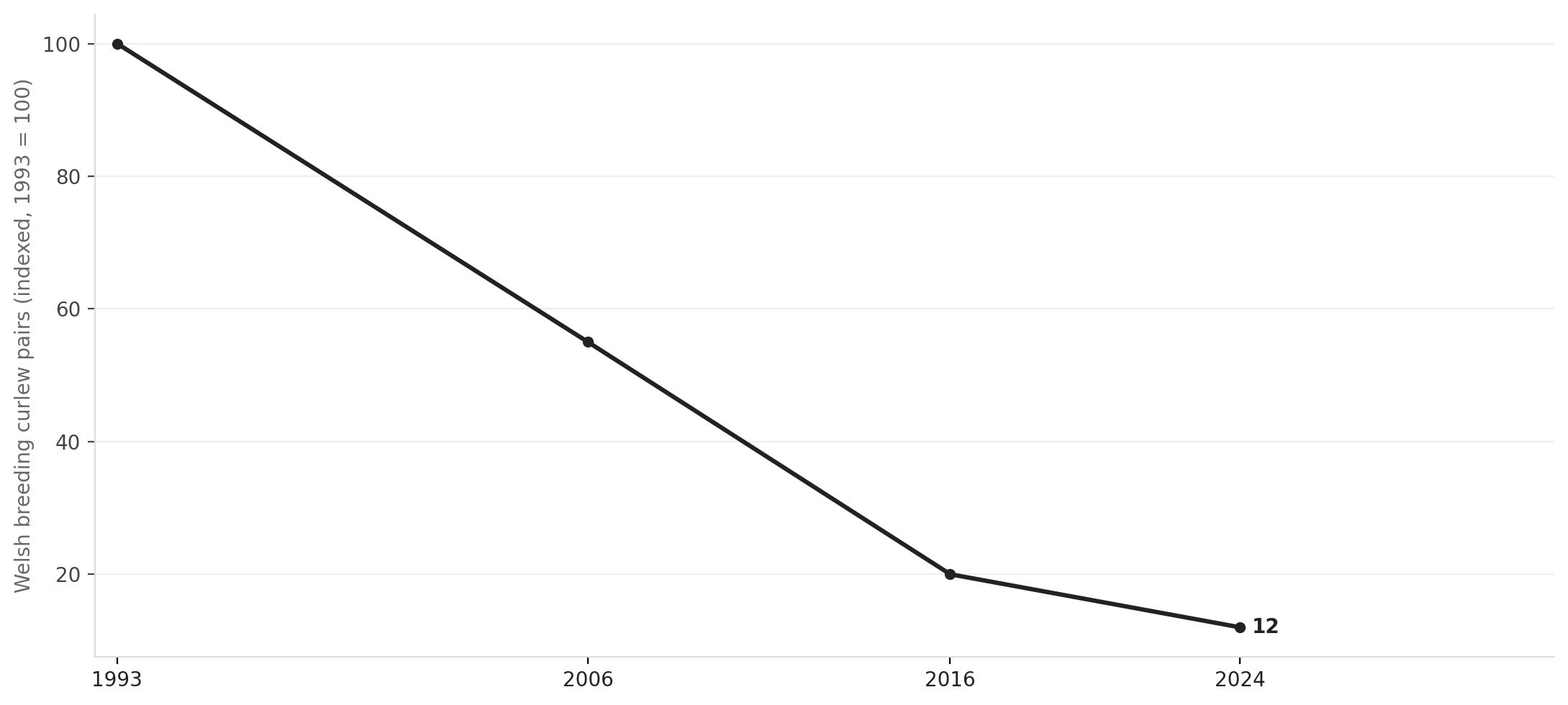
Wales is running out of time to save its curlews. Fewer than 400 breeding pairs remain in the country, down roughly 80% since 1993, and conservationists have warned the bird could be functionally extinct as a Welsh breeder by 2033. Now RSPB Cymru is trying something unusual: hiring a vet to help upland farmers change how they raise cattle in ways that might bring the curlew back.
The project, known as INRS, is working with eight farm businesses across curlew country in Wales. The core idea is that carefully managed cattle grazing, rather than the intensive sheep farming that has shaped these uplands for generations, creates the tussocky, insect-rich moorland that curlew need to breed and feed. Adult curlews eat soil invertebrates; their chicks forage on aquatic invertebrates and pollinators. A landscape that can support both depends heavily on what happens below ground.
That is where the veterinary work becomes critical. Standard livestock farming relies heavily on anthelmintics, the wormers given routinely to cattle and sheep, but these drugs are documented to devastate dung beetle populations and the soil invertebrate communities that curlews depend on. Each of the eight farms in the project will be tested for anthelmintic resistance across different drug groups, with the goal of finding ways to reduce chemical use without compromising animal welfare. The project will also cover antibiotic stewardship and biosecurity, both of which carry implications for wildlife as well as livestock health.
Source: NationGraph.
For farmers moving cattle onto upland moorland and bog for the first time, the welfare challenges are real. Mob grazing, a regenerative practice several of the participating farmers want to try, concentrates animals intensively before rotating them, requiring careful management of water, fencing and animal condition. The project is funding virtual fencing collars, GPS-based technology now being trialled on conservation sites across Britain, to guide cattle movements across sensitive habitat without the need for physical fences on protected moorland.
The timing connects directly to Wales's new Sustainable Farming Scheme, which launched in 2026 after years of political turbulence, including large farmer protests in Cardiff in 2024. One of its core requirements, Universal Action 12, asks all livestock farmers to work with a vet on an animal health improvement plan. This project is explicitly designed to help participating farmers meet that requirement while simultaneously delivering biodiversity outcomes, making it an early real-world test of whether the scheme's conservation ambitions and farming realities can coexist.
RSPB Cymru has posted the tender on Sell2Wales, the Welsh Government's procurement portal. The successful applicant must hold an RCVS-approved veterinary degree and be registered as MRCVS. Work will run for two and a half years, with a group session at the end opening lessons learned to neighbouring farms beyond the original eight. Whether the curlew responds in time is the question that won't be answered for years.