The North Carolina Department of Adult Correction issued three transitional housing RFPs in August 2026, covering Forsyth, Guilford, and Mecklenburg Counties. That is not a sentence that would have made sense twelve months ago. Corrections agencies do not typically run housing procurement offices. But in the past 30 days, 12 North Carolina institutions have issued their first housing-related requests for proposals in over a year, a cohort so institutionally diverse that it cannot be explained by any single program deadline.
The list includes Wake County (a medical respite facility for unsheltered residents), the small Gaston County town of Cramerton (a housing rehabilitation specialist), rural Duplin County in the east (CDBG-NR grant administration), and Alliance Health in Durham (a transitional housing program evaluation). The Adult Correction solicitations are the sharpest illustration of what is happening, but the breadth of the list is the actual finding.
Two distinct policy actions are driving this simultaneously, and they operate through entirely different mechanisms.
Source: NationGraph.
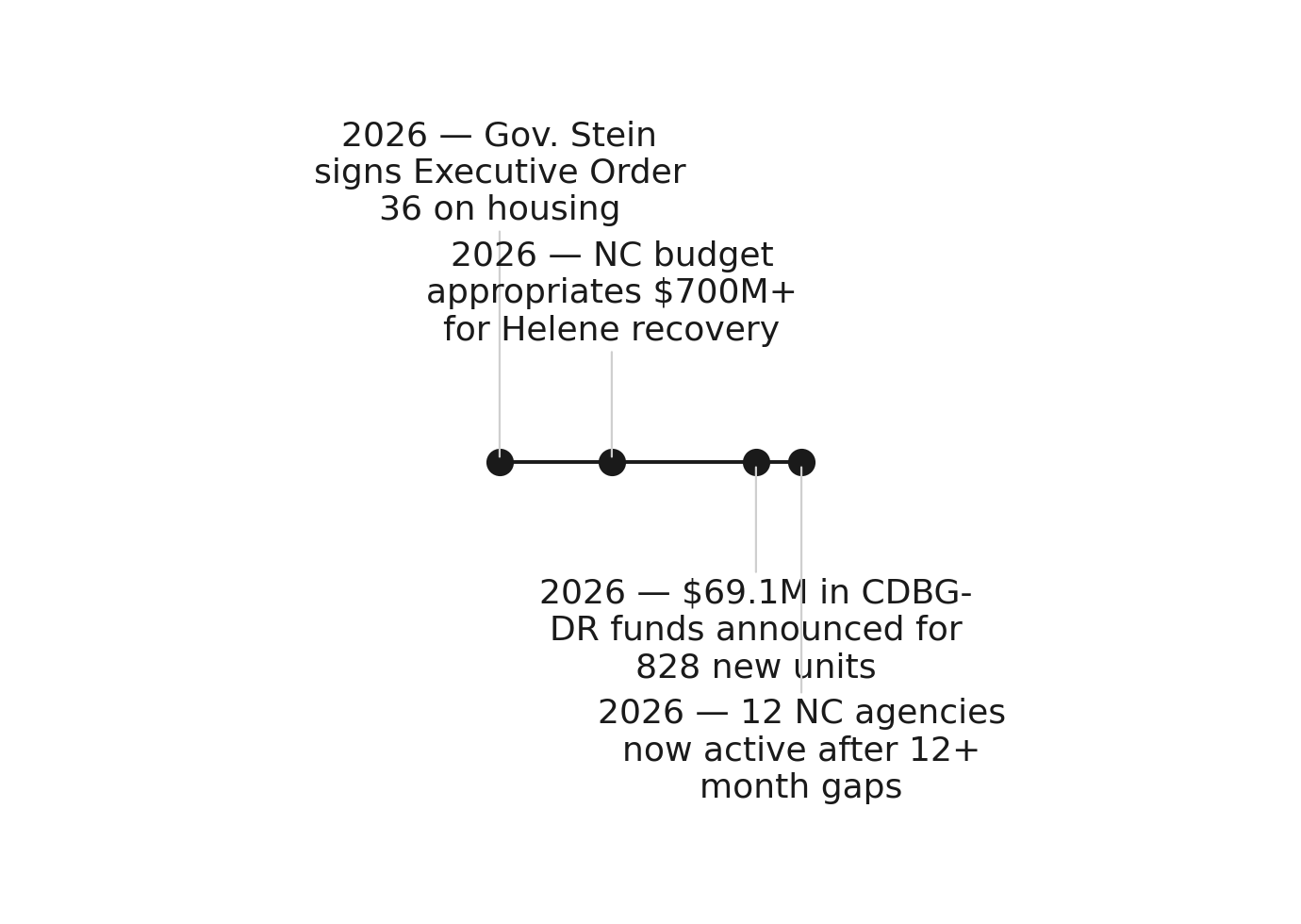
The first is federal. HUD obligated $1.428 billion in Community Development Block Grant Disaster Recovery funds to North Carolina on July 29, 2025, for Hurricane Helene recovery. Of that, $807 million is dedicated to the Renew NC Single-Family Housing Program, which funds repair and rebuilding of owner-occupied homes in western counties. The remainder is flowing into rental construction and neighborhood infrastructure sub-grants to counties. On August 25, 2026, Governor Stein announced $69.1 million in CDBG-DR funds to create 828 apartment units across ten Helene-impacted properties. That announcement came three weeks before the current RFP surge became visible in procurement data. The Sanford and Duplin County solicitations trace directly to that CDBG-DR pipeline, administered by the NC Department of Commerce's Division of Community Revitalization.
The second driver is not federal and carries no dedicated appropriation. Executive Order No. 36, which Governor Josh Stein signed on May 19, 2026, directed every cabinet agency to treat housing supply and affordability as a cross-agency obligation rather than a social-services line item. The order cited a 2025 housing gap analysis projecting a shortage of 764,000 homes in North Carolina through 2029, with affordability declining in all 100 counties between 2020 and 2025. It named corrections, health, and transportation agencies explicitly.
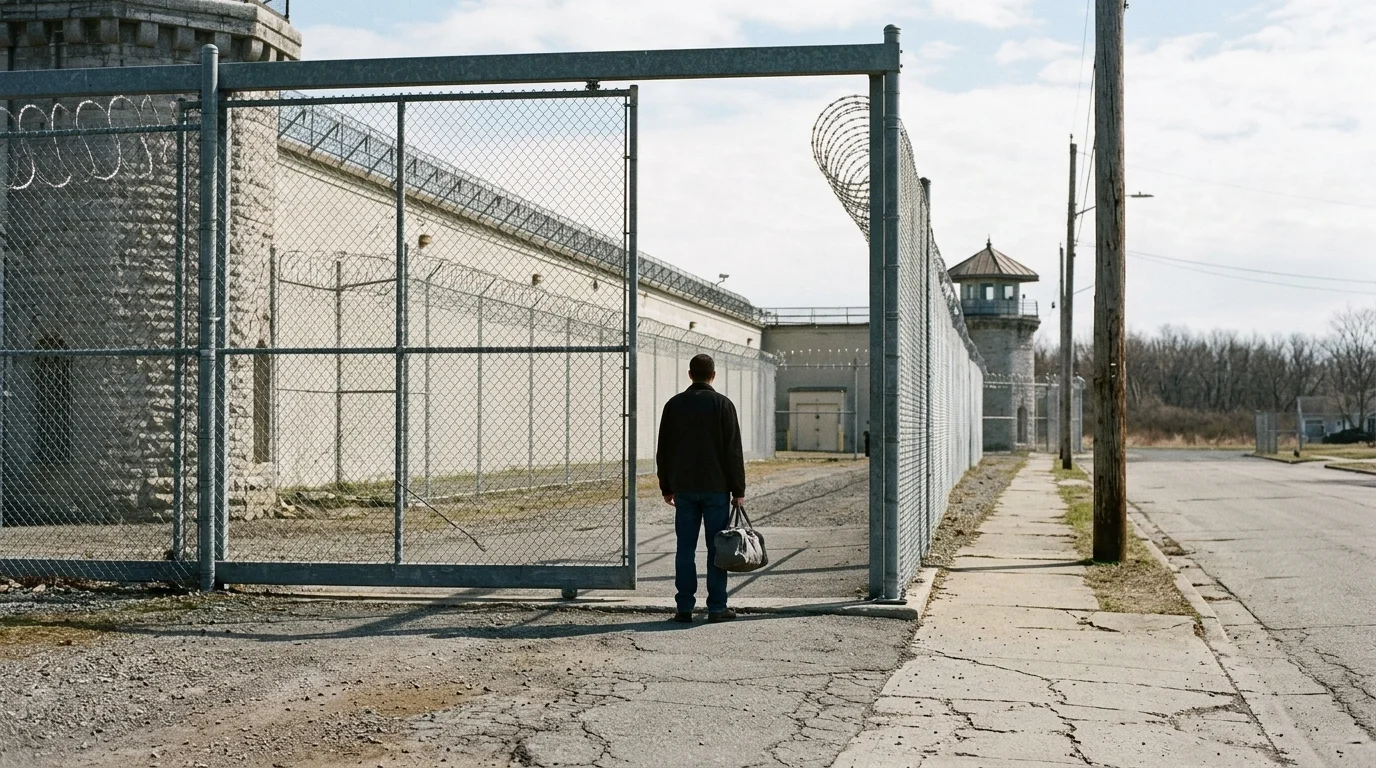
The Adult Correction RFPs are the most direct bureaucratic response to that mandate visible in procurement records so far. The agency's Reentry 2030 plan already set a target of 1,800 additional transitional housing units per year by 2030. More than one in four people leaving North Carolina state prisons exit without stable housing, according to reporting by NC Health News. EO-36 gave the agency both a mandate and political cover to act on a goal it had articulated but not yet translated into active procurement.
These are two parallel forces, not one unified program. The CDBG-DR money is a federal disaster grant with geographic restrictions, flowing specifically to counties in Helene's impact zone through a defined administrative chain from HUD to the NC Department of Commerce to local sub-grantees. EO-36 is an administrative coordination directive with no appropriation attached, asking agencies that already have budgets and missions to add housing to their operational scope. They share the same governor's political agenda; they do not share a funding stream or administrative mechanism.
North Carolina is carrying both simultaneously because it faces two geographically distinct housing crises. Western counties are still rebuilding 18 months after Helene made landfall in October 2024, with displacement persisting well past the emergency phase. The CDBG-DR pipeline is only now reaching local procurement, which is why the RFP activity in Helene-impacted areas is cresting now rather than a year ago. Separately, the state recorded the ninth-highest rental price increases in the country between 2024 and 2025, a pressure that affects the Triad, the Charlotte metro, and the Triangle in ways that have nothing to do with disaster recovery.
NC's active HUD housing grant portfolio now totals $2.51 billion obligated, with $538 million already outlaid. That financial backdrop, combined with a signed executive order and a state budget that appropriated more than $700 million for Helene recovery in July 2026 (including $40 million in temporary relocation assistance and $35 million in volunteer repair grants, drawn from state appropriations), means the institutions entering the housing market now are doing so with real money behind them.
The next signal to watch is whether the Adult Correction solicitations attract vendors with genuine transitional housing experience or whether they surface the same thin contractor pool that has historically limited reentry housing in North Carolina. The RFPs are open; the award decisions will show whether EO-36's whole-of-government ambition meets a market capable of delivering at the scale the Reentry 2030 plan requires.