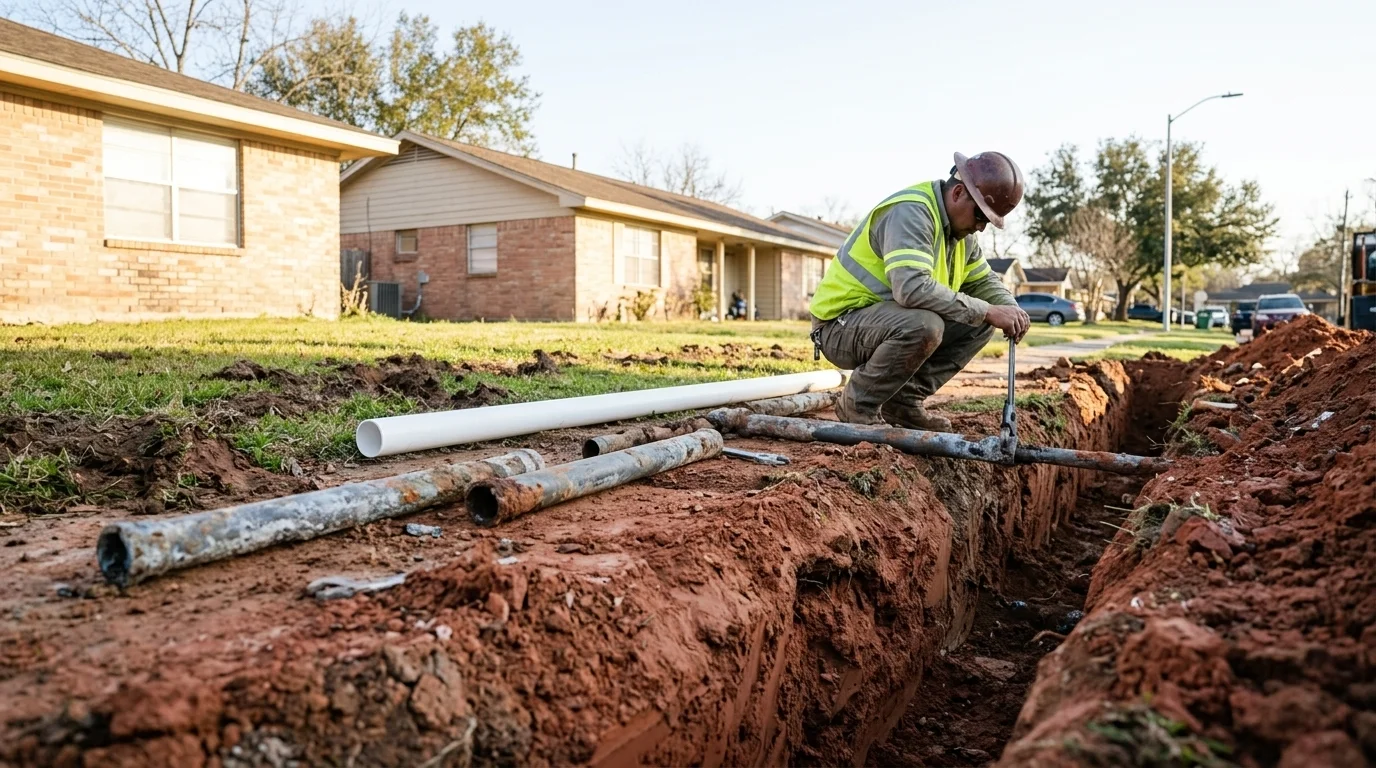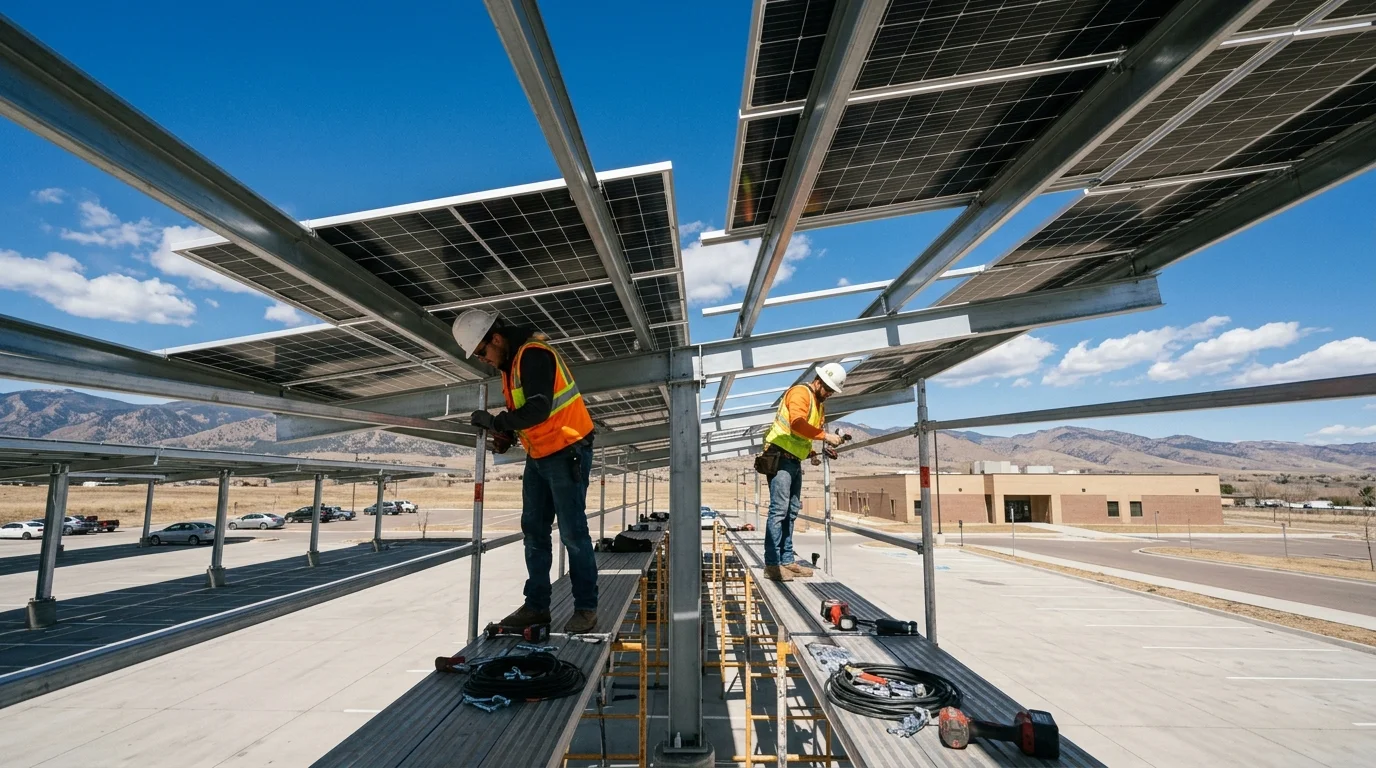
Colorado public agencies have been issuing solar procurement requests at more than twice their historical monthly rate so far in 2026, a surge that doesn't trace back to any single mandate but to three distinct policy mechanisms that happened to go live at the same time.
The three are separate, and the brief requires treating them that way. SB 24-207, signed by Governor Polis in May 2024, created two different programs: an Inclusive Community Solar provision that opened 50 megawatts of Xcel Energy capacity to third-party solar developers starting January 1, 2026, and a Dispatchable Distributed Generation mandate requiring Xcel to competitively procure at least 50 megawatts of solar-plus-storage per year in 2026 and 2027. Running in parallel, but funded entirely separately, the Colorado Energy Office's Local IMPACT Accelerator used EPA Climate Pollution Reduction Grant money to push $51.7 million in two rounds, $21.6 million in January 2026 and $30.1 million in June 2026, directly to 35 local and Tribal governments for emissions-reduction projects, including solar installations. Three different actors, three different funding and compliance mechanisms, one very compressed calendar.
The local grant program is where the contracting surge is most visible. Adams County's solicitation for solar-powered Electric Transportation and Power Hubs, a network of EV-charging facilities with integrated solar canopies, traces directly to its Local IMPACT Accelerator award, announced by the Colorado Energy Office in March 2026. The county, which has held a DOE SolSmart Gold designation since 2017, turned a grant award into an active RFP within months. Boulder County followed with its Community Hub Solar PV System solicitation. Colorado State University added a Vineyard Solar Installation notice. Each of these is a distinct procurement action at a distinct institution, and together they illustrate what happens when grant money arrives with a performance clock attached.
The utility side of the surge is being driven by a different kind of urgency. The Colorado PUC approved 4,100 megawatts of new Xcel generation on February 18, 2026, explicitly citing the need to move before federal tax credits begin phasing down under H.R. 1. Xcel's DDG solicitation, which Utility Dive described as the nation's first competitive procurement of its kind, is drawing bids from private solar-plus-storage developers under terms set by the PUC. A separate April 2026 PUC settlement increased Xcel's Solar Rewards incentive for income-qualified customers from two dollars to three dollars per watt and rolled more than 200 megawatts of capacity from older solar programs into the new Inclusive Community Solar structure, extending the contracting surface further.
The federal tax credit deadline is doing real work here. The residential solar ITC under Section 25D expired December 31, 2025, shifting the most time-sensitive procurement urgency toward institutional and utility-scale buyers who still have access to commercial credits. Counties and utilities both know those credits have a defined window, which is compressing the contracting timeline in ways that a policy change alone would not.
Colorado is not a random location for this to happen. The state passed the nation's first community solar bill in 2010, and its regulatory structure, dominated by Xcel as the investor-owned utility for the Denver metro, means that PUC decisions translate into large procurement cycles quickly. The Denver Regional Council of Governments also received its own CPRG implementation grant, giving Front Range jurisdictions a parallel funding pipeline to the state program. Adams County, Boulder, Pueblo, Colorado Mountain College, San Miguel County, and Thornton have all appeared in the solar contracting record over the past six months, a geographic spread that runs from the Front Range to the Western Slope.
For residents and businesses in Colorado, the practical effect is that solar capacity is being procured at the institutional level faster than at any point in recent memory, which matters for rate structures, community solar subscription availability, and local employment in installation and project development. The Inclusive Community Solar program's 50-megawatt Xcel tranche is available on a first-come, first-served basis, meaning early developer activity in 2026 could fill much of that capacity before the year ends.
The next signals to watch: whether Round 2 Local IMPACT Accelerator grantees, whose $30.1 million was awarded in June 2026, convert awards into RFPs at the same pace Adams County did after its March announcement. The DDG procurement cycle will also produce a contract award list from Xcel later in 2026, which will reveal how much of the 50-megawatt annual mandate gets filled in the first year. If the grant-to-RFP lag holds at roughly 90 days, the contracting surge likely has at least one more wave ahead of it.