Seven Florida institutions issued a flood-control procurement solicitation in the past 30 days for the first time in more than a year, and the number tells you almost nothing until you understand why they all went quiet in the first place.
The silence was procedural. After four named storms in 13 months (Idalia in August 2023, then Debby, Helene, and Milton through 2024), HUD awarded roughly $4 billion in Community Development Block Grant Disaster Recovery funds to Florida counties and the state. The grants came with a compliance clock: counties had to draft Action Plans, survive a public-comment period, submit to HUD, and receive formal approval before a single infrastructure dollar could move to procurement. That process took the better part of a year. Now, as Pinellas County's $813 million plan cleared HUD in July 2025 and Hillsborough's $709 million "Rebuilding for Tomorrow" program explicitly staged its infrastructure investments for 2026, the gates are opening simultaneously across the Gulf Coast.
The result is the steepest procurement ramp in the 18-month series: from three institutions issuing flood RFPs in January and February 2026 to 17 institutions in August 2026 alone. Across 10 CDBG-DR grants, HUD has obligated $2.81 billion to Florida entities since April 2025. Outlays remain near zero relative to obligations, meaning the money is in county hands, but the spending pipeline is only now breaking open.
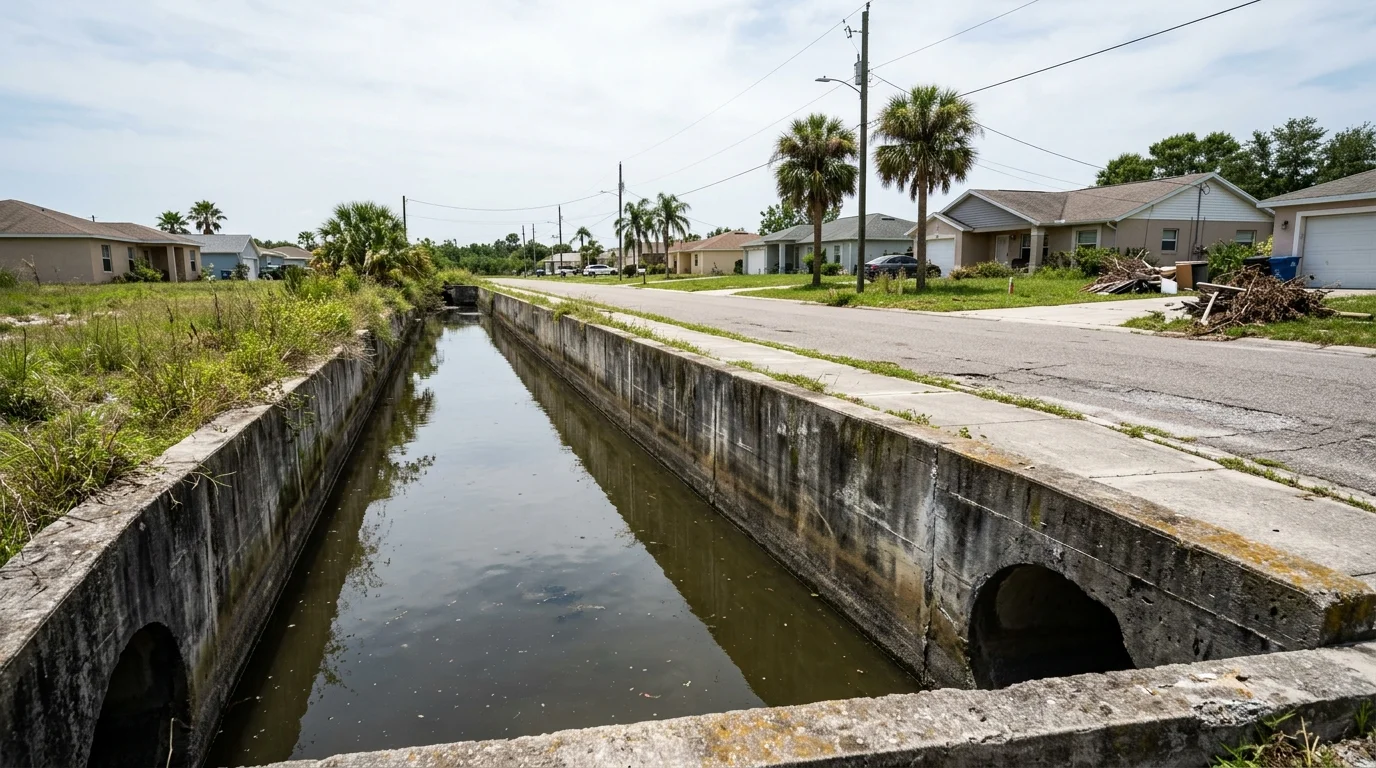
The procurements arriving this month reveal how counties are prioritizing that money. The most technically ambitious come from Hillsborough and the Southwest Florida Water Management District. Hillsborough (RFP 26-00364) is sourcing a countywide automated compound flood forecasting, impact analysis, and mapping system, the kind of integrated platform that fuses rainfall models, storm surge data, and hydrologic projections into real-time actionable outputs. Separately, the Southwest Florida Water Management District (RFP 26-4972) is procuring a real-time flood forecasting SaaS platform covering its 16-county Gulf Coast jurisdiction. A single contract award from SWFWMD cascades across roughly 10,000 square miles of some of the most flood-vulnerable terrain in the continental United States.
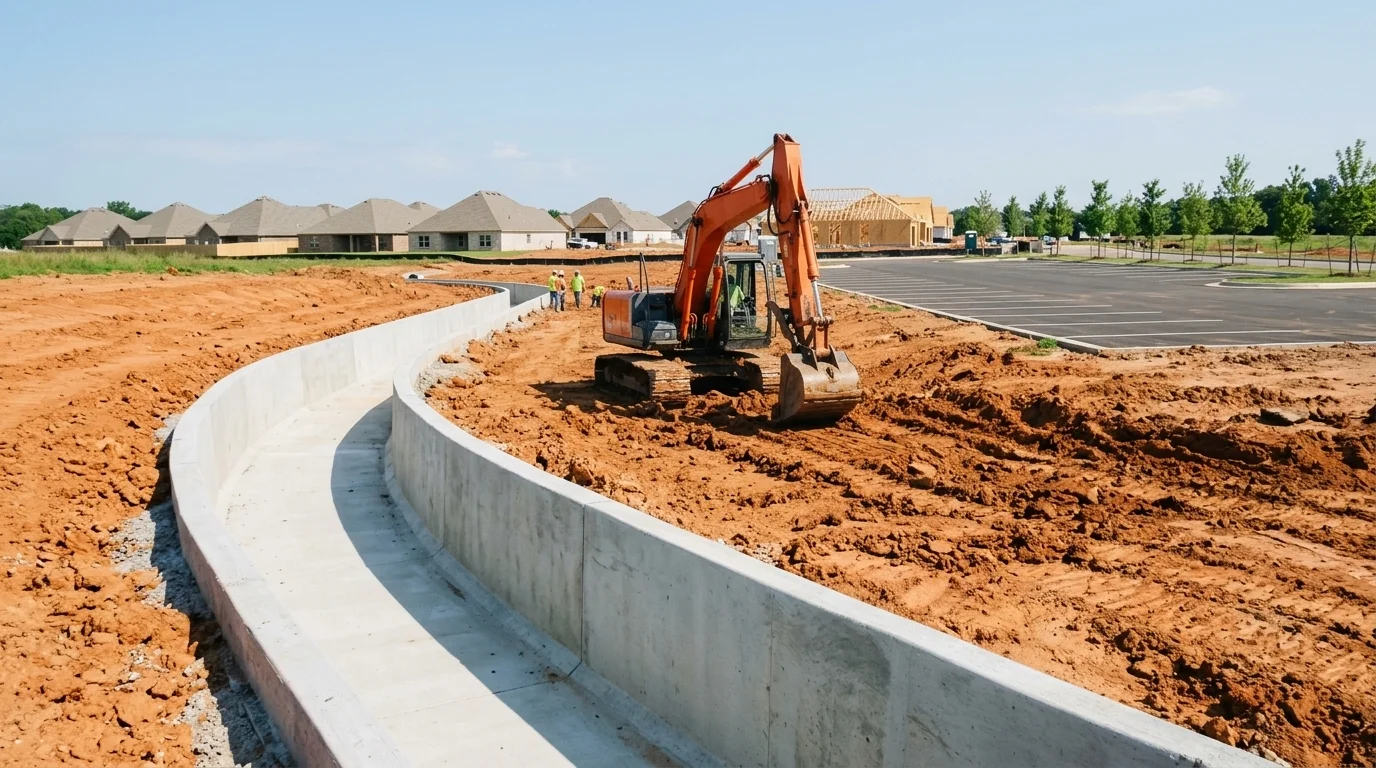
Not every RFP is that sophisticated, and that's the point. Polk County's solicitation is explicitly for CDBG-DR grant administration of its Infrastructure Repair Program, a procurement whose sole purpose is to manage the federal pipeline itself. Volusia County issued a CDBG-DR-branded flood mitigation construction RFP. Cape Coral, in Lee County (which received $100.7 million in CDBG-DR), is procuring ongoing stormwater and drainage engineering services. Taken together, the procurements span the full stack: forecasting technology, construction, engineering, and the administrative machinery to keep the grants compliant.
In April 2026, Hillsborough commissioners approved $95 million for 10 specific flood and drainage projects as part of the broader Rebuilding for Tomorrow program, with economic revitalization and public services phases following in summer 2026. That sequencing, project approvals in April, then procurement activity in August, is the compliance clock made visible. Counties cannot solicit vendors until their project-level spending plans are locked; the April approvals set the August solicitations in motion.
It is worth being precise about what is driving this and what isn't. The CDBG-DR grants are post-disaster recovery funds, administered locally by counties and through FloridaCommerce at the state level. A separate $9.9 million FEMA Flood Mitigation Assistance grant awarded to the Florida Division of Emergency Management in April 2026 targets pre-disaster mitigation and runs on a different eligibility framework and timeline. The two programs are not interchangeable, and the procurement surge underway is almost entirely a CDBG-DR story.
As a Florida Policy Institute analysis noted, the $4 billion allocation made Florida the largest single recipient of post-2023-2024 storm CDBG-DR funds in the country, and advocates have been pressing for those dollars to move faster toward affected residents and infrastructure. The August procurement surge suggests the infrastructure phases are finally arriving, even if housing and direct-assistance spending may still lag.
For residents in Hillsborough, Pinellas, Pasco, Lee, and Volusia counties, the practical meaning is this: the engineering studies, forecasting platforms, and drainage projects that federal dollars have been earmarked for since early 2025 are now entering the competitive bidding stage. Contracts will be awarded. Ground will eventually be broken. The counties that bore the worst compound flooding from Helene's storm surge and Milton's rainfall are, at last, past the paperwork phase.
The next signal to watch is outlays. HUD's public grant data will show when counties move from obligation to actual spending, when money flows from federal accounts to contractors. Right now, that number is effectively zero against $2.81 billion committed. How fast it moves will determine whether the infrastructure phases keep pace with the next hurricane season, or whether the compliance machinery slows spending again before the work is done.