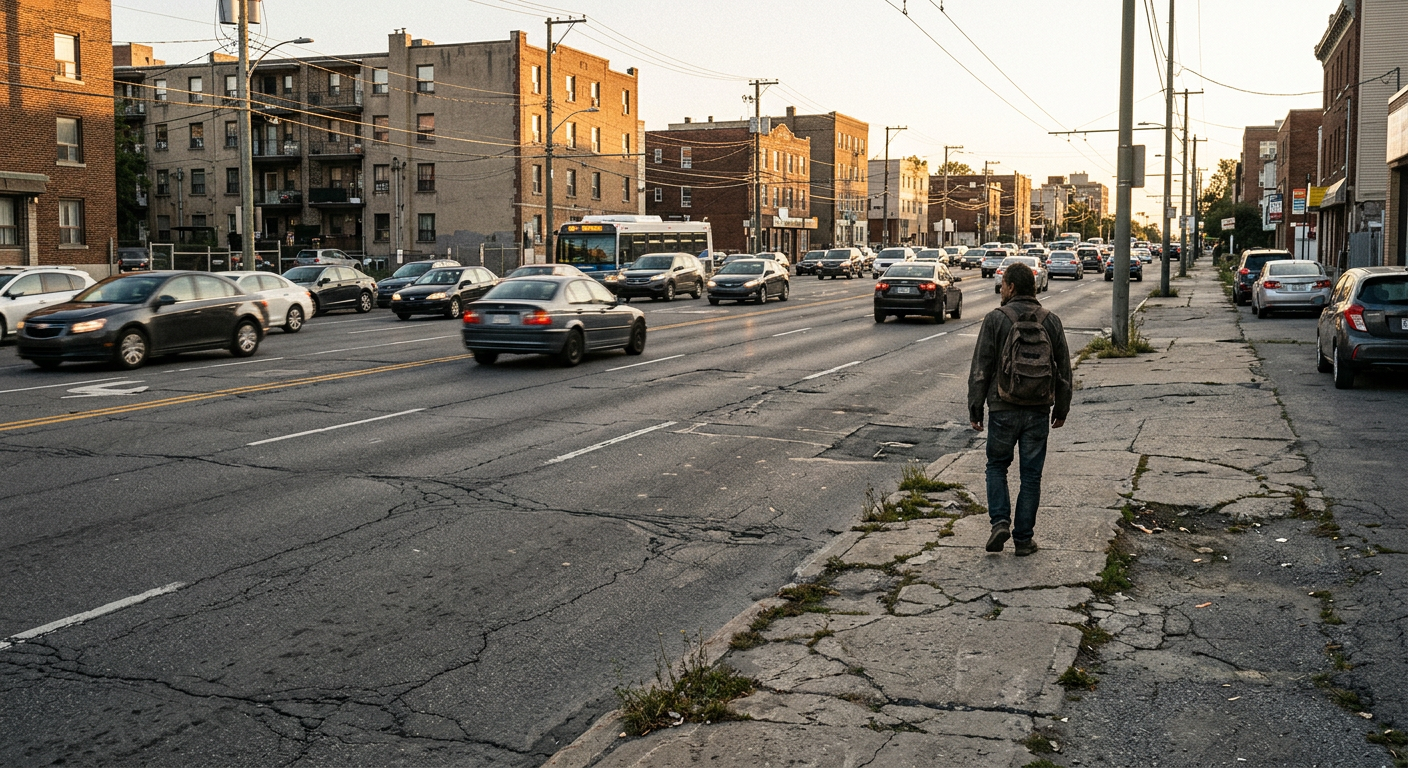
Metro Atlanta, one of the most dangerous regions in America for pedestrians, is launching pilot projects to test whether slowing traffic and adding crosswalks can reverse years of deadly sprawl.
The Atlanta Regional Commission secured a $2.75 million federal grant to develop demonstration projects across the 10-county metro area, targeting corridors like Buford Highway and Metropolitan Parkway where pedestrians have been killed at alarming rates. Georgia consistently ranks in the top 10 states for pedestrian deaths, and Atlanta's explosive growth created high-speed arterials cutting through neighborhoods with few sidewalks or safe crossings.
The grant builds on existing safety plans with real-world testing: temporary road changes like narrowed lanes, new crosswalks, or lowered speed limits to see what works before permanent construction. The projects will focus on pedestrians, cyclists, transit riders, and scooter users, all of whom face heightened risk on roads designed purely for car speed.
The funding comes from the Safe Streets and Roads for All program, a federal initiative created after U.S. traffic deaths hit a 16-year high in 2021. The program has $5 billion to help communities adopt Vision Zero policies, the principle that all traffic deaths are preventable through better road design.
But Atlanta's efforts face a structural problem: the state controls many of the region's deadliest roads and has repeatedly blocked local safety measures, including Atlanta's attempts to lower speed limits. The Atlanta Regional Commission can plan and test, but it can't force the state or the region's 100-plus municipalities to implement changes.
The demonstration projects are expected to run through 2026. If successful, cities and counties could apply for separate federal implementation grants to make the changes permanent.