Callahan County, Texas sits roughly halfway between the Dallas-Fort Worth metroplex and the Permian Basin, and the traffic from both worlds has been showing up on its rural highways for years. Now the state is adding lanes to handle it.
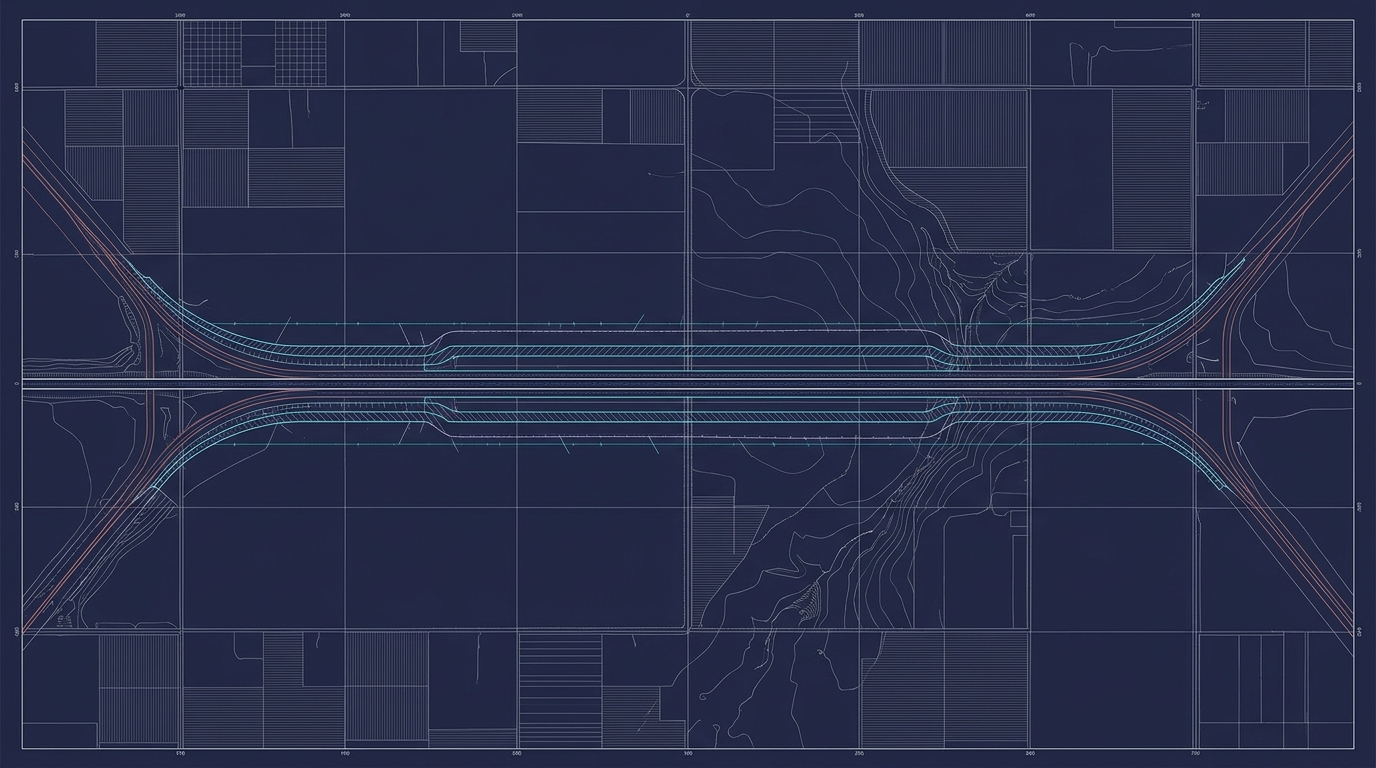
The Texas Department of Transportation is moving forward with a road widening project in the county, with contractor bids being sought this month through the state's procurement portal. Construction could begin as early as late 2026 or early 2027.
Callahan County has about 14,000 residents spread across 900 square miles, but its roads carry traffic that far outpaces its population. The county's state routes funnel oil field workers and equipment heading to the Permian Basin, agricultural trucks, and increasingly, wind energy construction vehicles hauling oversized loads on roads that weren't designed for them. On top of that, the broader westward push of DFW exurban development has added commuter and commercial traffic through the corridor.
Texas has been the fastest-growing state in the country, adding roughly 470,000 people per year between 2020 and 2024. That growth has strained highways even in places most Texans couldn't find on a map. When traffic counts on a rural two-lane highway climb high enough, particularly with a heavy mix of trucks, TxDOT's standard response is to widen or add passing lanes to reduce the collision risk that comes with vehicles trying to overtake slow-moving freight.
The project is fully state-funded, a critical detail for a county whose modest tax base makes major road construction financially impossible on its own. TxDOT's Abilene District, which covers Callahan County, has been advancing a series of capacity and safety projects as the region has grown alongside Dyess Air Force Base activity in Abilene and the broader energy economy to the west.
The funding comes from a state highway program built on two constitutional amendments, Proposition 1 in 2014 and Proposition 7 in 2015, which dedicated oil and gas severance tax revenue and a portion of sales tax to road construction. The result has been more than $100 billion allocated in TxDOT's current ten-year plan, though the program has faced pressure as construction costs have risen 30 to 40 percent since 2020.
If contractor selection proceeds on schedule this spring, residents along the affected route could see construction equipment on the ground before the end of the year.