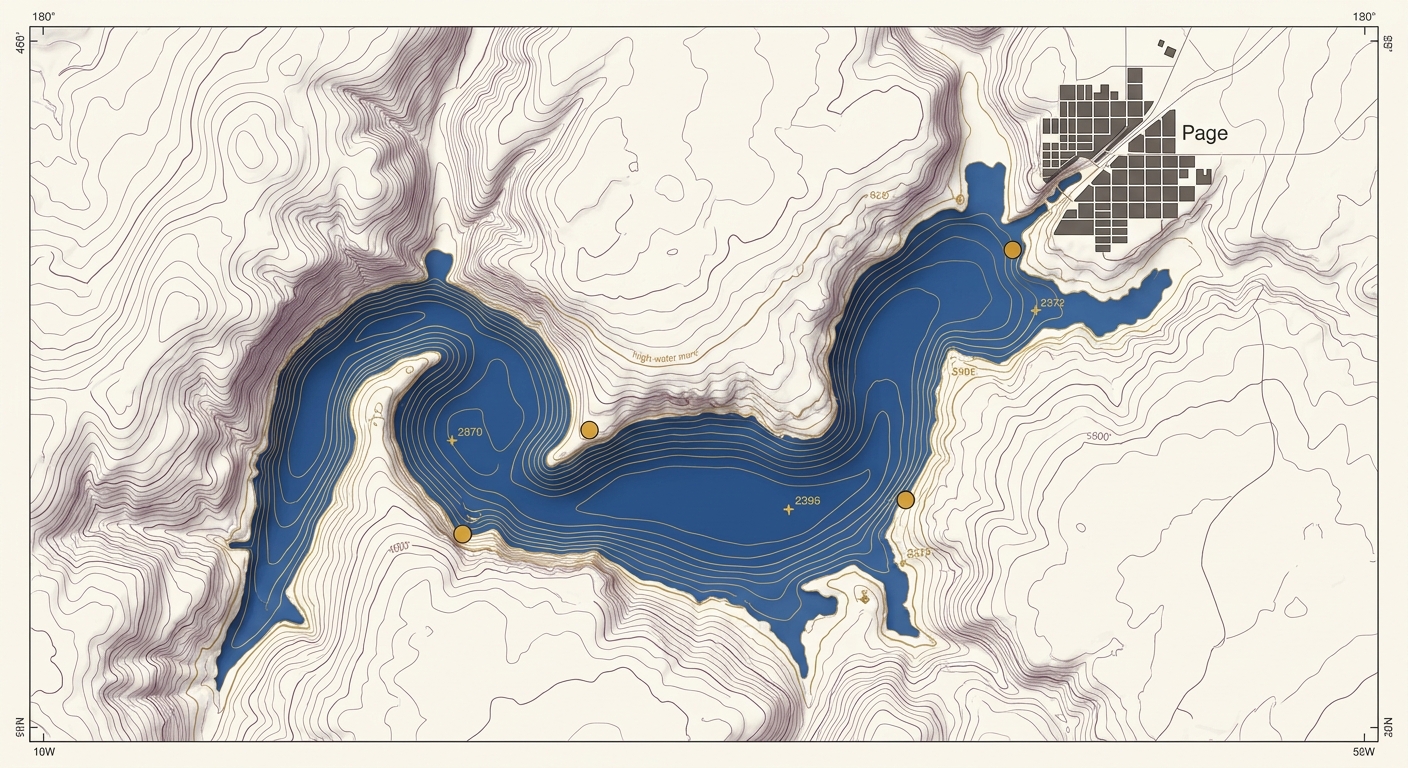
Page, Arizona sits on the edge of Lake Powell, and for the 7,500 people who live there, that reservoir is the only source of drinking water. Now, with $3.4 million in federal funding, the city is moving to redesign the aging intake system before the next drought puts that supply at risk again.
The grant, awarded through the EPA and funded by a congressional earmark in the 2023 Consolidated Appropriations Act, will pay for full engineering design and environmental analysis of a replacement water intake and pipeline system. The goal is a construction-ready plan for new intake pipes built to function even if Lake Powell drops to the dangerously low levels it reached just a few years ago.
Between 2000 and 2023, the Colorado River Basin experienced its worst drought in 1,200 years. Lake Powell, which was near full when the century began, fell to about 3,522 feet above sea level in 2022 and 2023, within striking distance of 'dead pool,' the level below which water cannot flow through Glen Canyon Dam at all. Page's existing intake infrastructure, built in the 1950s and 60s when the city was established as a construction camp for Glen Canyon Dam workers, was never designed for conditions like that. At the crisis point, city officials were drilling emergency backup wells and weighing whether to truck in water.
Lake Powell has partially recovered since 2023, helped by stronger snowpack in the mountains that feed the Colorado River. But water managers and city officials have been clear that the underlying infrastructure problem has not gone away. The intake system is old, and the water level swings that nearly stranded it could happen again.
This grant covers the design phase only. Construction of a new intake and pipeline system will require a separate, likely far larger, round of funding. The design work is intended to produce a shovel-ready project that Page can take to Congress or other federal programs for construction dollars.
Page is surrounded by Navajo Nation land, sits roughly 130 miles from the nearest sizable city, and has a limited tax base, making large infrastructure projects essentially impossible to fund locally. With no alternative water sources nearby, federal investment in the intake system is not optional.
With design and environmental work now funded, the city's next challenge will be securing the construction dollars needed to actually put new pipes in the water.