Vancouver is moving to rehabilitate a stretch of Fraser River shoreline that has quietly been deteriorating for decades, as rising seas, earthquake risk, and a population boom along the Cambie corridor converge to make the work increasingly urgent.
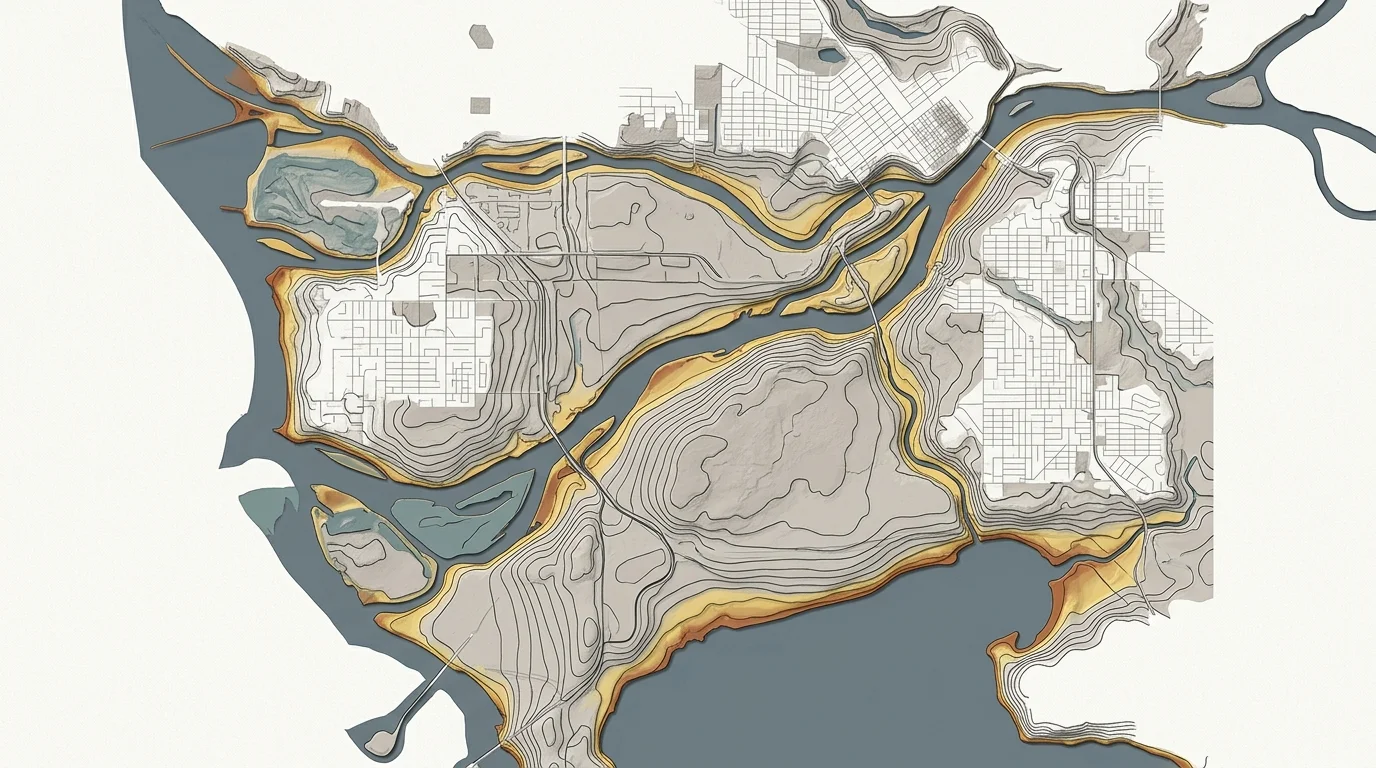
The Cambie Shoreline Rehabilitation Project targets aging marine infrastructure, including seawalls, revetments, and fill areas, built during the mid-20th century when this stretch of Vancouver's waterfront served sawmills and industrial tenants. None of it was designed for today's climate or seismic standards. Metro Vancouver's regional projections estimate up to one metre of sea level rise by 2100, and the low-lying Fraser River delta is especially exposed: even modest sea level increases combine with storm surges and river flooding to create compound flood risk for neighbourhoods like Marpole that sit just inland.
The seismic threat is equally serious. Vancouver lies in the Cascadia Subduction Zone, and older shoreline structures built on fill or liquefiable soils are among the city's most vulnerable assets in a major earthquake.
The stakes have risen sharply in recent years as the Cambie corridor has densified around the Canada Line, which opened in 2009 and triggered a wave of tower and mid-rise development. Tens of thousands of new residents now live close to shoreline infrastructure that was never meant to protect a dense urban neighbourhood.
Beyond flood and earthquake protection, the project carries an ecological dimension. The Fraser River estuary is critical habitat for all five Pacific salmon species and countless migratory birds. Federal and provincial rules now require that any shoreline work restore intertidal habitat where possible, replacing hard armoring with more naturalized treatments, a significant engineering and environmental challenge.
The city is seeking prequalification from heavy civil and marine contractors capable of working in tidal zones under strict environmental windows that limit construction activity to protect fish. It is a specialized field, and Vancouver faces stiff competition for qualified contractors. The same pool of marine firms is already stretched across the Iona Island Wastewater Treatment Plant, a $10-billion-plus Metro Vancouver project at the Fraser River mouth, as well as the Broadway Subway extension and ongoing port expansion. The city's two-stage approach, prequalifying firms before issuing a formal tender, reflects the technical complexity of the work and a desire to ensure enough capable bidders actually show up.
Vancouver has pursued similar work elsewhere on its roughly 250 kilometres of shoreline. The city has previously upgraded sections of the False Creek seawall, as covered in earlier reporting on Vancouver's shoreline resilience efforts, and the Cambie project follows that broader push to address what city officials have acknowledged is a multi-billion-dollar infrastructure deficit.
A formal tender to qualified contractors will follow once prequalification is complete. No construction timeline or total project cost has been publicly disclosed.