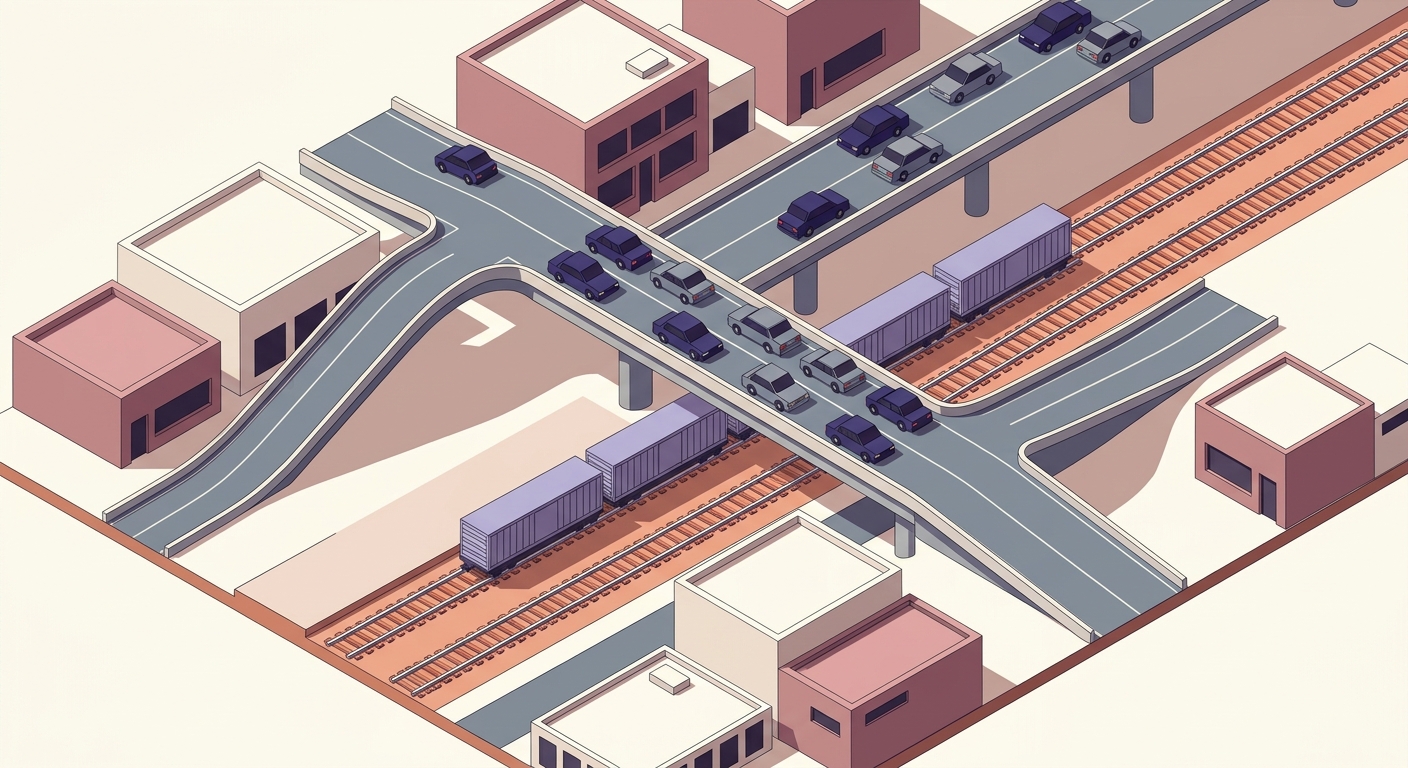
Baton Rouge is moving to rebuild one of its most complained-about pieces of infrastructure: the aging Perkins Road Overpass, which carries traffic over active freight rail tracks through the heart of the city's most commercially dense southern corridor.
The city-parish government is now seeking construction bids for the overpass reconstruction project, covering the stretch of Perkins Road between Raymond Avenue and Christian Street. The RFP posting signals the project has cleared its design and engineering phases and is ready for a contractor to begin work.
The overpass spans the Canadian Pacific Kansas City (CPKC) railroad tracks, a heavily used freight line that bisects the city. Overpasses like this one are especially consequential in Baton Rouge because the alternative, at-grade rail crossings, can halt traffic for extended stretches as trains pass. The CPKC rail network has grown with the 2023 merger of Canadian Pacific and Kansas City Southern, and increased freight traffic on these lines has made functional grade separations more important across the Gulf South.
The Perkins Road corridor runs through the Southdowns, Kenilworth, and Garden District neighborhoods, some of the most commercially active and politically engaged areas in East Baton Rouge Parish. Restaurants, shops, and nightlife have concentrated here over the past decade, intensifying traffic pressure on an overpass that was never built for current volumes. The narrow roadway and awkward approach ramps have long frustrated both drivers and pedestrians.
The project carries a 2023 project number, suggesting it entered the city-parish engineering pipeline three years ago. That timeline will likely draw scrutiny from residents and advocates who have been tracking the MovEBR program, the $1 billion-plus transportation initiative voters approved in December 2018 through a half-cent sales tax. MovEBR was designed to clear a backlog of road, bridge, and drainage projects across East Baton Rouge Parish, but the program has faced recurring questions about whether projects are arriving on schedule.
Louisiana as a whole has historically ranked among the worst states for infrastructure, with a significant share of its bridges rated structurally deficient. Baton Rouge compounds that statewide problem with a development pattern built around cars, limited river and rail crossings, and years of deferred maintenance.
No construction cost estimate or project timeline has been publicly disclosed in the solicitation. How long the rebuild takes and what it ultimately costs will be closely watched in a corridor where residents have been vocal about infrastructure quality for years.