Hawaii is launching a $45 million overhaul of its rural healthcare system, targeting the chronic physician shortages and access gaps that have left neighbor island residents flying to Honolulu, or worse, going without care.
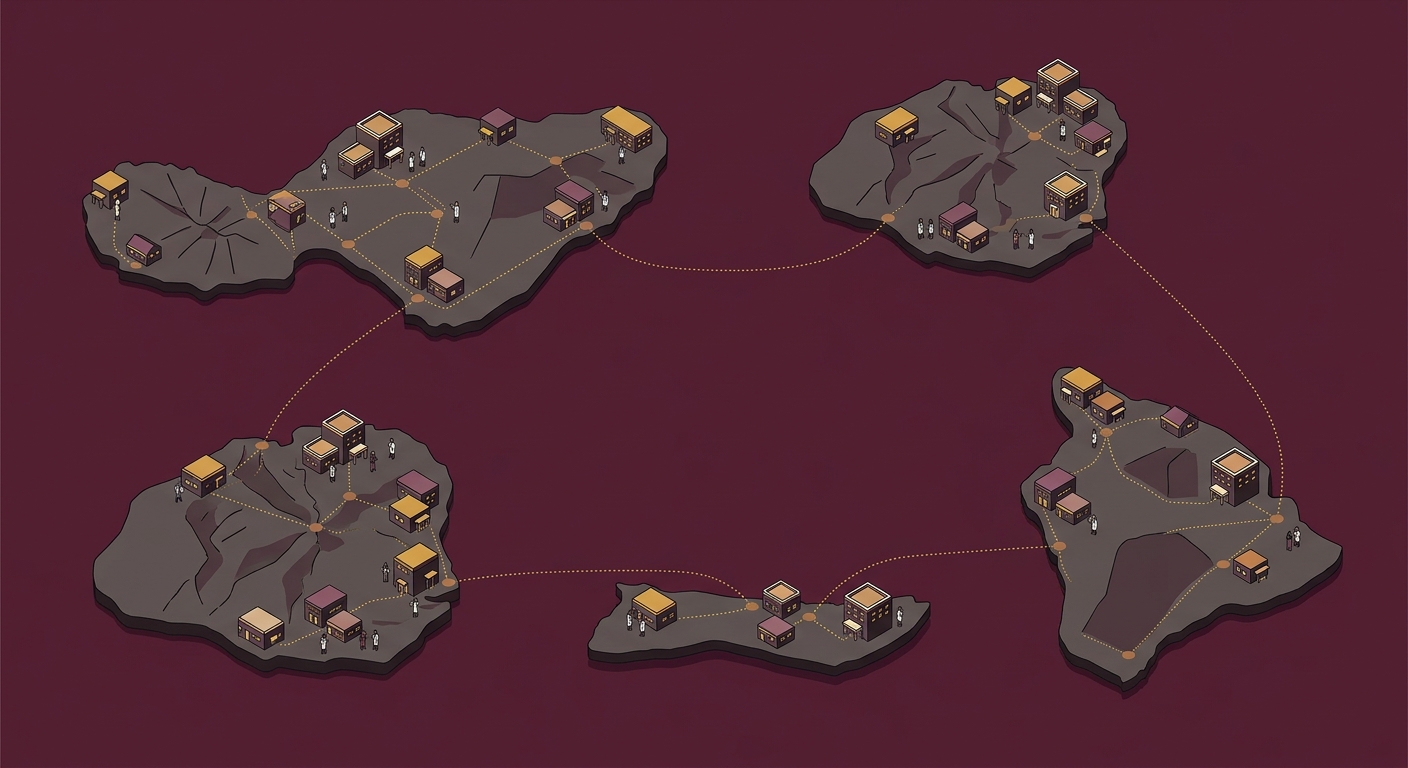
The challenge is one no other state faces quite the same way. About 400,000 Hawaiians live on islands outside Oahu, spread across 1,500 miles of Pacific Ocean. The vast majority of specialists and advanced medical facilities are concentrated in Honolulu, and when a patient on Molokai or in rural Hawaii Island needs emergency or specialty care, an inter-island air ambulance alone can cost more than $30,000. Communities like Molokai and Lanai have struggled to keep facilities staffed and funded for years, and the 2023 Maui wildfires, which killed 102 people and overwhelmed the island's already strained health system, made clear just how fragile that infrastructure is.
The federal program, funded through the Centers for Medicare and Medicaid Services, is being run directly out of the Governor's office, a signal of how seriously the state is treating it. That's notable in part because Governor Josh Green is himself a physician who spent years practicing emergency medicine in some of Hawaii's most remote communities, including Ka'u on Hawaii Island, one of the state's most underserved areas.
A central piece of the plan is a major investment in growing Hawaii's own physicians rather than trying to recruit them from the mainland. The University of Hawaii's John A. Burns School of Medicine is receiving a subaward to launch the HOME RUN program, short for Hawaii Outreach for Medical Education in Rural Under-resourced Neighborhoods. The idea is to embed medical training directly in rural communities, betting that doctors who train in a place are far more likely to stay and practice there. It's a strategy driven by hard experience: physicians trained on the mainland, facing the nation's highest cost of living and the realities of island isolation, rarely end up filling vacancies on neighbor islands.
The national physician shortage is severe and getting worse. The Association of American Medical Colleges projects a gap of up to 124,000 physicians by 2034, with rural areas taking the hardest hit. For Hawaii, that national trend collides with geography, demographics, and economics in ways that make the problem uniquely difficult to solve through conventional recruitment.
This award is part of a broader federal push on rural health that has accelerated since the COVID-19 pandemic exposed vulnerabilities in rural systems nationwide. Hawaii has received significant federal rural health investment before, but the scale and structure of this program, six interconnected initiatives overseen at the governor level, represents a more coordinated approach than past efforts. How quickly it can move physicians into underserved communities and whether the HOME RUN pipeline can produce lasting results will be the real test of whether $45 million can move the needle on a problem decades in the making.