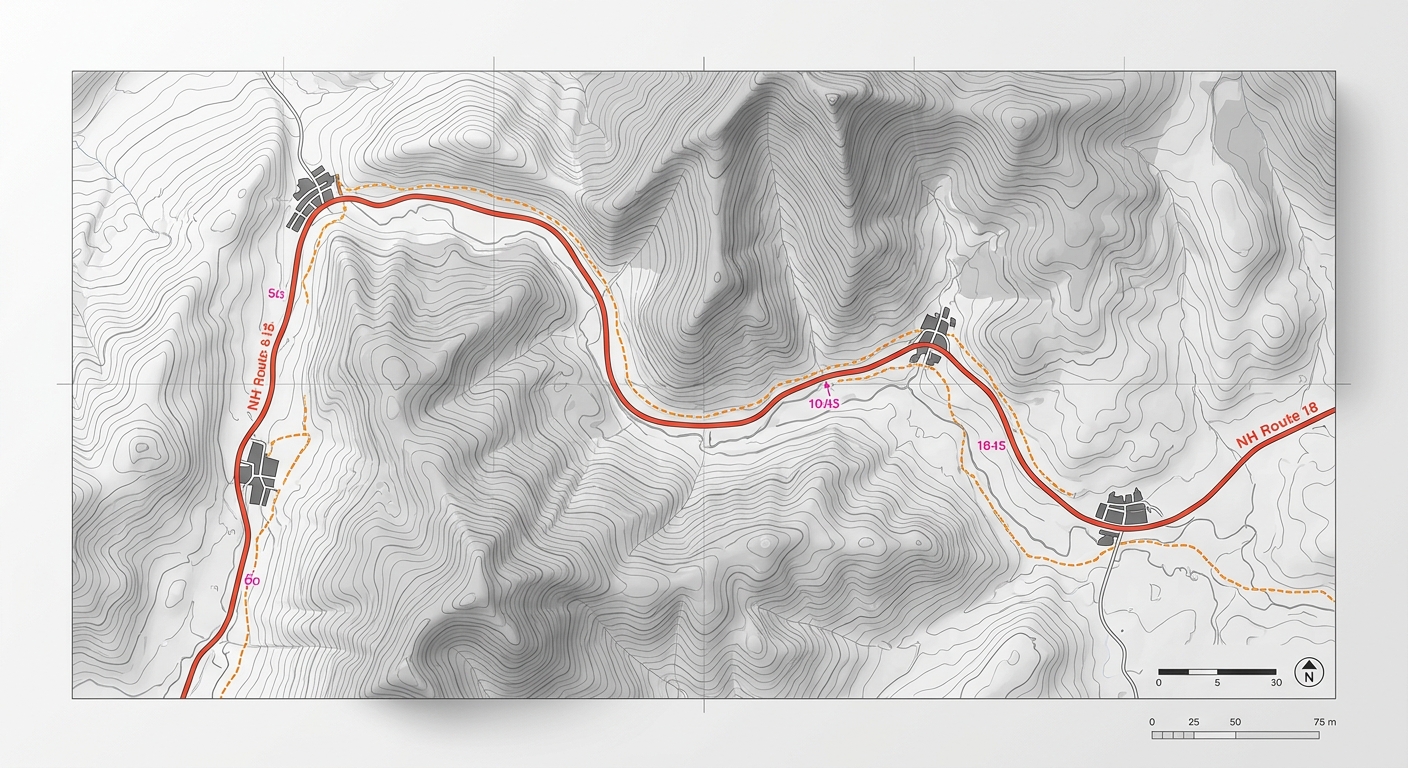
Three small communities in New Hampshire's White Mountains are still working toward a bicycle and pedestrian trail that may have been first authorized by Congress more than two decades ago. A new $220,000 federal grant flowing through the New Hampshire Department of Transportation is helping push that project closer to reality.
The trail would run along and beside NH Route 18, connecting the town centers of Bethlehem, Sugar Hill, and Franconia — three Grafton County communities with a combined population of around 4,000 people. The route currently has no dedicated space for cyclists or pedestrians despite linking three downtowns and serving as a scenic corridor through the mountains.
The project carries a federal designation that tells its own story: Demo ID NH097, marking it as a congressional demonstration project, the kind of hometown earmark that was a fixture of federal highway bills in the 1990s and early 2000s. Projects like this one were often funded in small increments over many years, requiring communities to work through local planning, land acquisition, and environmental review one slow step at a time. Some have taken 15 to 20 years from authorization to ribbon-cutting. This one appears to still be in progress.
For towns like Bethlehem, Sugar Hill, and Franconia, the stakes are more than recreational. The White Mountains economy runs on tourism, and communities across the region have spent years trying to build four-season appeal that extends beyond ski season. Trail connectivity has become part of that strategy, giving visitors and residents alike a reason to arrive by bike or explore on foot. The nearby Franconia Notch Recreation Path has long served as a model for what linked non-motorized corridors can do for a rural region.
Like Cleveland, which is finally building a trail on Irishtown Bend after years of delays, this project illustrates how long local infrastructure ambitions can sit in federal pipelines before reaching construction.
New Hampshire's tight transportation budget, driven by a tax structure with no income or sales tax and chronic pressure to prioritize bridge and road repairs, makes federal funds critical for projects like this. The $220,000 flows through the Federal Highway Administration's Highway Planning and Construction program, the same funding stream that has kept legacy demo projects alive even as congressional earmarks were banned from 2011 to 2021.
No completion date has been publicly announced, and it remains unclear how much work remains before the trail opens to the public.