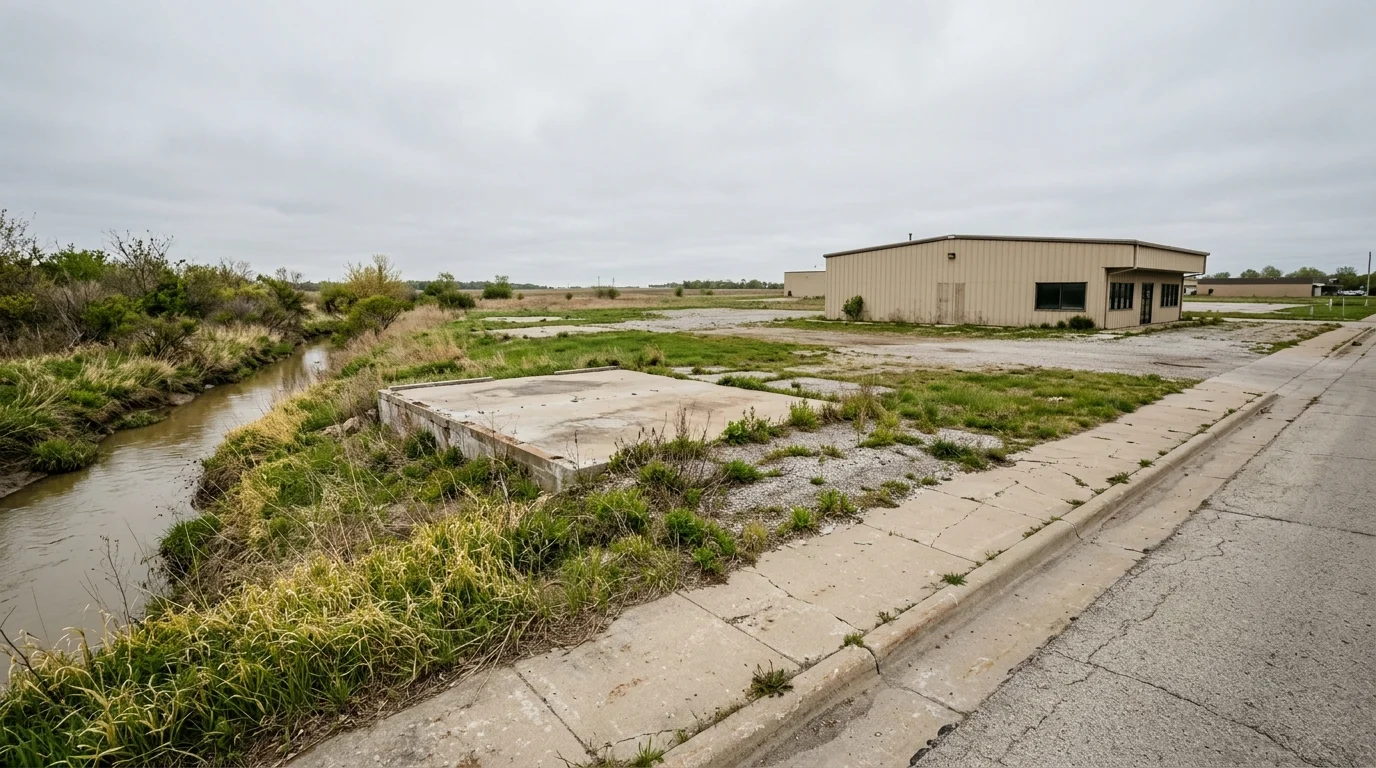
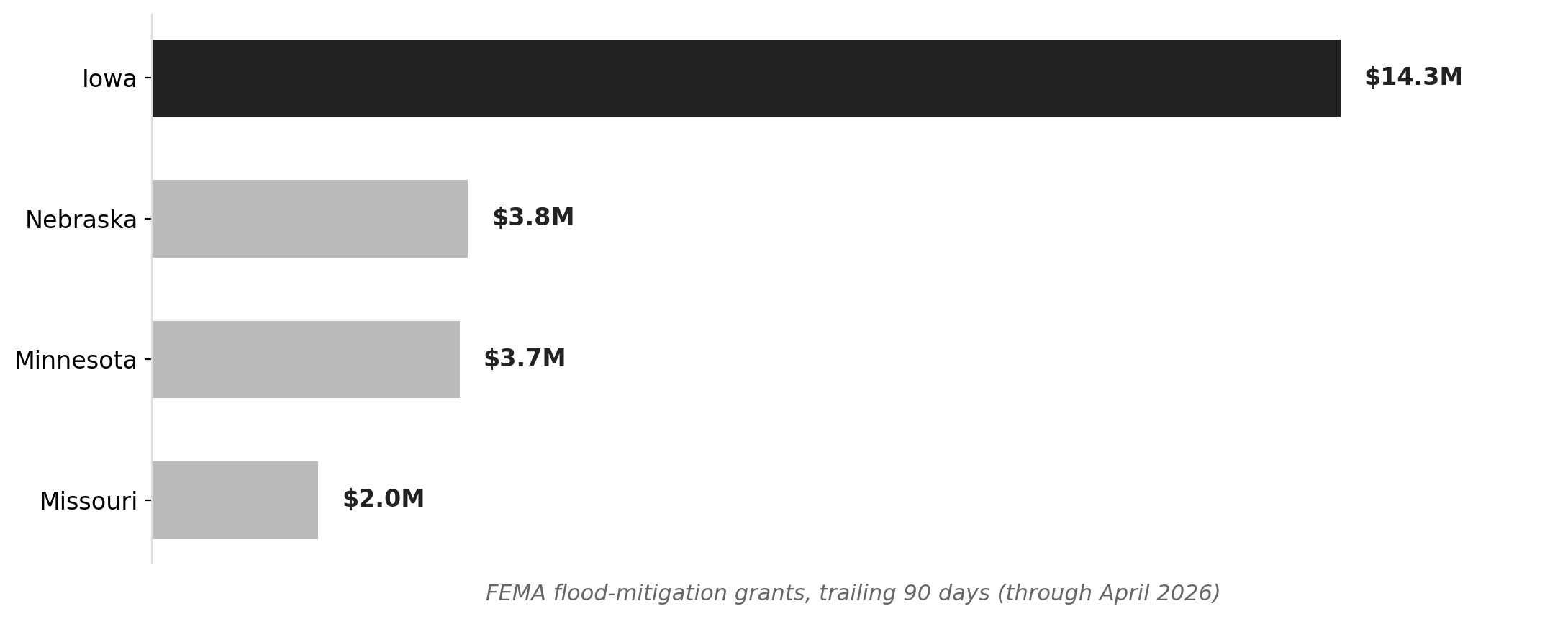
Federal flood-mitigation grants to Iowa have reached $14.3 million in the past 90 days, a 553% increase over the same window last year, and almost all of it is going to one place: a low-lying commercial corridor in Clive, a Des Moines suburb, where the same eighty acres have flooded four times in the past decade.
The surge is not a broad infrastructure push. It traces to a single grant awarded April 24, 2026: $13.1 million to the City of Clive through Iowa's Homeland Security and Emergency Management Department, part of a FEMA announcement of more than $250 million in Flood Mitigation Assistance awards across 20 states. FEMA described the release as clearing a backlog of pending applications that had accumulated under prior leadership, noting the awards came even as the agency operates 67 days into a lapse in appropriations.
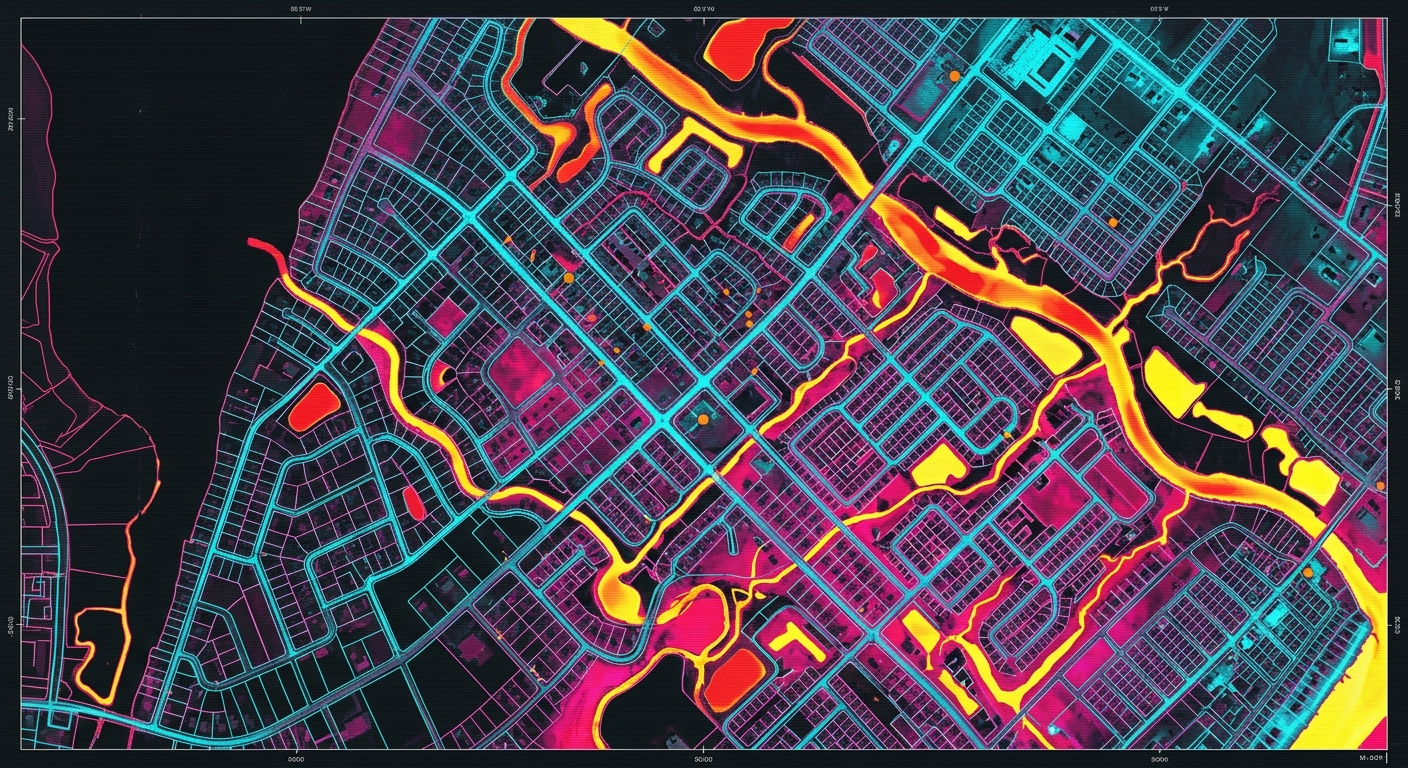
The money will fund property acquisition and demolition in Clive's University Boulevard Flood Mitigation Plan area, a stretch of Walnut Creek where commercial structures have been inundated repeatedly and where conventional flood-engineering fixes have not held. Clive launched a voluntary buyout program in 2018 and has since acquired 27 properties along the creek. The new federal dollars give the city the resources to pursue roughly 13 high-priority properties still remaining in the target area.
Source: NationGraph.
The scale of that single award explains Iowa's position in the national rankings. In this FMA cycle, Iowa received the second-largest allocation in the country behind only Texas, which drew $24.3 million. Among Midwest neighbors, the gap is stark: Nebraska received $3.8 million in the same 90-day window, Minnesota $3.7 million, Missouri $2.0 million.
The reason Iowa was positioned to capture this funding comes from 2024. The state absorbed three separate Presidential Disaster Declarations between late April and late July of that year, covering dozens of counties hit by flooding, tornadoes, and straight-line winds in rapid succession. Those declarations, DR-4779-IA, DR-4784-IA, and DR-4796-IA, created a dense pipeline of federally eligible mitigation projects and accelerated the timeline for communities like Clive that already had applications in development. In February 2026, Rep. Randy Feenstra announced more than $62 million in FEMA disaster-recovery grants to Iowa communities stemming from that same storm season. The April FMA award is a separate, additional layer on top of that recovery spending.
The Clive project is a particular kind of federal investment: not a levee, not a detention basin, but a permanent removal of structures from the floodplain. Under FMA buyout programs, acquired properties are typically converted to open space and cannot be redeveloped, which means the government is paying to shrink the footprint of human occupation in a watershed it cannot adequately protect. The FEMA Flood Mitigation Assistance program is specifically designed for structures with repetitive or severe repetitive flood loss histories, and the University Boulevard corridor qualifies on both counts.
For Clive residents and businesses in the acquisition zone, the practical effect is a federally funded exit from a floodplain that the city has concluded it cannot engineer its way out of. The city's buyout policy is voluntary, but the program has moved steadily: 27 acquisitions over eight years, and now federal funding to close out the highest-risk remaining properties. Once demolished, those parcels revert to green space along the creek corridor.
For the rest of Iowa, the grant illustrates how the 2024 disaster declarations continue to work through the federal system, converting storm damage into mitigation eligibility. Iowa's $2.2 million baseline in last year's comparison window was a thin collection of transportation, research, and wetlands grants with no major capital flood-control commitment. The step-change to $14.3 million reflects not an acceleration of federal generosity but the eventual arrival of dollars for which Iowa applied after a catastrophic year.
The grant period runs through April 2029. The next signal to watch is whether Clive completes the remaining property acquisitions within that window and whether the 80-acre Walnut Creek corridor can be fully transitioned out of active commercial use before the next significant flood season tests the progress made so far.