At least six New York institutions issued solar procurement solicitations for the first time in over a year in the past 30 days, and the surge has less to do with renewed ambition than with two bureaucratic clocks that started ticking at almost the same moment.
The first clock is the New York Office of General Services Group 05302 statewide contract. OGS issued Solicitation 23378 in April 2026, with bids opening July 1. The contract covers four lots: photovoltaic systems, PV services, community solar subscriptions, and related services. Any authorized user in the state can draw down from it without running a standalone competitive procurement. That matters enormously for smaller governments. A town supervisor in Cayuga County or a facilities director in Southampton no longer needs a full procurement department and months of legal review to put solar panels on a public building. They have a pre-competed catalog and can issue a call-off.
The second clock is federal. The One Big Beautiful Bill Act, signed July 4, 2025, retained the Section 6417 direct-pay mechanism that allows tax-exempt municipalities to receive the equivalent of an investment tax credit as a cash payment. But the OBBBA curtailed or eliminated many of the underlying clean energy credits that direct pay was paired with, narrowing the window during which municipal solar projects can still capture the full financial benefit. Construction commencement deadlines under the phased credit schedule are real, and project timelines in the solar industry run long. An RFP issued in August 2026 for a project that breaks ground in 2027 is already cutting it close.
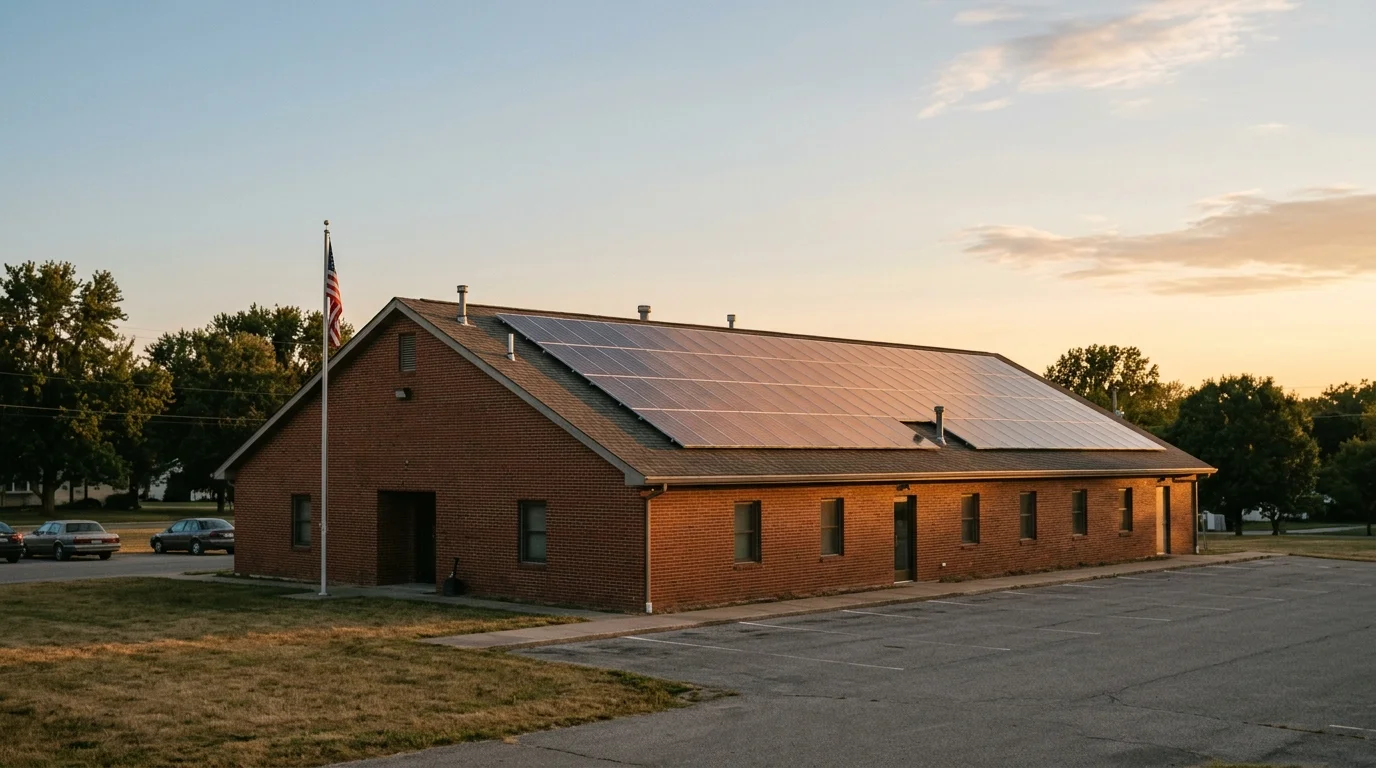
Those two forces together explain why Cayuga County issued an RFP for a ground-mounted solar PV array with a bid deadline of August 5, 2026, and why Southampton issued a solicitation for solar installation at its Flanders Community Center due August 26. Both were their first solar solicitations in more than 12 months. Neither is a large municipality with a dedicated energy office. Both are doing exactly what the OGS architecture was designed to enable.
The broader picture in New York reinforces the reading. Over the trailing 30 days, 10 New York institutions issued 19 solar RFPs, leading neighboring states by a substantial margin: New Jersey posted 7 institutions and 12 RFPs; Connecticut 8 and 11; Pennsylvania 7 and 11; Massachusetts 5 and 9. New York's lead is not simply a function of size. It reflects the procurement infrastructure the state has built and the compounding pressure of CLCPA compliance.
That pressure has teeth. A New York court ruled in October 2025 that the Hochul administration had failed to meet CLCPA deadlines and ordered the Department of Environmental Conservation to issue enforceable emissions regulations. The state appealed, with oral argument set for May 2026. Whether or not the administration prevails, the ruling has clarified that local governments are obligated actors under the CLCPA's 70% renewable electricity by 2030 mandate, not optional participants. NYSERDA's 10th annual Renewable Energy Standard solicitation, RESRFP26-1, issued April 24, 2026, reinforces that the state is actively pulling projects toward near-term commercial operation.
The headline context is striking on its own terms: solar supplied 29% of New York state electricity demand during midday hours on June 3, 2026, a new statewide record. The infrastructure is working. The question the OGS contract and the federal timeline are now forcing is whether municipalities can get their own projects into the ground before the economics shift.
NYC is the cautionary counterexample. Local Law 99 mandates 100 megawatts of solar on city-owned properties by 2030, but a December 2025 report from the city's Independent Budget Office found the city behind pace for that target. Procurement friction, not political will, has been the consistent bottleneck.
The Group 05302 contract is a direct answer to that friction for the rest of the state. What the next 60 days will reveal is whether the institutions that have been dormant for more than a year were waiting for the infrastructure, the urgency, or both. The August and September RFP deadlines will be the first real test of whether the contract vehicle converts into awarded projects before the federal credit window closes further.