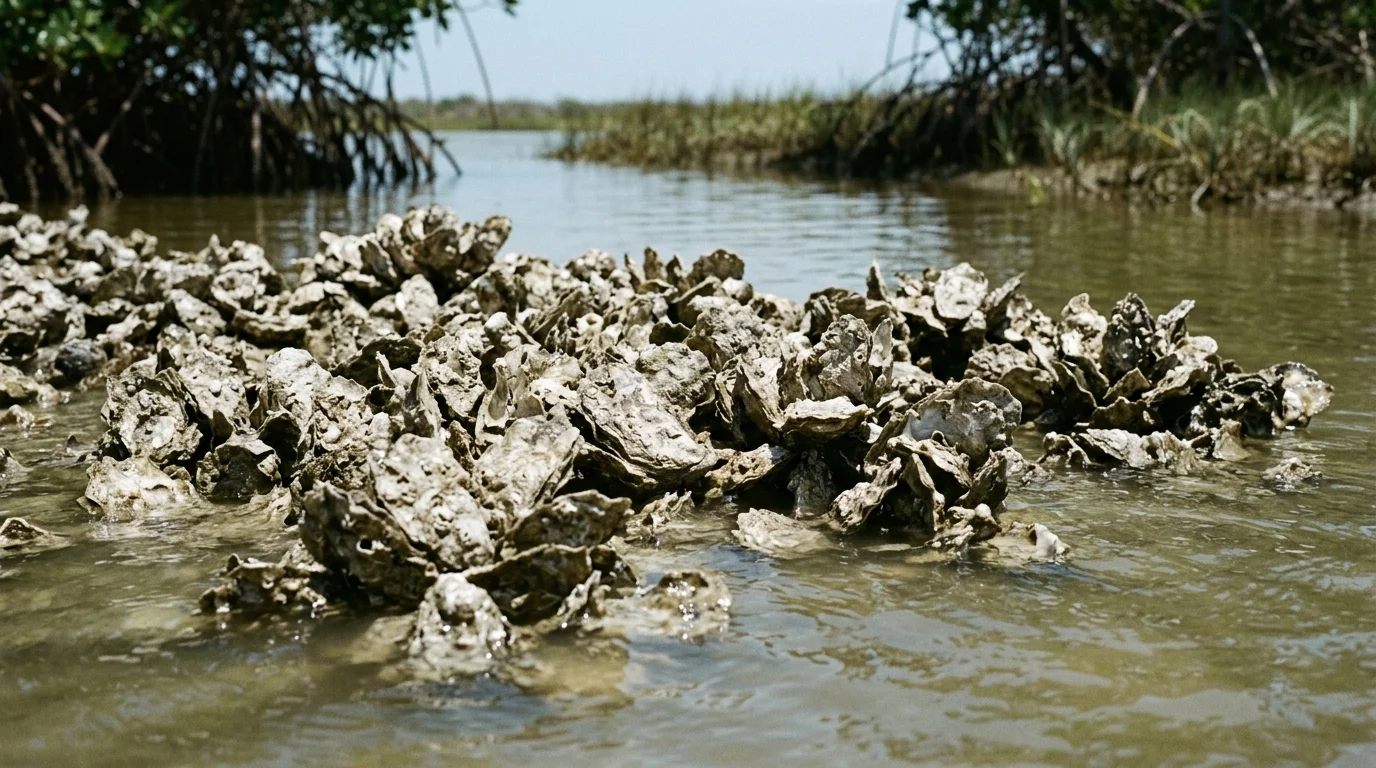
Manatee County, Florida is moving to rebuild its oyster reefs, hiring contractors to install the shell and substrate that allow oyster colonies to take hold and grow along its battered estuarine shorelines.
The effort comes after one of the roughest stretches in the county's environmental history. In 2021, a failed phosphate processing facility called Piney Point discharged 215 million gallons of nutrient-laden wastewater into Tampa Bay, triggering a massive red tide bloom that killed tons of marine life and blanketed local beaches in rotting fish. Hurricanes Ian, Idalia, Helene and Milton followed in quick succession from 2022 through 2024, eroding shorelines and hammering coastal habitats that were already weakened.
Oysters are central to the recovery strategy because they do several jobs at once. A single adult oyster filters up to 50 gallons of water per day, pulling out the excess nitrogen that fuels red tide and algal blooms. Dense reefs also absorb wave energy, protecting shorelines from erosion, and provide habitat for fish, crabs and other marine life. Florida has lost an estimated 85% of its historic oyster reefs over the past century to overharvesting, dredging, sedimentation and nutrient pollution, a collapse that stripped coastal waters of one of their most effective natural filters.
Manatee County's coastline touches Tampa Bay, Sarasota Bay and the Manatee River estuary, all of which carry federal designations as impaired waters or estuaries of national significance. Regional restoration programs run by Tampa Bay Watch and Sarasota Bay Watch have installed smaller oyster reef projects at sites like Robinson Preserve and Perico Preserve in recent years, and the county's project fits into that broader push.
The restoration work is also politically notable. Manatee County's Board of County Commissioners voted in late 2023 to roll back local wetland protections, drawing sharp backlash from environmental groups and residents before the county partially reversed course in 2024. Investing in active ecological restoration represents a different posture, even as development pressure on coastal land continues.
The county posted a solicitation for contractors on June 17, 2026. The total project budget and specific restoration sites have not been publicly detailed, so the full scale of the effort remains unclear until a contract is awarded.