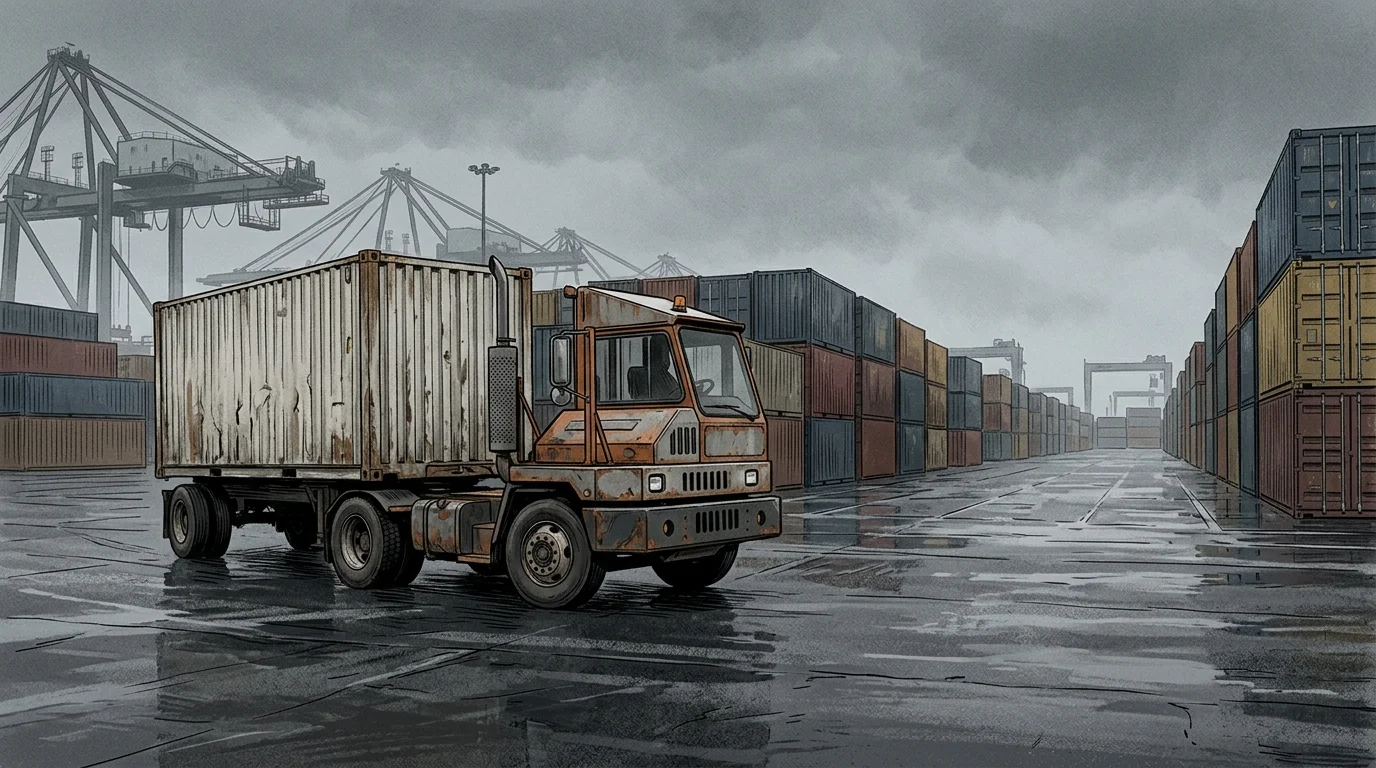
At the Port of Los Angeles, the diesel-powered yard tractors that shuttle containers around terminals are on their way out. Everport Terminal Services, which operates a stretch of berths at the nation's busiest container port, is now looking for battery-electric replacements as California's legally binding deadline to eliminate fossil-fuel cargo equipment draws closer.
Everport posted the solicitation through the port's procurement portal on June 27. The quantity of tractors and contract value weren't specified in the public record, leaving the full scope of the purchase unclear.
The move is driven by more than voluntary ambition. The California Air Resources Board adopted its Zero-Emission Cargo Handling Equipment rule in June 2024, requiring that any new cargo-handling equipment purchased starting in 2026 be zero-emission, with a hard deadline of 100% zero-emission fleets at California ports by 2035. Yard tractors, sometimes called hostlers, are the single most common piece of cargo-handling equipment at San Pedro Bay, with an estimated 1,500 to 2,000 in operation across the ports of Los Angeles and Long Beach combined.
Source: NationGraph.
The push to replace them has been building for two decades, rooted in community outrage over diesel pollution in port-adjacent neighborhoods like Wilmington and San Pedro, where childhood asthma rates run well above county averages. The 2006 San Pedro Bay Ports Clean Air Action Plan first set the goal of eliminating diesel equipment; the 2024 CARB rule made it mandatory.
Federal money has helped fund the transition. The EPA awarded the Port of Los Angeles $412 million in late 2024 through the Inflation Reduction Act's Clean Ports Program, one of the largest such grants in the country, to pay for zero-emission equipment and the charging infrastructure to power it. But the Trump administration's moves to roll back parts of IRA funding have cast some uncertainty over how much of that money will actually flow.
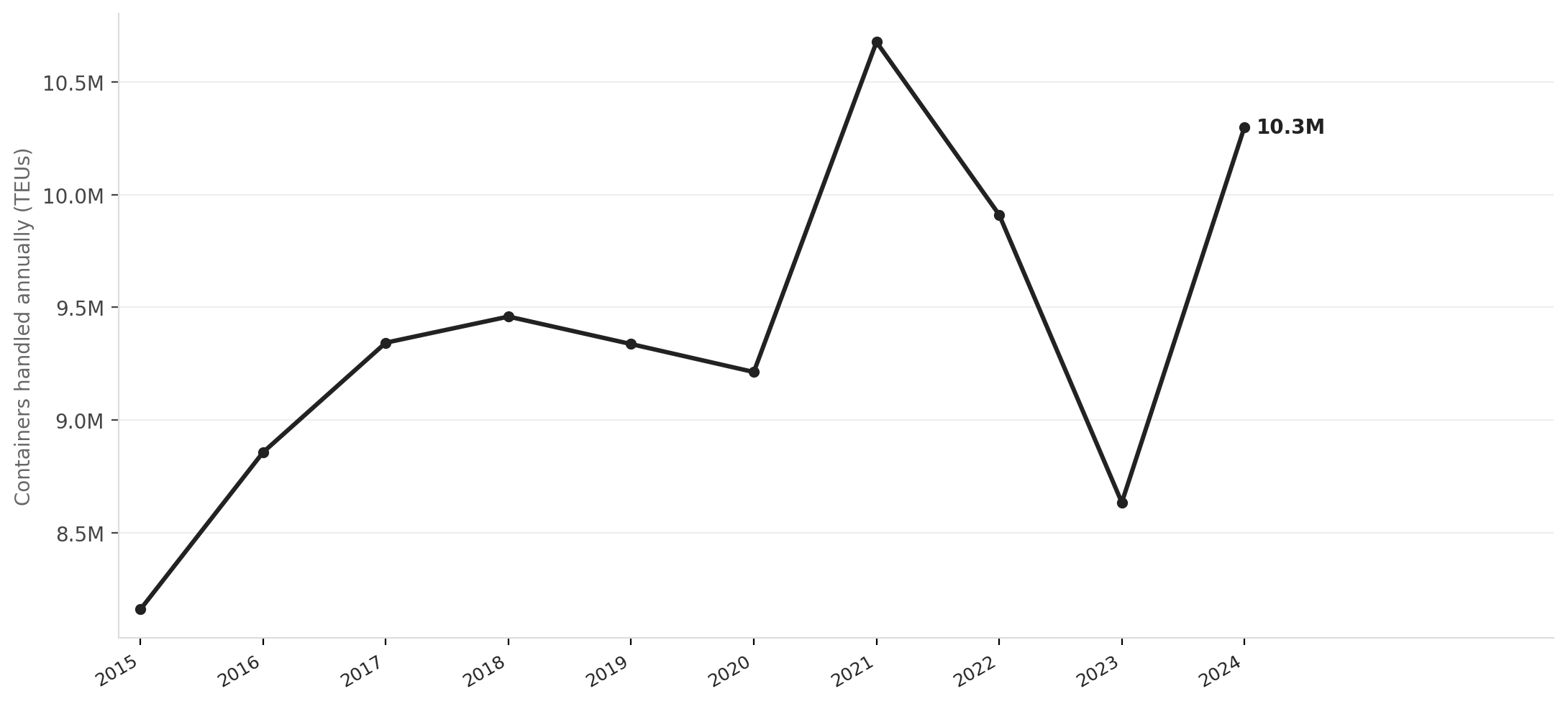
The timing is complicated in other ways. Cargo volumes at the port whipsawed in 2025 amid tariffs on Chinese imports, with Port Executive Director Gene Seroka publicly warning of steep declines in May of that year. Questions also linger about whether Southern California Edison can deliver the electrical capacity terminals will need as dozens of diesel machines go electric at once. Everport is not alone in the race: SSA Marine, Yusen Terminals and Fenix Marine have all issued similar procurements in recent years.
With CARB's 2035 deadline fixed and the 2026 new-purchase requirement already in effect, terminals have little room to slow-walk electrification. Whether the grid, federal funding and cargo economics can keep pace with the compliance clock remains an open question as the port works through supplier selection.