Six Washington institutions issued their first stormwater management RFP in more than 12 months during the last 30 days, a number that was zero in the same window a year ago. The spike is a behavioral signal: entities that sat out the initial wave of permit-driven procurement in early 2026 are now moving, and the regulatory clock explains why.
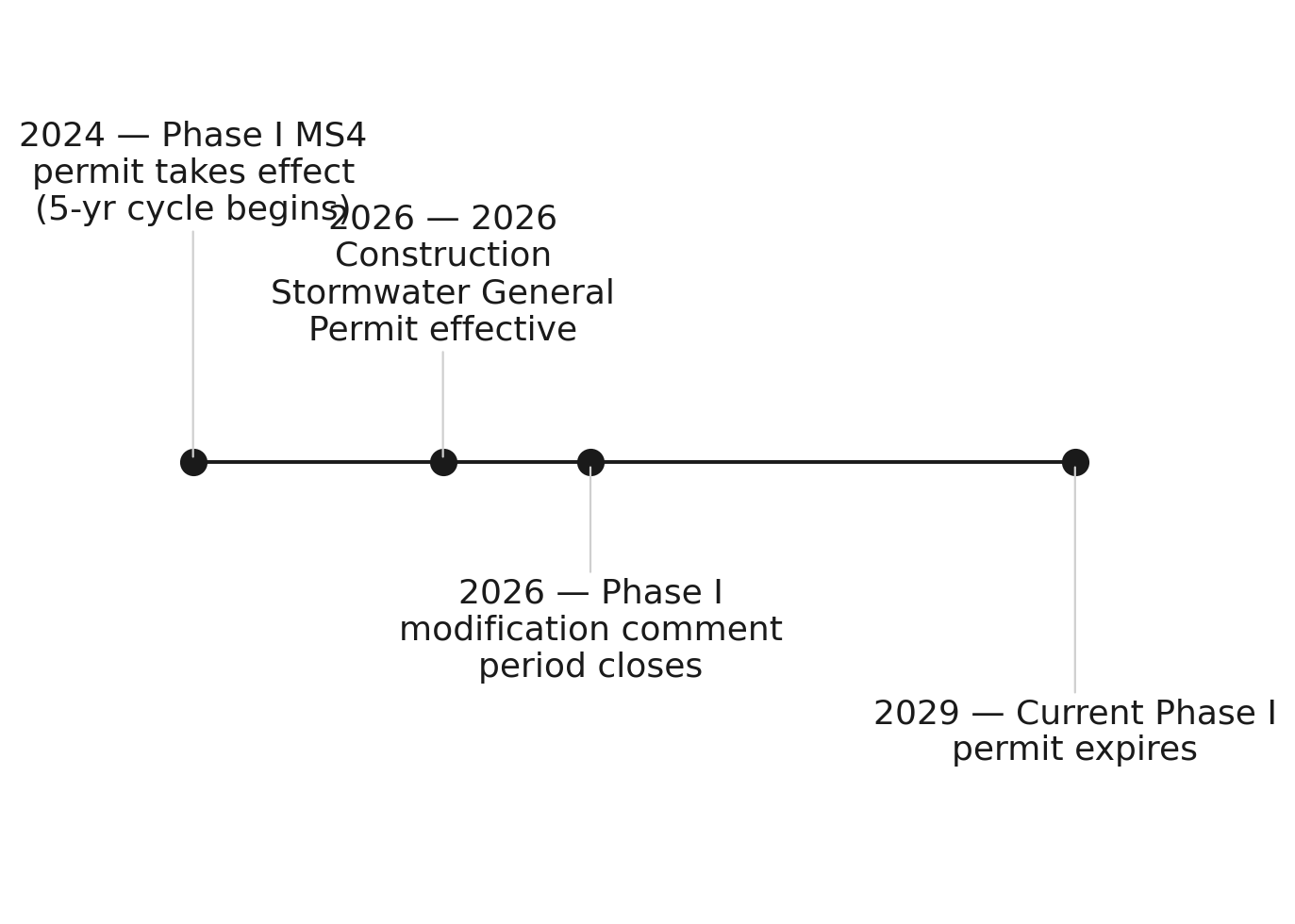
The forcing event is a mid-cycle modification to Washington State Department of Ecology's Phase I Municipal Stormwater General Permit, the NPDES permit that governs stormwater discharges from Washington's largest cities and counties. A mid-cycle modification happens at most once per five-year permit cycle. This one carries a public comment deadline of Nov. 2, 2026, and Ecology expects to issue a final decision in winter 2026. Whatever new compliance requirements emerge from that decision will be binding. Municipalities that have not yet aligned their contracts and programs with the current permit language will have even less runway once the modification is finalized.
The Phase I permit has been in effect since Aug. 1, 2024, and runs through July 31, 2029. A separate instrument, the 2026 Construction Stormwater General Permit, reissued Nov. 19, 2025 and effective Jan. 1, 2026, added a parallel compliance layer for construction-related discharges, governed by different rules and aimed at a different set of actors. The two permits share Ecology's Water Quality Program as their administrator but should not be read as a single regulatory event: the municipal permit covers ongoing stormwater operations by large local governments, while the construction permit covers discharges from active construction sites. Together, they have compressed the compliance calendar for jurisdictions that manage both obligations.
Source: NationGraph.
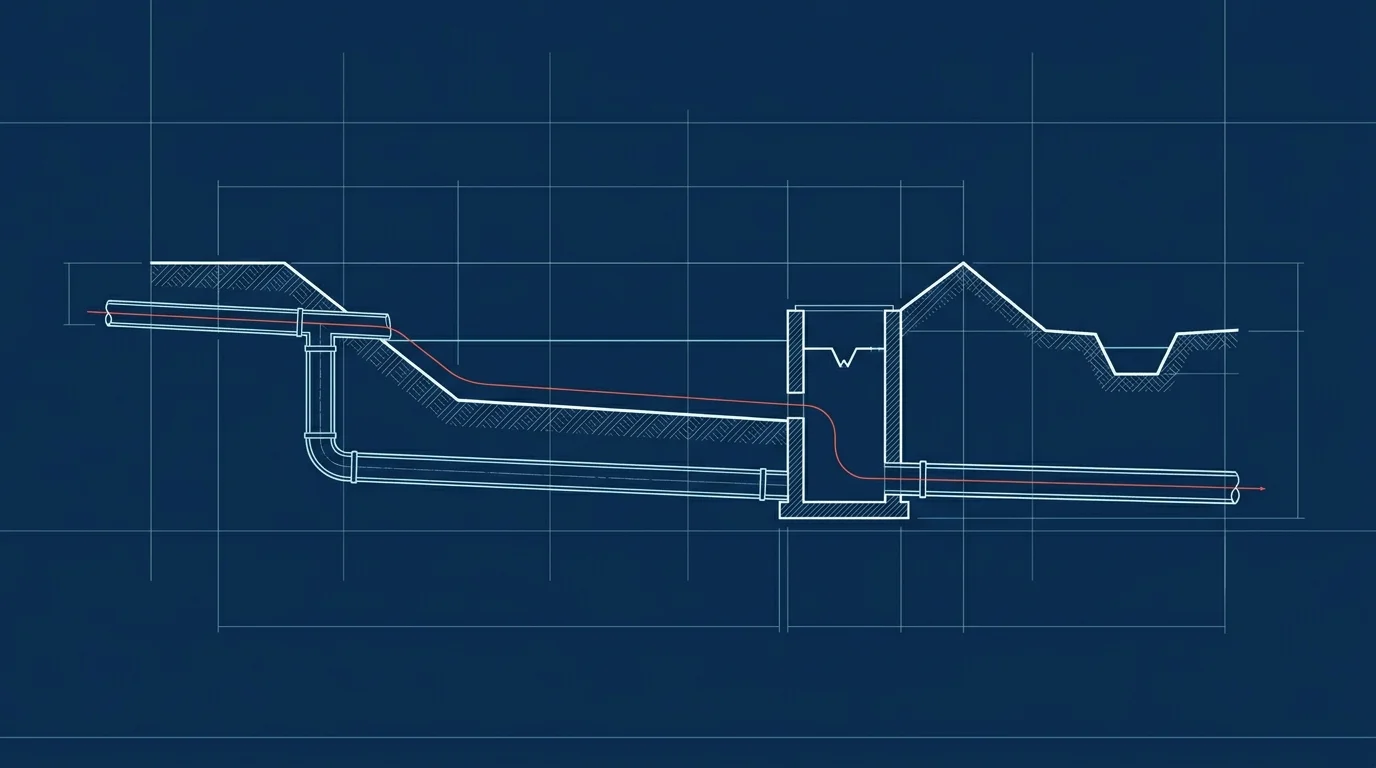
The six institutions that re-entered the market after more than a year of dormancy span the state's geography and institutional type. Spokane is the most active, posting eight RFPs in the period. Its procurements include a Combined Sewer Overflow Basin 34 stormwater separation facility, involving a diversion structure, lift station, and modular wetland treatment systems, and a regional public education campaign funded through Ecology's GROSS Grant program, a state competitive program that helps MS4 permittees satisfy the public outreach requirements embedded in the municipal stormwater permits. Washington DNR issued an RFP for Castle Rock stormwater improvements. Sammamish sought on-call stormwater engineering services. Mill Creek and Snohomish County combined on a pipe rehabilitation inspection contract. Shoreline, in King County, posted an RFP for 10th Ave NE stormwater improvements. Kitsap County included stormwater components in a road project procurement.
This is a catch-up moment. Monthly WA stormwater RFP activity ran at just two to five distinct institutions per month from October through December 2025, then spiked dramatically, 74 institutions in February 2026, 82 in May 2026, as the early wave of Phase I implementation spending hit. Activity quieted over the summer before the current September re-engagement. The six newly active institutions this month are not part of routine maintenance cycles; they are entities that missed the first procurement wave and are now compressing their timelines as the permit modification approaches a final decision.
The cascade from state permit to city code is already visible. Seattle's March 2026 draft summary of stormwater code changes explicitly updated definitions and requirements to align with the 2024 Phase I MS4 permit, illustrating how a state-level permit modification forces city-level code revision and, downstream, new contracting. Smaller jurisdictions facing the same alignment obligation but with less internal capacity are the likeliest candidates to have delayed, and the likeliest to be scrambling now.
Ecology has acknowledged the capacity gap. The agency has launched an MS4 Statewide Mentorship Network, actively seeking mentors and mentees among public-sector permittees, a structure that would be unnecessary if compliance capacity were evenly distributed. Abbey Stockwell, the Phase I Municipal Stormwater Permit Specialist at Ecology's Water Quality Program, is the named point of contact for the modification process.
Permittees also face an overlapping comment obligation that adds to the pressure. While the current modification comment period runs through Nov. 2, 2026, Ecology has already opened an early-input period for the 2029 permit reissuance, running July 24, 2026 through Feb. 19, 2027. Jurisdictions must engage on both tracks simultaneously, even as they race to get contracts in place under the current permit terms.
The next signal to watch is Ecology's winter 2026 final decision on the Phase I modification. If the agency tightens monitoring, reporting, or program requirements, the institutions that have not yet procured services will face an even shorter window to comply. The public hearing record from Sept. 9 and the comment submissions closing Nov. 2 will indicate how much additional burden the modification is likely to impose, and whether the current procurement surge is the beginning of the catch-up or still the early wave.