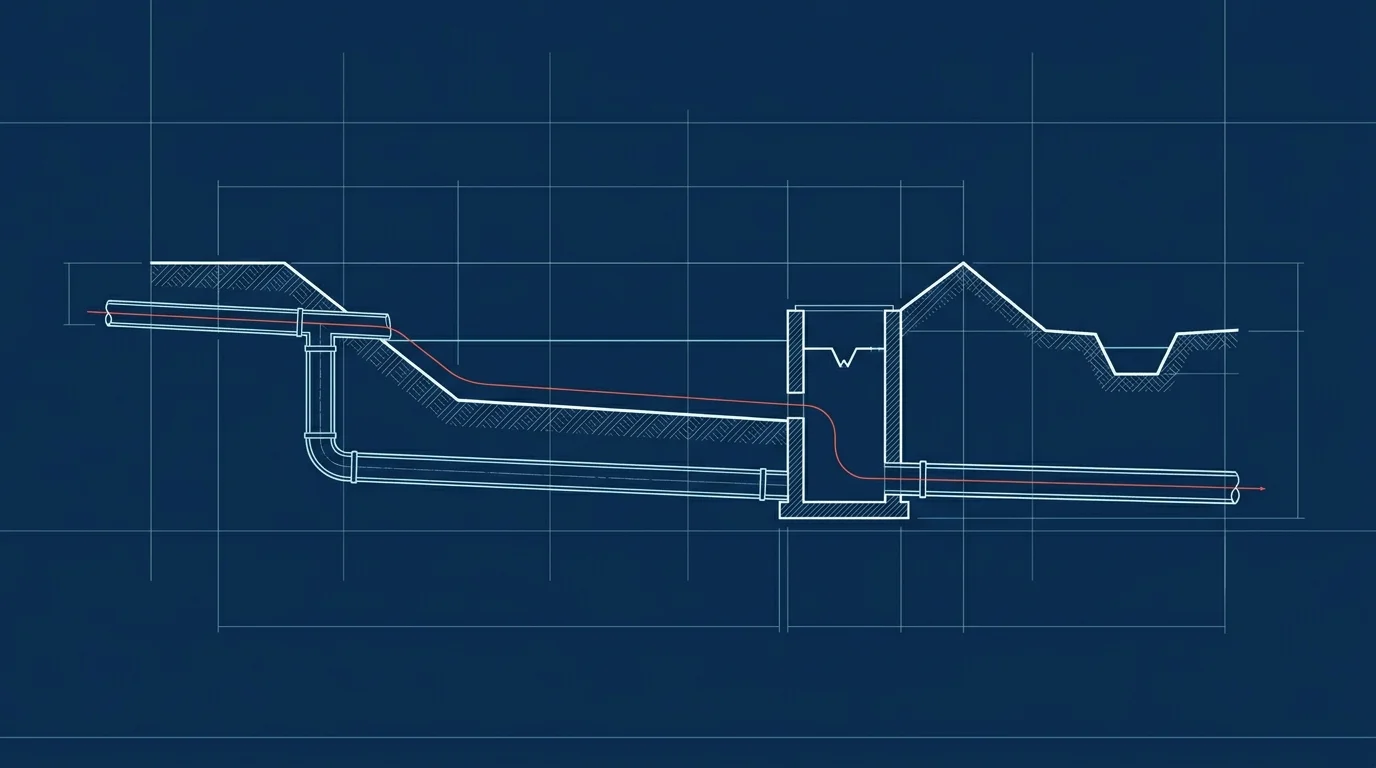
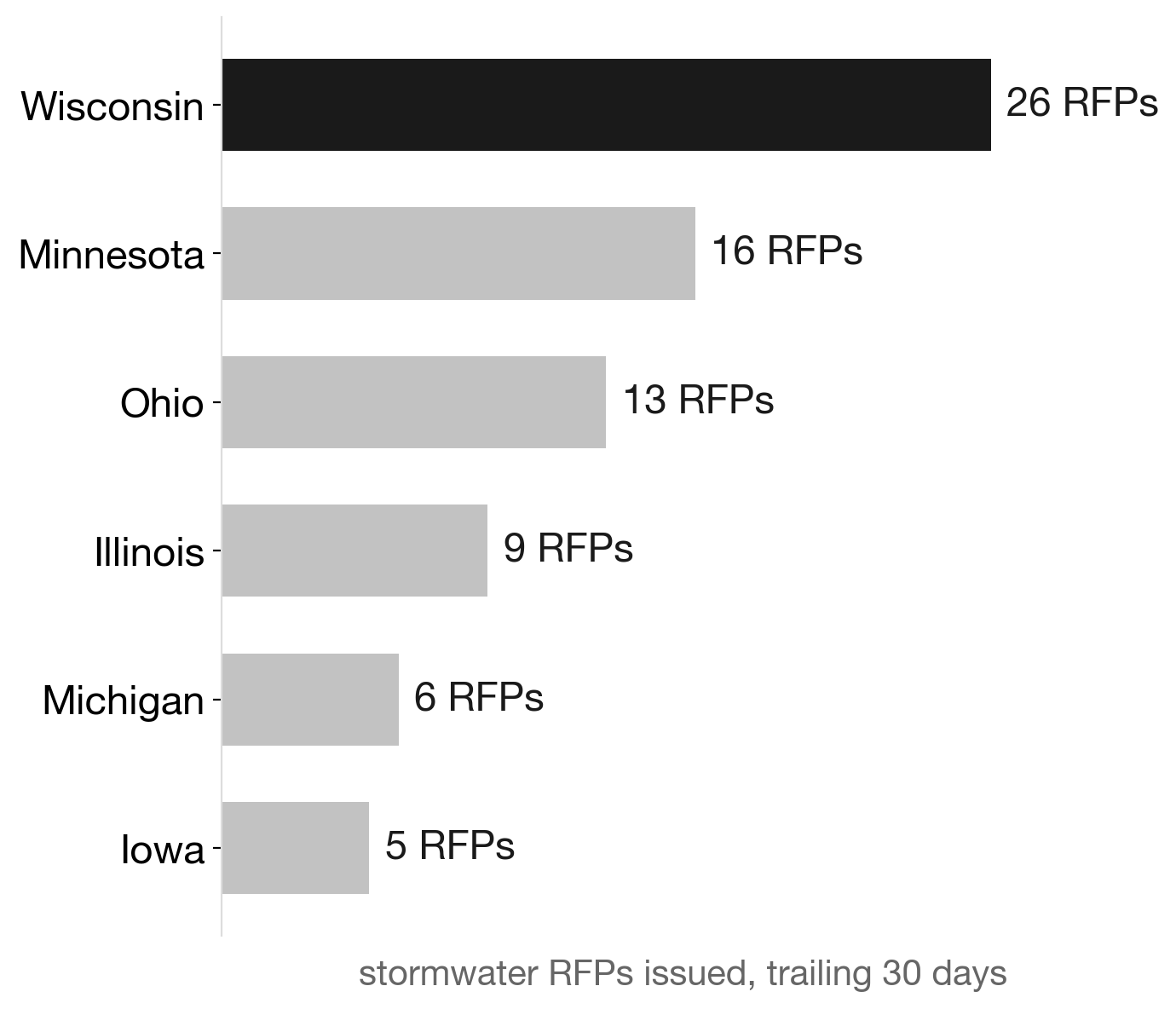
Wisconsin municipalities filed 26 stormwater-related RFPs in the last 30 days, against a 12-month average of roughly 7.8 per month, a 3.4x spike that leads every neighboring Midwest state and maps almost perfectly onto the southeastern corridor of counties where new, stricter permit obligations are landing hardest.
The driver is a regulatory clock, not a weather event. Wisconsin's Department of Natural Resources is reissuing all Municipal Separate Storm Sewer System (MS4) permits for the 2025-2030 five-year term under an updated Chapter NR 216 rule published in the Wisconsin Administrative Register in January 2026. The revision tightened the minimum control measures that permit holders must demonstrate: programs now need to be specific, measurable, and tied to TMDL (total maximum daily load) obligations for impaired waterways. For municipalities that have been coasting on lapsed permits under administrative extension, the message is clear, document what you're building or face a compliance gap in the first year of a new permit cycle.
The result is a procurement wave. After removing a UW-Parkside re-post that inflated raw counts, approximately 14 to 15 distinct projects are confirmed across 13 institutions, still roughly double the monthly baseline. The Milwaukee Metropolitan Sewerage District is pursuing sewer rehabilitation work tied to FEMA levee accreditation. The City of Waukesha has active bids out for the Patrick Ponds and Summit Woods pond rehabilitation projects. The City of Whitewater is procuring engineering services for three separate detention basin improvements simultaneously. The Village of Waunakee and the Village of Bayside, in partnership with Schlitz Audubon Nature Center, round out the green infrastructure side of the list. The project types, basin rehab, pond dredging, subdivision drainage, green infrastructure installation, are precisely the capital investments the DNR's new MS4 Best Practices Menu identifies as qualifying compliance measures.
Source: NationGraph.
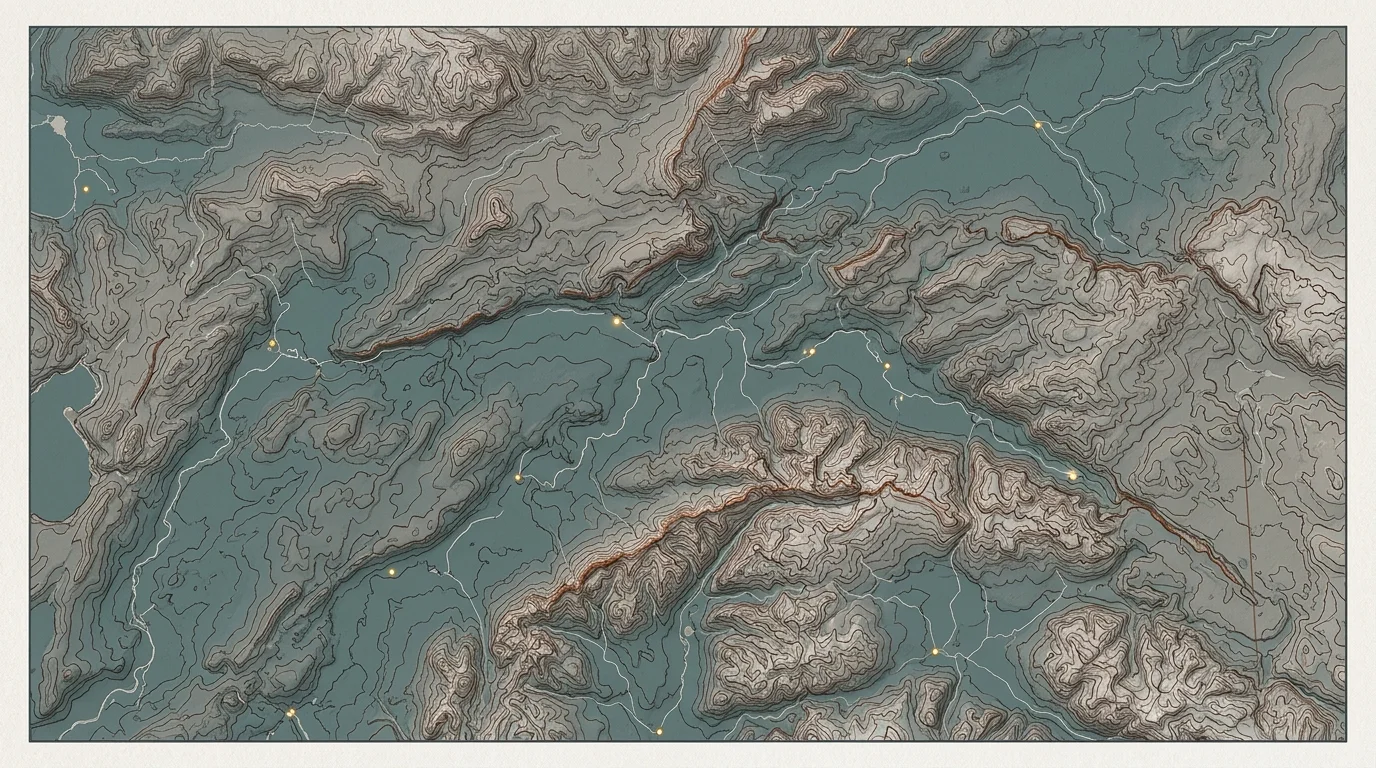
The geographic concentration is not a coincidence. Wisconsin's Southeast Region alone holds 103 of the state's 245 MS4 permittees, spread across Milwaukee, Waukesha, Walworth, Racine, Kenosha, Sheboygan, Washington, and Ozaukee counties. That corridor combines the state's highest impervious surface densities with the longest list of EPA-listed impaired waterways, meaning TMDL obligations are both larger and more legally exposed than in the rest of the state. When the DNR issued individual permit fact sheets for southeastern communities, Cedarburg received its 2025-2030 MS4 fact sheet in June 2025, it put every municipal engineer in the region on notice that the compliance bar had moved.
The federal fiscal backdrop is also supportive. EPA grants currently disbursing to Wisconsin DNR include a $148 million Drinking Water State Revolving Fund, a $66.6 million Clean Water SRF, and $60.4 million in Performance Partnership grants. Separately, the state's Clean Water Fund Program provides low-interest loans specifically for WPDES permit compliance infrastructure, giving municipalities a financing mechanism alongside the grant dollars. That combination, a hard regulatory deadline plus accessible capital, is what separates this moment from prior permit cycles, when compliance timelines were softer and funding pathways less direct.
Wisconsin's 26 RFPs in the window outpace Minnesota's 16, Ohio's 13, Illinois's 9, Michigan's 6, and Iowa's 5. The gap is partly structural: Wisconsin runs one of the most prescriptive state-level MS4 programs in the region, with individual fact sheets for each of its 245 permittees and mandatory annual eReporting that makes noncompliance visible. States with more permissive MS4 frameworks generate less procurement pressure at reissuance, because the compliance bar is lower and the documentation burden is lighter.
For residents in the southeastern counties, the practical effect is new and rebuilt drainage infrastructure over the next two to three construction seasons. Detention basins slow runoff before it reaches lakes and rivers already on state impairment lists. Pond dredging restores capacity that sediment has gradually stolen. Green infrastructure at schools and nature centers handles precipitation at the source. None of this is visible in the way a bridge repair is, but the permit mechanism forcing it is among the most consequential tools Wisconsin has for meeting its Clean Water Act obligations.
The next signal to watch is the pace of permit issuance itself. Municipalities operating under administratively extended lapsed permits must continue meeting old conditions until new permits issue, but the new permit, when it arrives, starts the compliance clock on measurable program outcomes. Communities that have procurement out now will be in a stronger position to demonstrate capital progress when their individual reissuance packets land. Those that haven't started will face a compressed timeline in 2027 and 2028 as the reissuance queue works through all 245 permittees.