Virginia school divisions have issued 7 school safety RFPs in the last 30 days, against a trailing 12-month average of roughly 2 per month. That 3.5x surge is not showing up in neighboring states: North Carolina, the next closest, sits at 3 RFPs in the same window against its own prior average of about 2.25 per month, essentially flat. The Virginia spike is the first measurable procurement response to Governor Abigail Spanberger's bipartisan school safety package, signed April 2, 2026 and effective July 1, and it is arriving with a structural tension baked in. The legislation created significant new authority. Almost no new money came with it.
The centerpiece is Alyssa's Law (HB 592), which makes Virginia the 12th state to authorize wearable panic alarm systems in all public elementary and secondary schools. The word "authorize" is doing real work there. The statute gives school boards the legal permission to procure panic alarms; it does not require them to, and it appropriates no direct funding to help them do so. A companion VDOE grant program was written into the bill, but it is contingent on a future General Assembly appropriation that has not yet been made. Education advocates and local officials flagged the exposure almost immediately: Virginia Beach School Board member Melinda Rogers publicly questioned whether the state would provide financial support before her division was expected to act.
The legislation Spanberger signed is actually a stack of distinct instruments, not a single program, and conflating them obscures where the financial pressure lands. HB 592 is the permissive panic-alarm authorization. HB 1071 is a separate mandate: it strengthens threat assessment teams and requires training on emergency substantial risk orders, directing changes at school personnel and the Virginia Center for School and Campus Safety rather than at hardware budgets. SB 529 enhances training for school security officers. Each law does a different thing. None of the three comes with a dedicated appropriation.
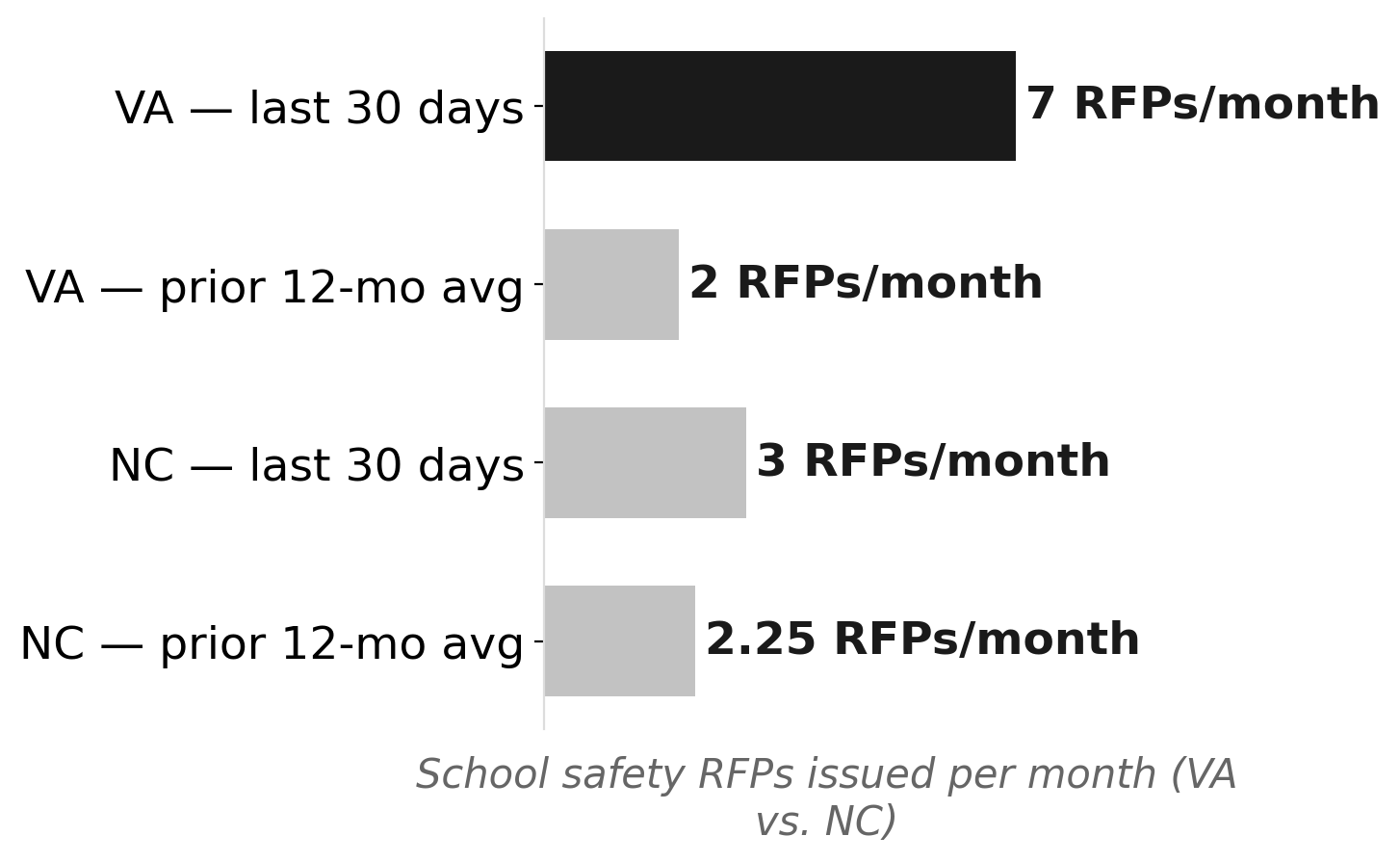
Source: NationGraph.
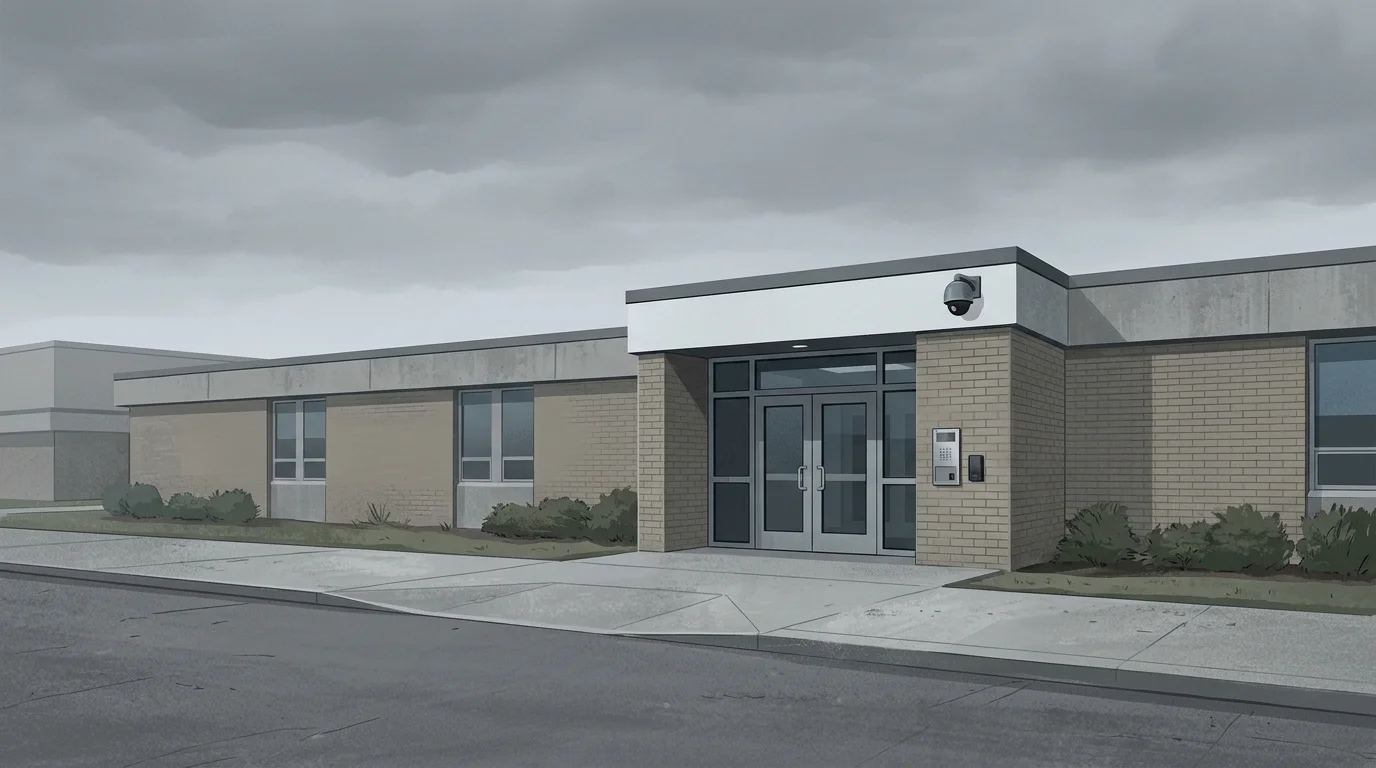
What fills the gap, practically, is a pre-existing state financing mechanism that predates this legislative session by more than a decade. Virginia's School Security Equipment Grant Program, now in its 13th consecutive year at $12 million annually for FY2025-26, is funded through five-year equipment notes issued by the Virginia Public School Authority, with debt service drawn from the Literary Fund. It is a state program, not a federal one, and it covers the full range of physical security upgrades: intercoms, cameras, access control, entry vestibules, bus cameras, and now panic systems. The active procurements visible in this month's RFP surge reflect exactly that scope. Louisa County is sourcing a public-safety radio amplification system for its schools. Henrico County has issued two updated solicitations to build a new security entry vestibule at Johnson Elementary. James City County is bidding a school bus video monitoring contract. Hampton City Schools is jointly procuring industrial hygiene and respiratory safety services.
The geographic spread matters. These are not concentrated in Northern Virginia or a single metro. They come from Hampton Roads, the Richmond suburbs, and Central Virginia, suggesting broad-based uptake rather than a response by the divisions with the largest administrative capacity.
Federal dollars are also in play, though they arrive through separate channels with different purposes. A $1.93 million DOJ STOP School Violence grant runs through George Mason University to support threat assessment and prevention work in Prince William County middle schools through September 2027. Two DOJ School Violence Prevention Program grants, totaling roughly $767,000, went to the Washington County School Board and the Virginia Department of Criminal Justice Services, both starting October 2025. These are prevention and training investments, not hardware dollars, and they do not relieve the capital pressure HB 592 creates for divisions trying to install physical alarm systems by or shortly after July 1.
The $12 million annual state pool is the realistic near-term funding vehicle for most divisions, but spread across 133 school divisions and more than 431 schools, it limits per-school amounts significantly. Divisions that have existing relationships with the grant program, or that can move procurement paperwork quickly, will be positioned better than those that cannot. That competitive dynamic is already visible in the RFP surge: the divisions issuing solicitations now are the ones trying to be first in line.
The next signal to watch is the grant application cycle for the School Security Equipment Grant Program and whether the General Assembly moves to fund the VDOE panic-alarm grant authorized under HB 592 in its next session. Until that appropriation materializes, the Virginia Mercury's assessment of the legislation as a bipartisan political win remains accurate, and so does the concern that the financial obligation it creates falls unevenly on local budgets. The procurement boards are where that gap becomes concrete.