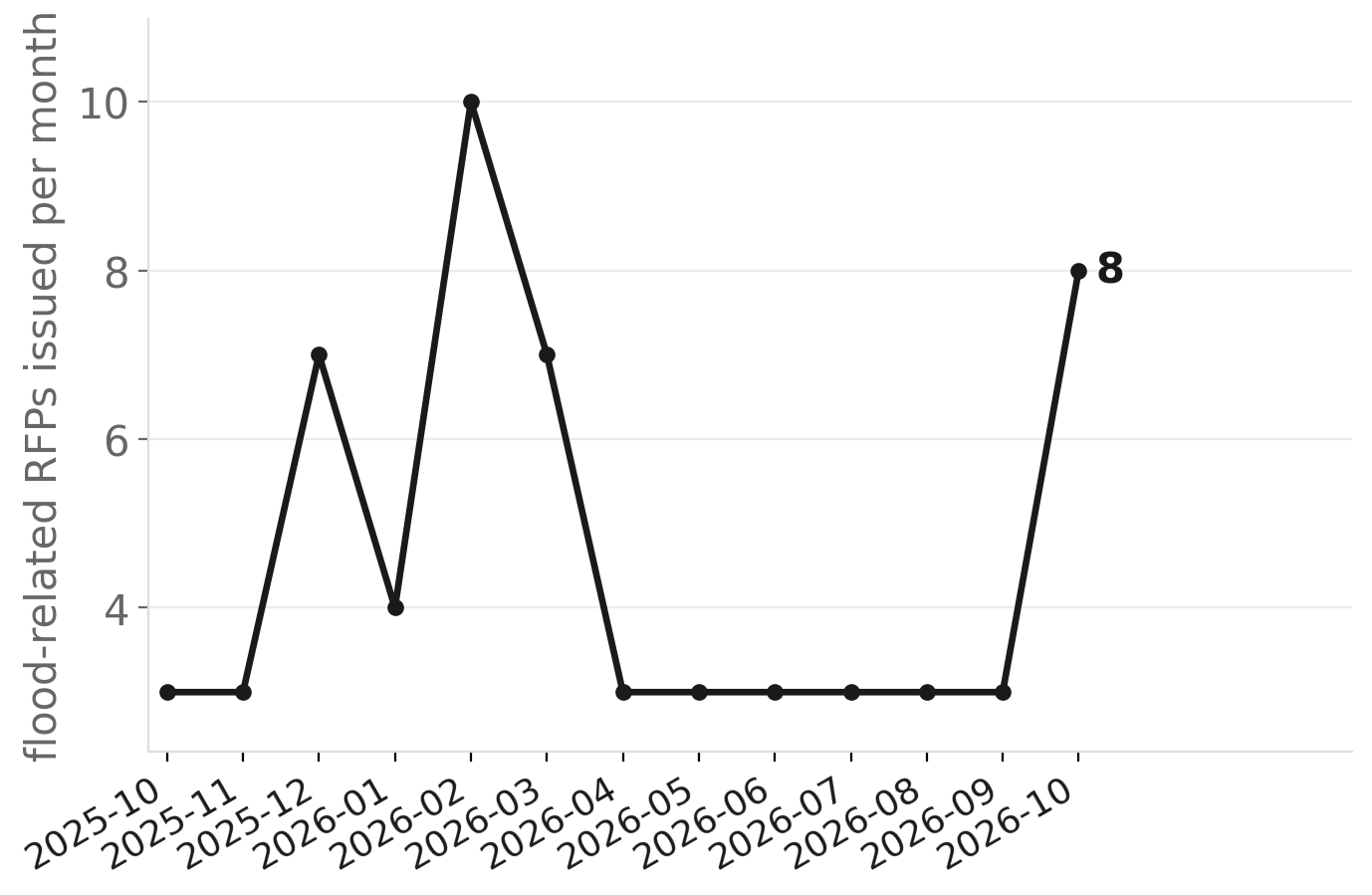
South Carolina logged 8 flood-control RFPs in the last 30 days, against a trailing 12-month average of about 3.1 per month, a 2.6x spike that looks like urgency because it is. Counties across the state are not suddenly more worried about flooding. They are staring at expiration dates on money they cannot afford to return.
The most acute deadline is December 31, 2026. The SC Office of Resilience (SCOR) distributed $65 million in federal ARPA funds to counties, cities, and towns statewide for stormwater infrastructure, and every dollar must be fully expended by year's end. That is not a soft target. Jurisdictions that have not yet hired contractors, engineers, or mapping consultants are now doing it in October, because November is too late to complete procurement and still close out construction invoices before the clock runs out.
ARPA is not the only timer running. SCOR is also administering a separate $19.6 million HUD Community Development Block Grant – Disaster Recovery set-aside targeting riverine and surface flood impacts in HUD-designated most-impacted areas from Hurricane Helene. Applications for that program closed in March 2026, which means projects are now moving out of planning and into active procurement. Simultaneously, roughly $8.4 million in USDA Emergency Watershed Protection Program grants, awarded in 2025 to Walhalla, Georgetown County, Greenville, North Augusta, and Williamsburg County following Helene and Tropical Storm Debby, carry 12-to-18-month performance periods that expire in 2026. Three separate programs, three separate administrators, three separate clocks, all striking at roughly the same moment.
Source: NationGraph.
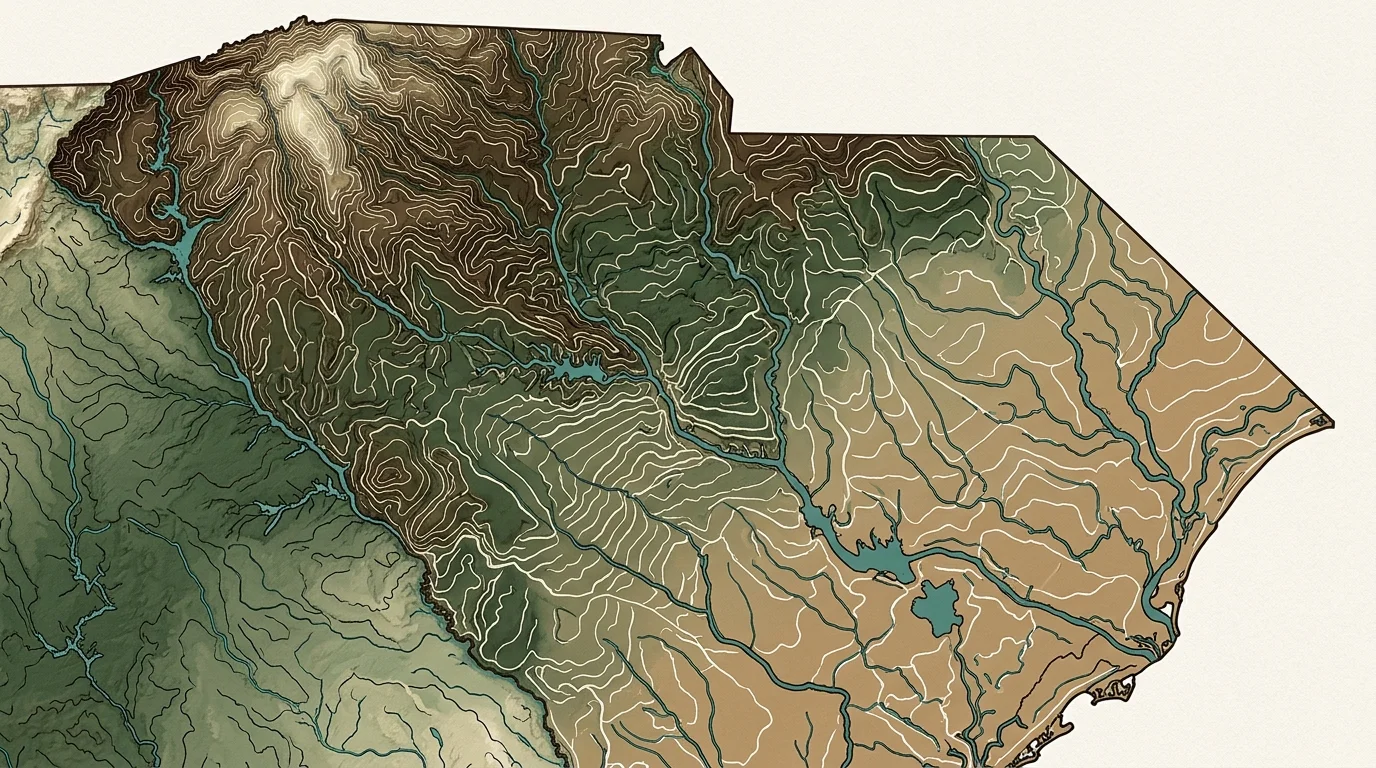
Horry County sits at the center of the current burst. The county, which absorbs both coastal surge from the Atlantic and riverine flooding from the Waccamaw and Little Pee Dee Rivers, issued a county-wide Flood Mapping, Mitigation, and Forecasting Program RFP on October 17, 2026, the largest single procurement in the window. That solicitation follows directly from a $4.9 million SC Rural Infrastructure Authority grant funding six concurrent stormwater construction projects across the county. As those construction phases near completion, Horry County's stormwater program is generating new downstream demand: finished drainage infrastructure needs updated flood models and forecasting systems to validate that the work performed as designed.
But the geography of the RFP surge extends well beyond the Grand Strand. Isle of Palms in Charleston County and Clemson in Pickens County have both issued procurements in the current window, with Clemson's Stormwater Master Plan RFP signaling that inland Upstate jurisdictions are executing on the same funding stack as coastal ones. That spread matters: this is not a coastal-hardening story. It is a statewide implementation story, playing out wherever SCOR sub-recipient agreements landed.
FEMA has been adding to the pile throughout the year. The agency announced $9 million for South Carolina recovery in June 2026 and a $5.5 million follow-on round in September, both through Public Assistance and Hazard Mitigation Grant programs tied to the Helene and Debby disaster declarations. FEMA's HMGP awards carry a 75 percent federal cost share and their own multi-year performance requirements, adding yet another procurement driver that runs on a different timeline from the ARPA and CDBG-DR deadlines.
SCOR itself has been signaling that the elevated pace is not accidental. The office reported 86 active flood mitigation projects statewide as of October 2026, and in February 2026 it briefed the SC legislature requesting recurring state appropriations for mitigation infrastructure and additional staffing, an explicit acknowledgment that the organization's workload is not going to contract once the federal deadlines pass. Whether the General Assembly funds that request will determine whether the current procurement wave has a successor or simply trails off when the grants are gone.
South Carolina's neighbors are running similar races. Virginia logged 14 flood-related RFPs in the same 30-day window, North Carolina 11. The Southeast-wide post-storm procurement surge suggests that the Helene and Debby recovery apparatus is hitting implementation simultaneously across the region, a function of grants awarded at roughly the same time now reaching the point where actual contracting can no longer be deferred.
For residents, the immediate signal is visible in local council agendas and county purchasing portals: construction bids, engineering contracts, and mapping studies appearing in clusters before the end of the calendar year. The next signal to watch is what SCOR reports on expenditure rates against the December 31 ARPA deadline. If a meaningful share of the $65 million is still unspent in November, expect emergency procurement actions, and, for some jurisdictions, the kind of scope reductions that happen when time runs out before the money does.