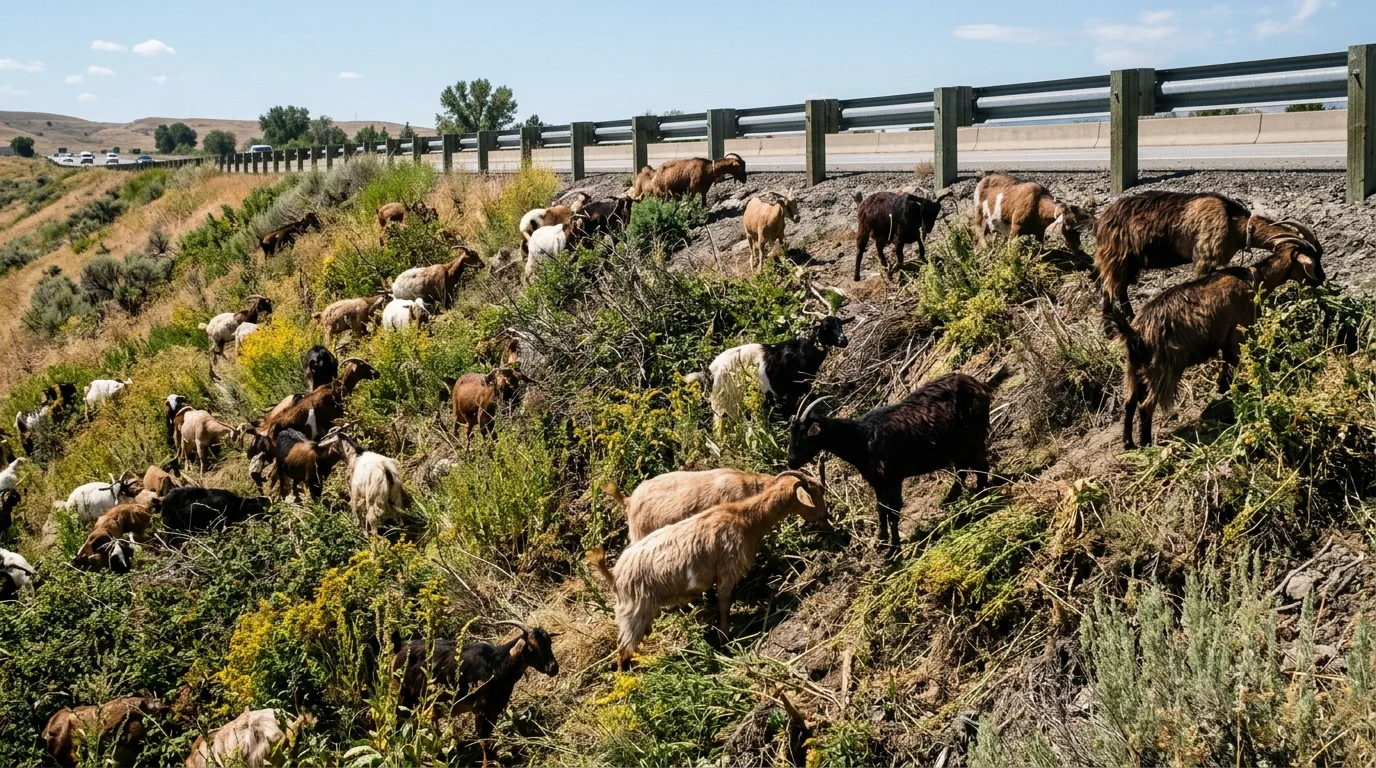
Maryland is turning to goats to manage invasive vegetation along state roads and rights-of-way, enlisting contract herds to chew through plants like kudzu, multiflora rose, and Japanese knotweed that resist mowers and have long been treated with chemical sprays.
The Maryland Department of Transportation has posted a solicitation for prescribed goat grazing services to control vegetation across the state highway network, which spans roughly 17,000 lane-miles plus extensive embankments, slopes, and utility corridors.
The timing reflects serious environmental pressure. Maryland operates under strict federal limits on nutrient and chemical runoff into the Chesapeake Bay, and herbicide drift from roadside spraying counts against those obligations. Reducing chemical use along transportation corridors has become a policy priority amid Gov. Wes Moore's administration pushing sustainability goals across state agencies. MDOT has framed this as part of an "integrated vegetation management" approach that blends biological, mechanical, and chemical tools rather than defaulting to spraying.
Goats are particularly well suited to terrain too steep or rocky for mowing equipment, including the sharp embankments along I-70, I-68, and western Maryland mountain routes where crews can't safely operate machinery. They also work in areas where herbicide drift near waterways raises regulatory concerns. A herd can clear dense invasive growth that would otherwise require repeated chemical applications.
The practice has spread steadily among transportation agencies over the past decade. Chattanooga, O'Hare Airport, and state DOTs in Virginia, New York and Missouri have all contracted goat herds for similar work. The broader shift accelerated after a 2015 finding on glyphosate and the subsequent wave of Roundup litigation that resulted in more than $10 billion in settlements against Bayer, making agencies more cautious about herbicide reliance. Maryland already has experienced local contractors in this space: Eco-Goats, a Davidsonville, Md.-based prescribed grazing company, has worked with municipal parks and private landowners across the region.
MDOT has not yet disclosed the contract value, acreage, or specific locations covered under the solicitation. The agency's broader push toward cleaner alternatives to chemical spraying mirrors steps other Maryland departments have taken, including rushing to lock in solar contracts before federal incentives shift.
Contractor selection details have not been released. Once a vendor is chosen, the scale and locations of the grazing program should become clearer.