Eighteen California institutions issued their first electric vehicle procurement solicitation in over a year during the last 30 days. A year ago, that number was zero.
The burst is not an ideological moment. It is a paperwork deadline.
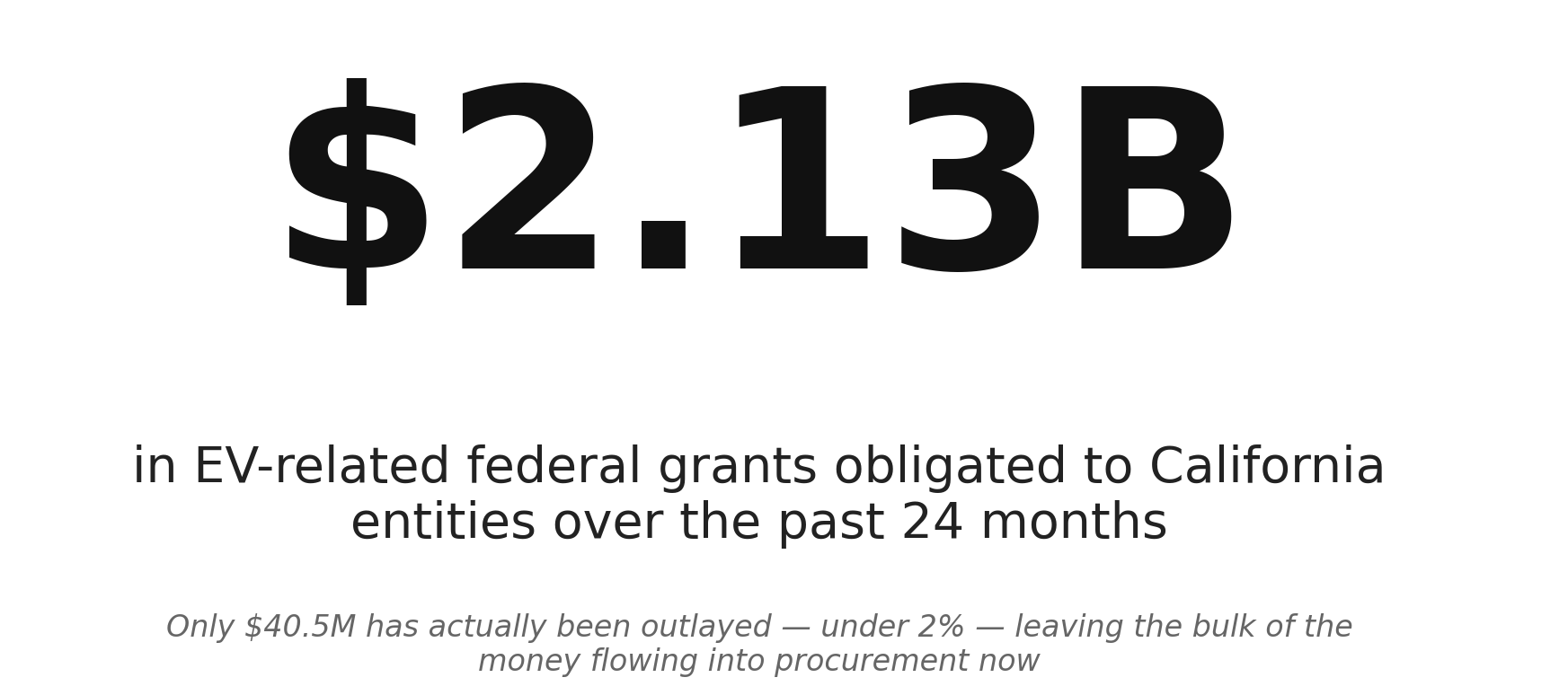
California is sitting on $2.13 billion in EV-related federal grants obligated to state entities over the past two years, of which only $40.5 million has actually been spent. The gap between committed and outlayed dollars is not a sign of dysfunction so much as a lag built into the structure of the funding: federal money flows to state and local accounts, then waits while agencies design projects, issue solicitations, select vendors, and clear environmental review. What the last 30 days represent is the procurement machinery finally catching up to the money.
Source: NationGraph.
The trigger is a stack of deadlines. California's 2025 NEVI Deployment Plan was approved September 10, 2025, qualifying the state to draw on the final federal fiscal year of the National Electric Vehicle Infrastructure program. The FHWA followed in October 2025 with an $885 million national FY2026 apportionment, of which California holds the single largest state share: $384 million over five years. The California Energy Commission then opened four simultaneous solicitations, GFO-25-602 through GFO-25-606, with application windows stacked from March through June 2026. The CEC's scoring rubric for those grants explicitly rewards project readiness and speed to deployment, meaning agencies that cannot show an active procurement vehicle when they apply will score lower than those that can. For an agency that hadn't touched EV infrastructure in 18 months, filing an RFP in the next few weeks is the path to a competitive grant score.
A January 2026 federal court ruling in Washington v. DOT cleared one more obstacle. The decision fully released previously frozen NEVI-obligated funds, removing a legal cloud that had given cautious procurement officers a reason to wait through most of early 2025.
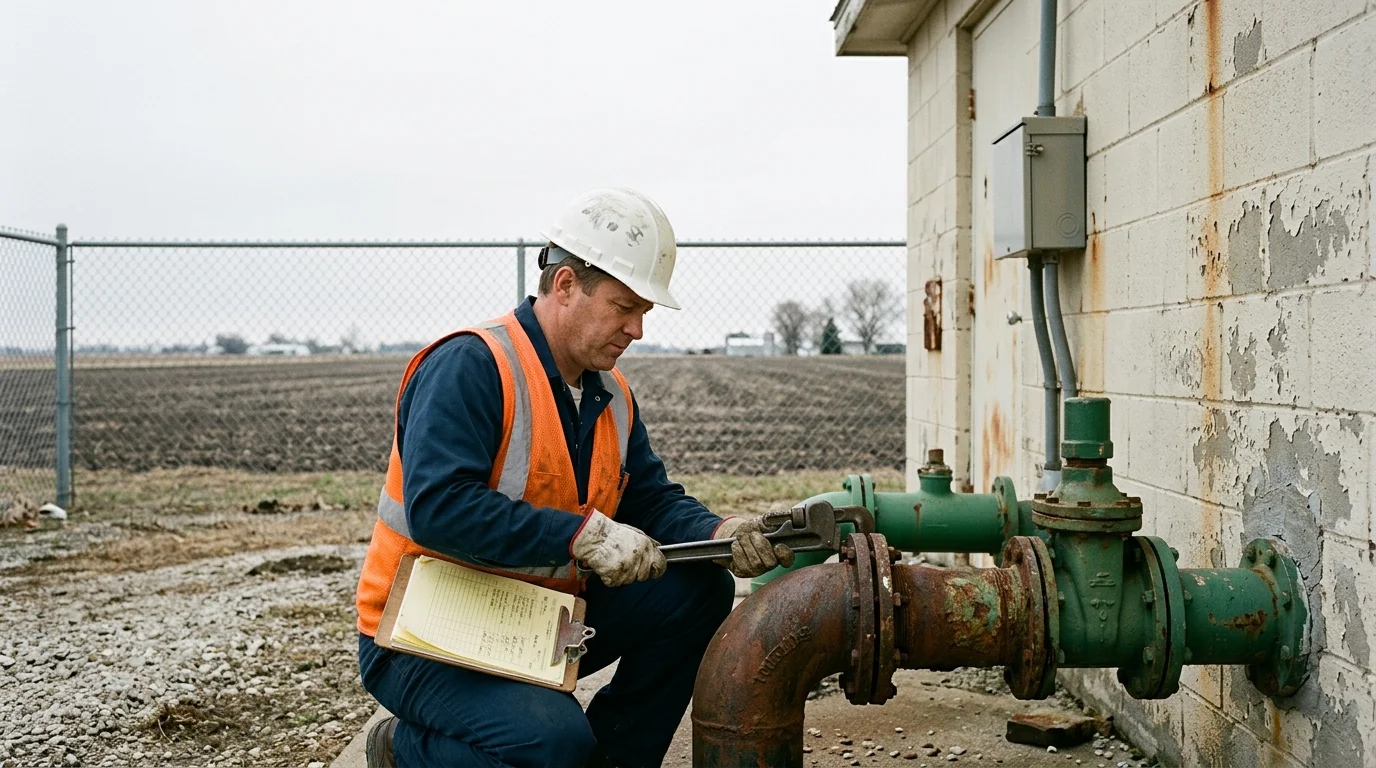
The resulting cohort of 18 first-time issuers spans the full institutional range and stretches across 15 counties from San Diego to Shasta. The California Department of Water Resources put out a solicitation for EV supply equipment at the Chrisman Pumping Plant. The City of San Diego issued an RFP for turnkey fleet EV charging infrastructure, with responses due July 31. Napa Valley Transportation Authority is seeking bids for a charger buildout at its bus maintenance facility. Colton Joint Unified School District is procuring EV charging equipment for its transportation yard. That combination, a state water agency, a major coastal city, a regional transit authority, and a school district in the Inland Empire, captures how broadly the pressure has now distributed. This is not a Bay Area phenomenon. It is not a coastal-city phenomenon. The geographic spread into mid-sized and inland agencies is the clearest signal that electrification procurement has moved past its early-adopter phase in California.
The longer-run structural pressure matters here too. CARB's Advanced Clean Cars II regulation mandates that all new light-duty vehicle sales in California be zero-emission by 2035. Every local fleet manager in the state is already operating under a hard statutory electrification clock, which makes charging infrastructure investment politically easier to defend at a budget meeting than it would be in a state without the mandate. Governor Newsom's 2026-27 budget proposal adds a $200 million ZEV rebate program designed to cushion the expiration of the federal $7,500 EV tax credit, extending the demand-side rationale for building out charging capacity now rather than later.
According to CEC program guidance, the NEVI solicitations are designed to push funding toward corridor-level and community-level charging gaps, not just the urban installations that early rounds favored. That orientation aligns with the current RFP cohort: a pumping plant in Kern County, a school district bus yard in San Bernardino County, a transit facility in Napa. These are not glamorous deployments, but they are the kind that close the coverage gaps the CEC has flagged as priorities.
The next signal to watch is how many of the 18 agencies that filed RFPs in the last 30 days successfully submit CEC grant applications before the June 2026 window closes. A vendor award without a grant application would suggest the procurement was driven by local capital budgets rather than federal subsidy chasing. A high conversion rate, agencies that filed RFPs and then submitted CEC applications, would confirm that the deadline mechanics are working as designed: federal money, translated into a scoring rubric, translated into a local purchasing document, translated eventually into chargers in the ground.