Federal grants carrying stormwater language in Alaska have reached $7.78 million in the past 90 days, up from $300,000 in the same window last year. The 2,400% jump looks startling until you examine what's actually being funded: not municipal drainage or clean water programs, but airport infrastructure, obligated under the final year of a five-year federal program that closes permanently on September 30, 2026.
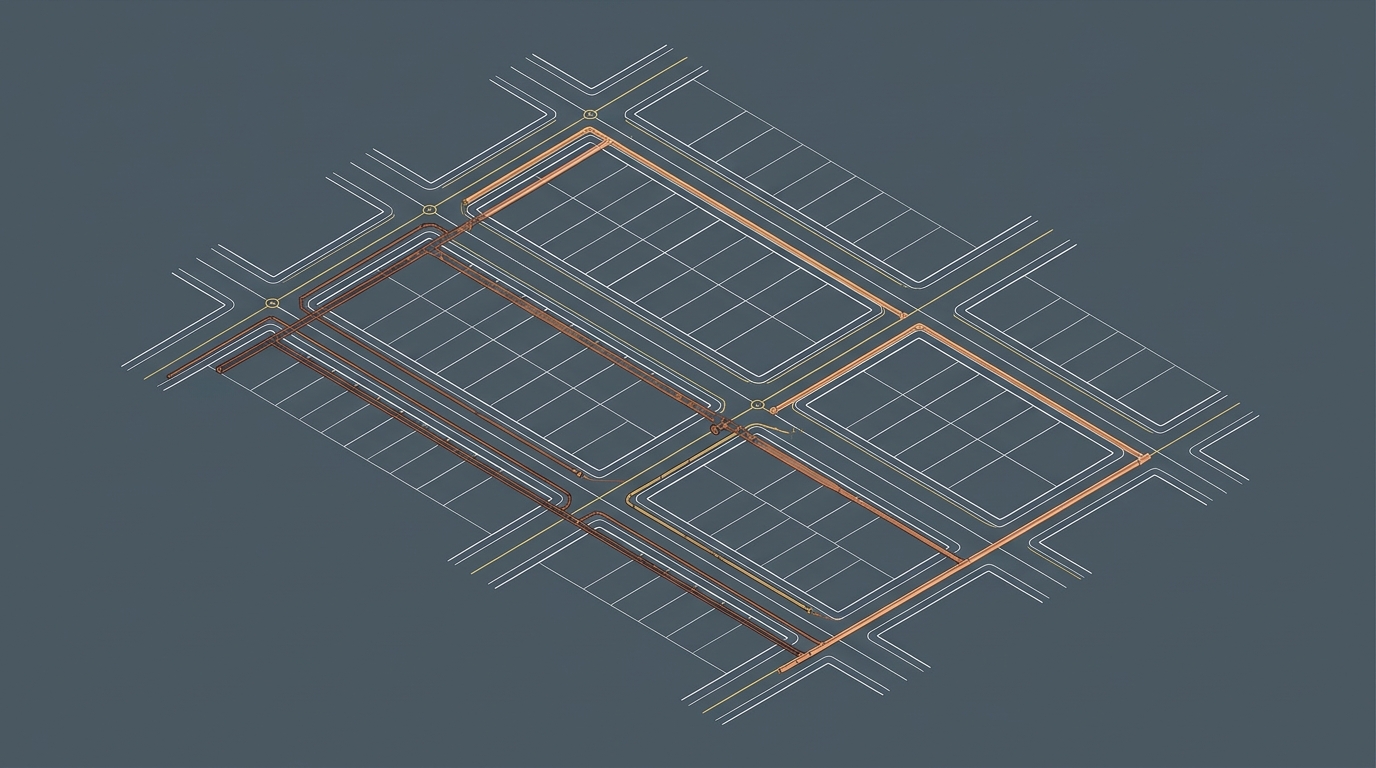
The number driving that surge is a single $7.78 million FAA Airport Infrastructure Grant to Alaska DOT&PF, obligated May 19, 2026, for construction of a new storm drain system alongside taxiway rehabilitation at an Alaska airport. It doesn't appear in the data as an aviation grant because the FAA classifies drainage construction as the primary deliverable when an airport's stormwater system is the reason it falls out of FAA conformity. The label is technically accurate. The category is misleading.
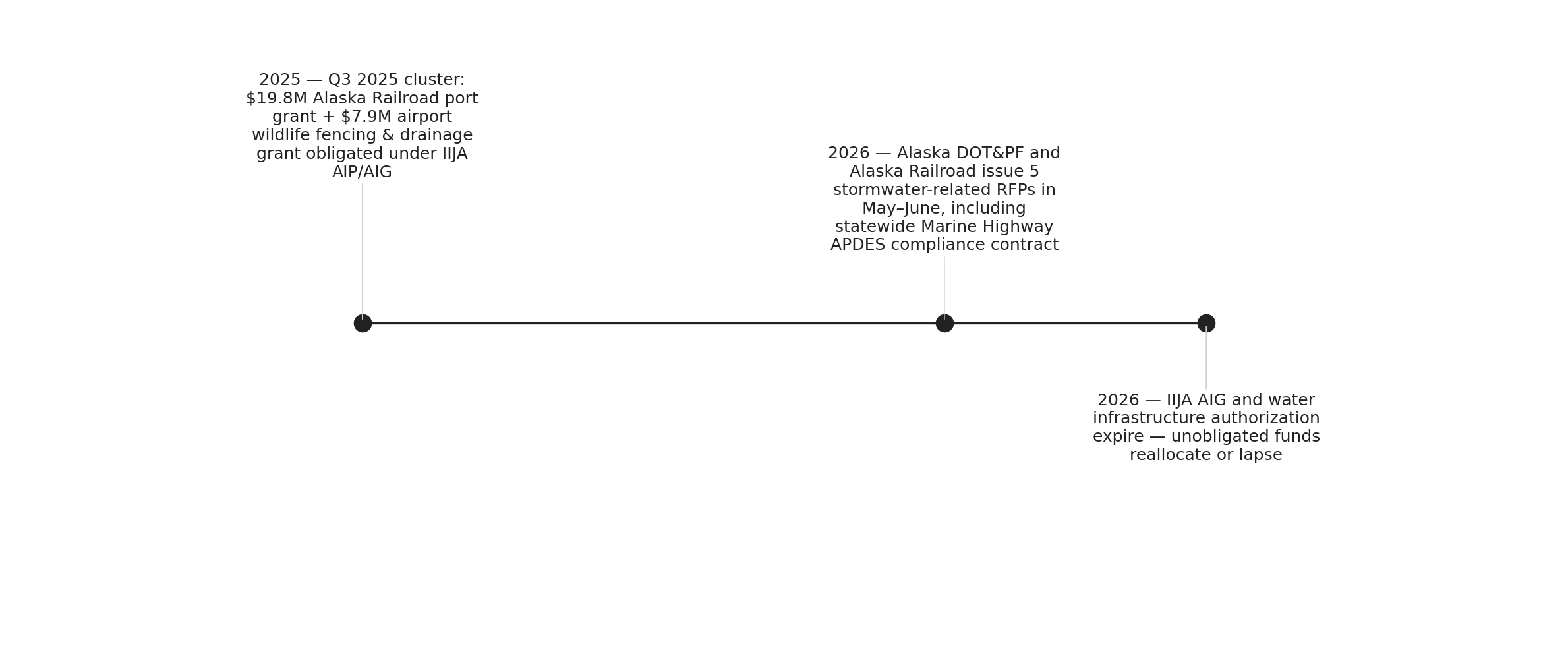
The real story is in the 12-month picture, and it's substantially larger. Alaska received $44.7 million in grants with stormwater language over the trailing year, outpacing California's $39 million despite having roughly one-sixtieth the population. A cluster of awards in Q3 2025 alone totaled $36.9 million, including a $19.8 million Alaska Railroad port infrastructure grant and a $7.9 million airport wildlife fencing and drainage grant, both under the IIJA's Airport Improvement Program umbrella. Alaska DOT&PF and the Alaska Railroad issued five stormwater-related RFPs in May and June 2026, among them a statewide Marine Highway System APDES compliance contract and a Whittier rail yard drain repair, confirming that agencies are actively spending down entitlements before the deadline.
Source: NationGraph.
The urgency is structural. According to the FAA, FY2026 is the fifth and final year of the IIJA's $14.5 billion Airport Infrastructure Grant authorization. The agency released its last $2.89 billion installment this year, and any funds not obligated by September 30 either expire or flow into a competitive reallocation pool where Alaska would compete against every other state. Alaska DOT&PF, which manages more than 260 public-use airports, the densest per-capita network in the country, has structural priority because of IIJA-specific carve-outs that include the Alaska Highway program and the Alaska Marine Highway System. But priority only helps if the paperwork closes in time.
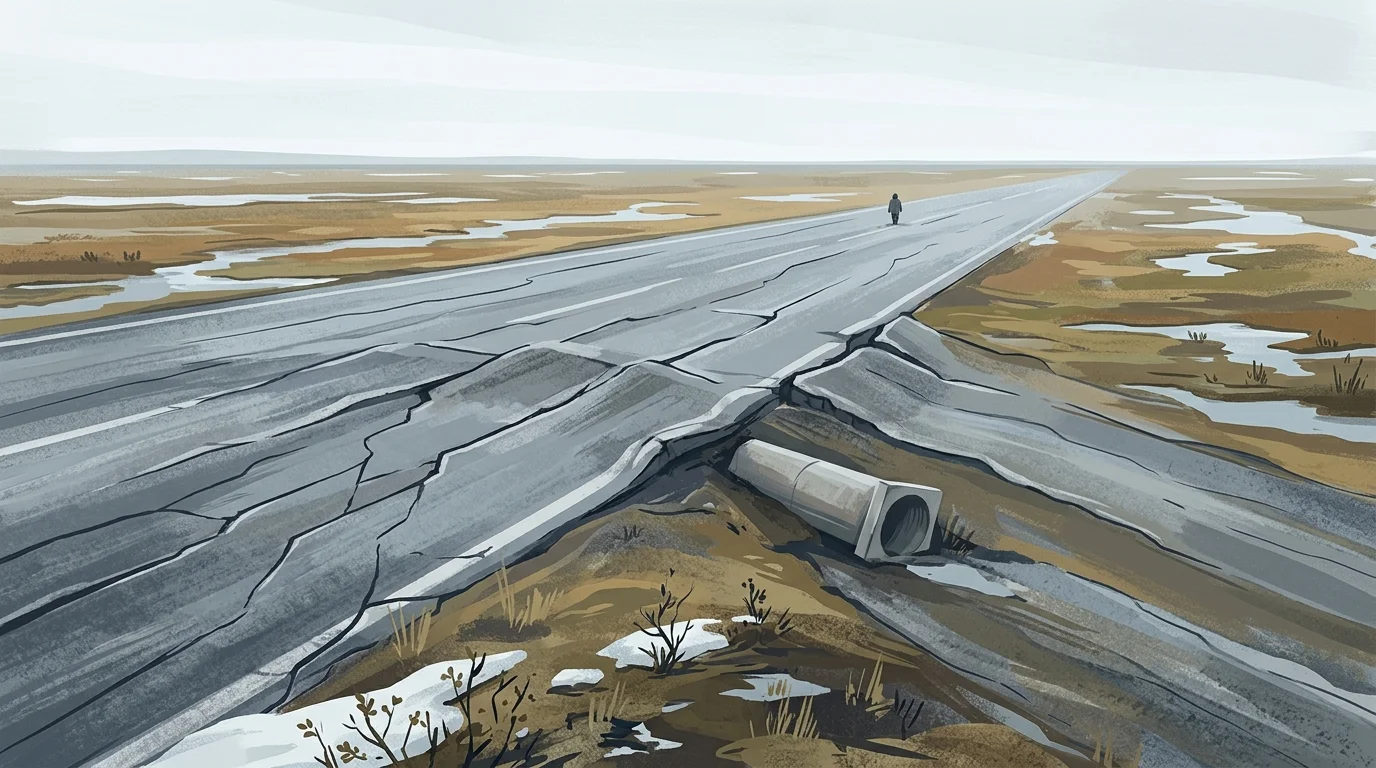
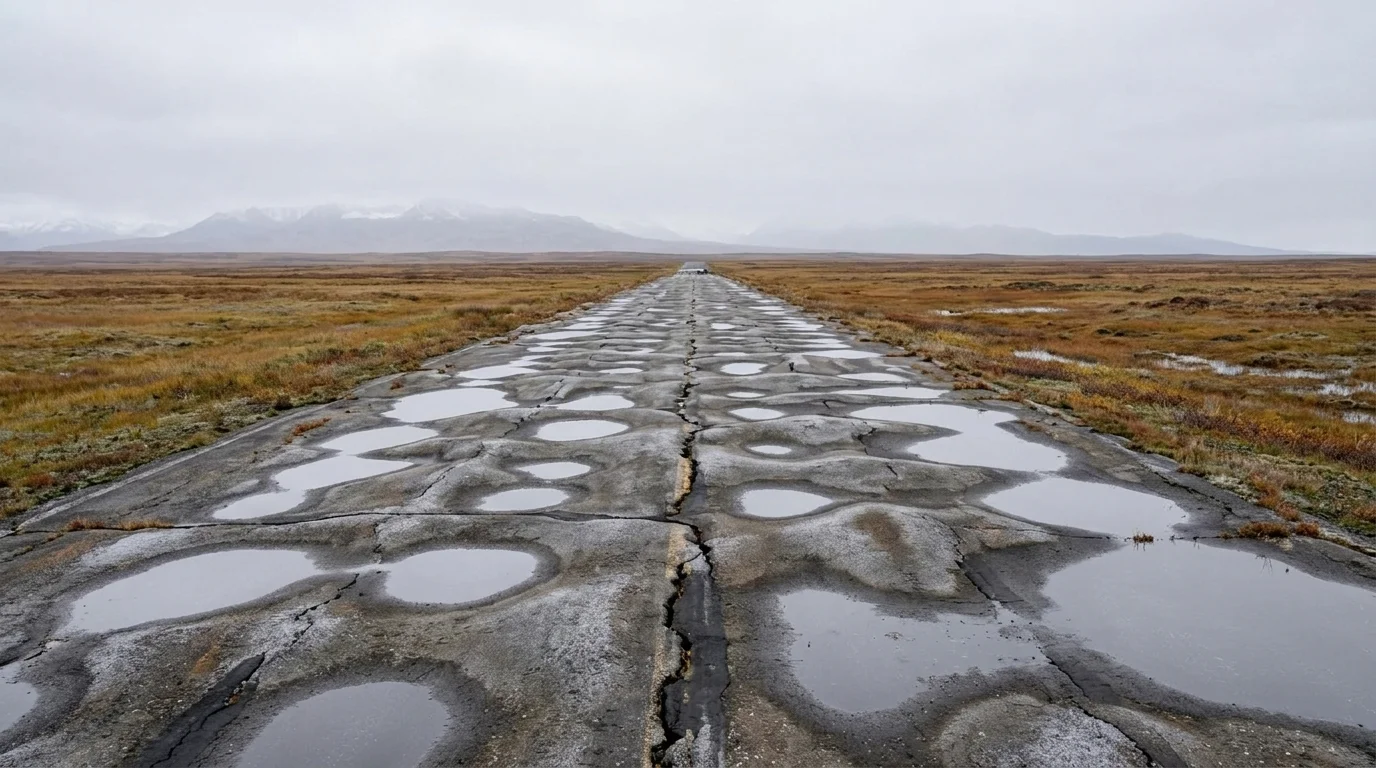
The drainage crisis those grants are addressing is not administrative. Alaska's airports were largely built on permafrost using mid-20th century designs that assumed stable ground. As permafrost thaws, those designs fail: water ponds on runways, infiltrates taxiway foundations, and undermines pavement in ways that can close an airport with little warning. For communities with no road access, a closed airport is a medical evacuation risk, not an inconvenience. A Harvard Belfer Center report from April 2025 documented that permafrost thaw-induced damage to runways and roads has already disrupted the delivery of critical medical services in remote Alaska. A 2025 study in Nature Communications Earth & Environment put the long-run cost of permafrost thaw damage to Alaska's buildings and roads at $37 to $51 billion by mid-century. The airport drainage grants are, in that context, a down payment on a much larger problem.
What the current spending surge does not represent is a broad stormwater infrastructure program. Alaska's Clean Water Fund SFY26 Intended Use Plan lists 42 projects totaling $187.1 million in funding requests, covering municipal wastewater, drinking water, and community-level stormwater systems across the state. Almost none of that demand is being met by the airport-grant-driven flows visible in the current data. The National League of Cities has urged Congress to reauthorize the IIJA's water infrastructure provisions, which also expire September 30, 2026, precisely because the gap between documented need and available funding is widening.
For Alaskans, the practical question after September 30 is what replaces these entitlement flows. The FAA's standard Airport Improvement Program continues, but at a fraction of the IIJA-era funding levels. No successor program has been authorized. The 42 Clean Water Fund projects sitting in the state's IUP have no guaranteed federal match. And the permafrost will keep thawing regardless of what Congress does next.
The next signal to watch is whether Alaska DOT&PF can close obligations on its remaining AIG entitlements before the September 30 deadline. Any funds that slip past that date move into competitive reallocation, where Alaska's remote airports would have to make a case alongside projects in states with far more political weight. The clock is specific: 83 days from the date of the May grant obligation.