Wisconsin is directing $271,300 in federal child care dollars to county-level contracts for 2026, part of a continuing effort to maintain access to affordable care in a state where thousands of families remain underserved.
The funds come from the federal Child Care and Development Block Grant, the primary federal subsidy program for low-income working families, and are being distributed by the Wisconsin Department of Children and Families. County contracts under this program can be used to support provider payments, expand available slots, or fill local supply gaps that the state's broader subsidy system doesn't reach on its own.
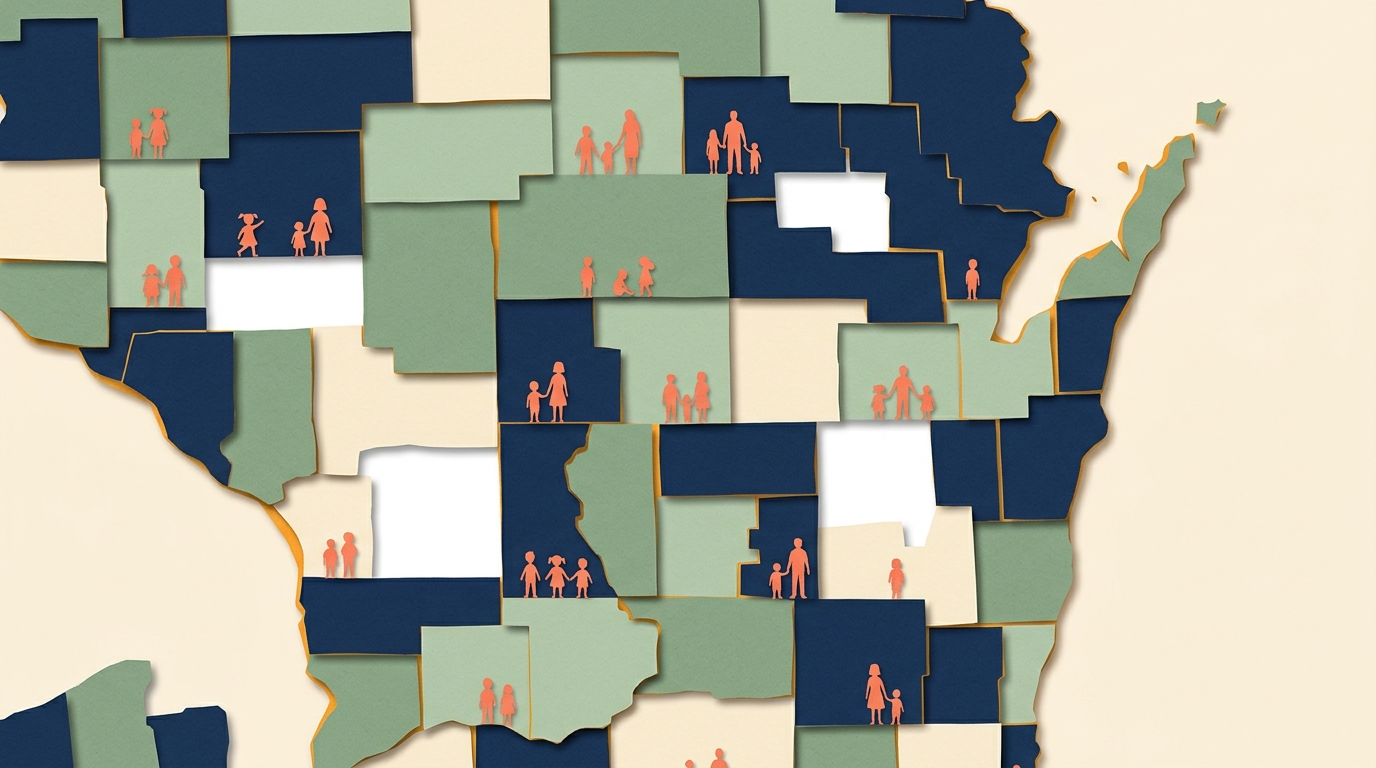
The need is real. Wisconsin lost roughly 20% of its licensed child care capacity between 2019 and 2023, with rural counties hit hardest. Many northern and western counties have been classified as child care deserts, and some have zero licensed infant care slots. With the state's unemployment rate hovering near historic lows, child care access has become a direct constraint on workforce participation and employer recruitment across the state.
The backdrop to this allocation is the so-called child care cliff: the expiration of roughly $52.5 billion in federal pandemic-era stabilization funds that had kept providers open and rates stable. Since those funds dried up in late 2023, states have had to lean harder on regular CCDBG allocations to sustain what was built. Wisconsin has taken several steps in that direction, including raising Wisconsin Shares reimbursement rates and expanding subsidy eligibility to families earning up to 300% of the federal poverty level through its Partner Up! program.
This $271,300 is a modest piece of a larger picture. Wisconsin has been issuing similar county contract awards in recent months, part of what appears to be a broader effort to lock in commitments early and give counties planning certainty as federal budget negotiations remain unsettled. Similar awards this cycle have included nearly $1 million to counties statewide and $395,000 in a separate round.
DCF has not publicly disclosed which specific counties will receive funds from this award or how the allocation decisions are made, leaving open the question of whether the most underserved areas are being prioritized. At the national level, CCDBG still reaches only about 1 in 6 eligible children, and proposed federal discretionary spending cuts add uncertainty to future funding cycles.
How far $271,300 stretches will depend largely on where it lands and what local providers charge. Counties are expected to begin implementing the contracts at the start of calendar year 2026.