Federal solar grants in Texas have surged 593 percent in the last 90 days, from $1.5 million to $10.7 million. That number is essentially meaningless. Drill into the three matching grants and you find a bike trail project with incidental solar language, an atmospheric radar study of ionospheric photoionization, and a scatter radar contract. None of them put a single panel on a single roof.
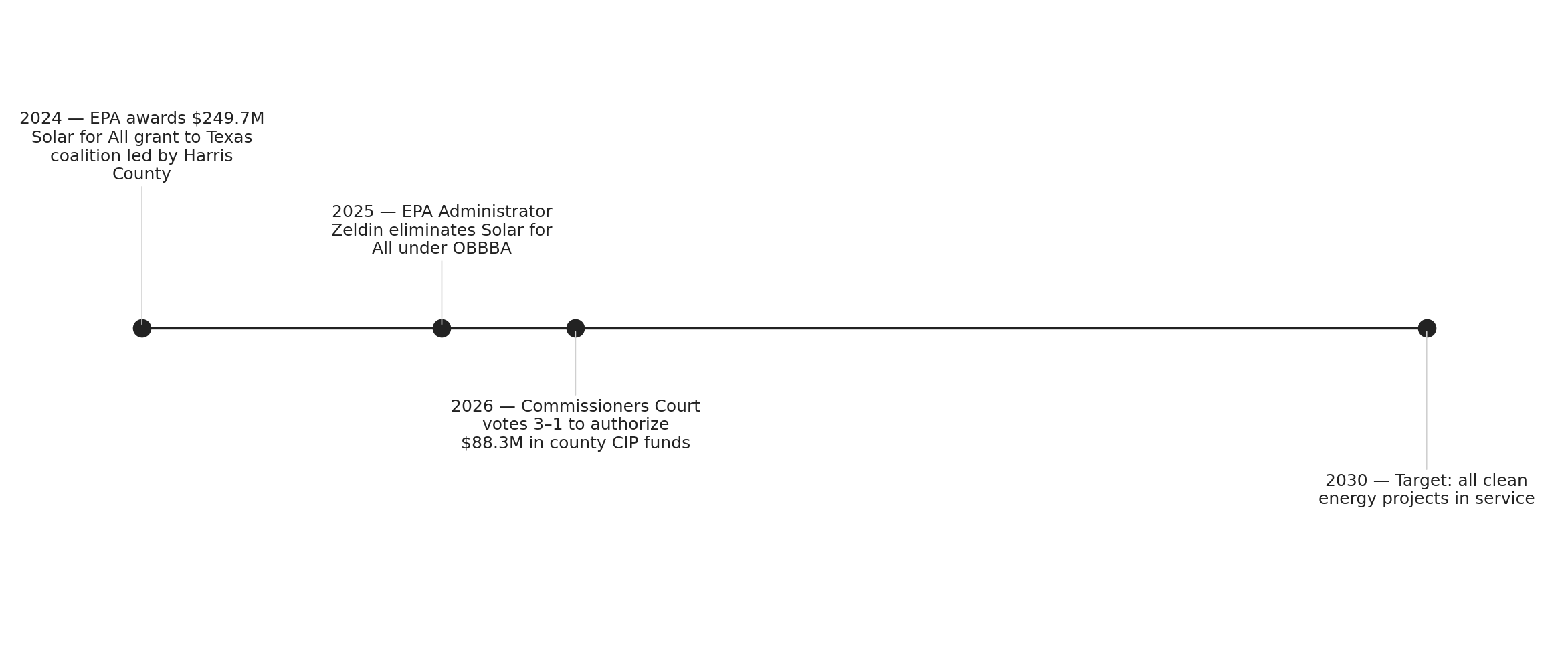
The real solar story in Texas is not in those numbers. It is in Harris County's Commissioners Court, which voted 3-1 on March 19, 2026 to authorize $88.3 million from county capital improvement funds to build a solar and battery storage program that the federal government tried to kill.
The backstory starts with a genuine windfall. In April 2024, the EPA awarded the Texas Solar for All Coalition, led by Harris County, a $249.7 million grant under the Biden-era Solar for All program. The grant was formally obligated by September 30, 2024, targeted at roughly 11 million Texans living in federally designated disadvantaged communities. Harris County's direct share was $54 million. Then, in August 2025, EPA Administrator Lee Zeldin eliminated the entire Solar for All program under the One Big Beautiful Bill Act, and the money stopped.
Source: NationGraph.
Harris County sued the EPA in October 2025, arguing in federal court that the OBBBA only rescinded $19 million in unobligated administrative costs, not the grant funds that had already been legally obligated before the law passed. That case is still pending. But the county could not afford to wait for the courts. According to a Community Impact report on the Commissioners Court vote, the county must begin construction by July 4, 2026 to qualify for an IRS Investment Tax Credit worth roughly $36 million, about 40 percent of the project cost. Miss that deadline and the fiscal math changes entirely.
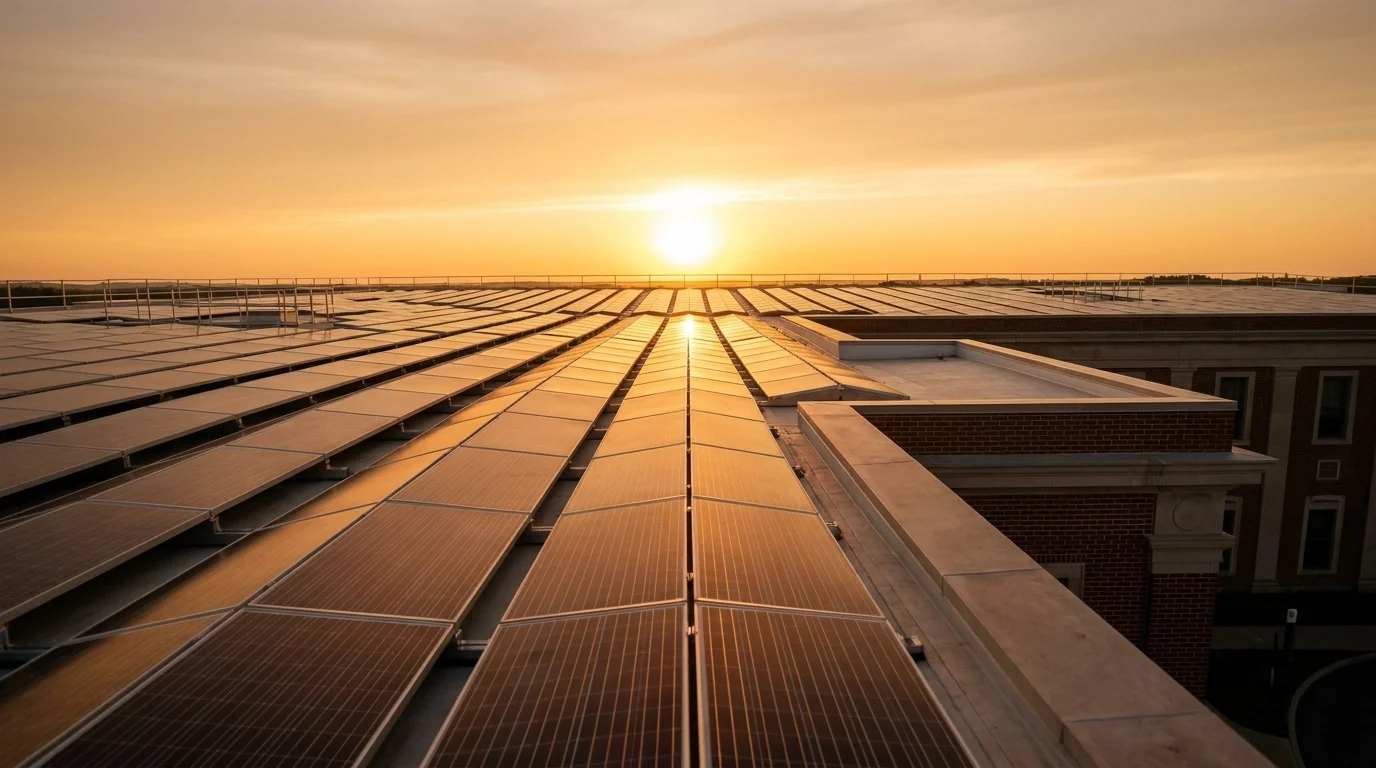
So the county is writing the check itself. The $88.3 million will fund solar installations and battery storage at six to ten county-owned facilities, with all projects expected to be in service by 2030. The county's legal theory, as reported by Utility Dive when the lawsuit was filed, is that a favorable court ruling would eventually reimburse those outlays. That is a substantial institutional bet: spend the money now, collect the ITC in July, win in court later.
The broader context makes the gamble legible. Texas is the largest solar market in the country by installed capacity and runs the largest deregulated electricity grid in the contiguous United States. ERCOT projects grid demand to nearly double by 2031, from roughly 86,000 MW to 145,000 MW, driven largely by data center and industrial load. The Dallas Fed noted in February 2026 that Texas added as much solar capacity in 2025 as in all of 2024, even as IRA headwinds gathered. More than $62 billion in clean energy investment has flowed into the state since the IRA passed, with over $128 billion in projects announced statewide. The economics of solar in Texas do not depend on federal goodwill, but the equity component, getting panels onto homes and facilities in low-income communities rather than utility-scale fields, has always leaned heavily on federal subsidy.
That is the gap Harris County is now trying to fill with county funds. Texas has no statewide solar rebate program. The state's Republican leadership has broadly opposed IRA climate provisions. For communities that cannot finance solar installations privately, the Solar for All grant was not supplemental; it was the mechanism. Eliminating it did not change the underlying grid math. It just shifted the cost onto whoever was willing to absorb it.
Harris County, population 4.8 million, has apparently decided it is willing. The Dallas Fed's February 2026 analysis warns that a broader solar slowdown is likely after 2027, when IRA credits expire for new projects under the OBBBA. Harris County's July 4 deadline is not just a bureaucratic target; it is the closing window of a specific financial structure that may not exist in its current form twelve months from now.
The open question is whether the lawsuit holds. If the courts agree that the obligated grant funds survived the OBBBA, the county recovers its $88.3 million and the program proceeds essentially as designed. If the courts rule against Harris County, the county has spent down its CIP reserves on a solar buildout that federal policy actively opposed. The vote was 3-1. That one dissenting vote on Commissioners Court is the simplest measure of how much this bet divides even the people writing the check.