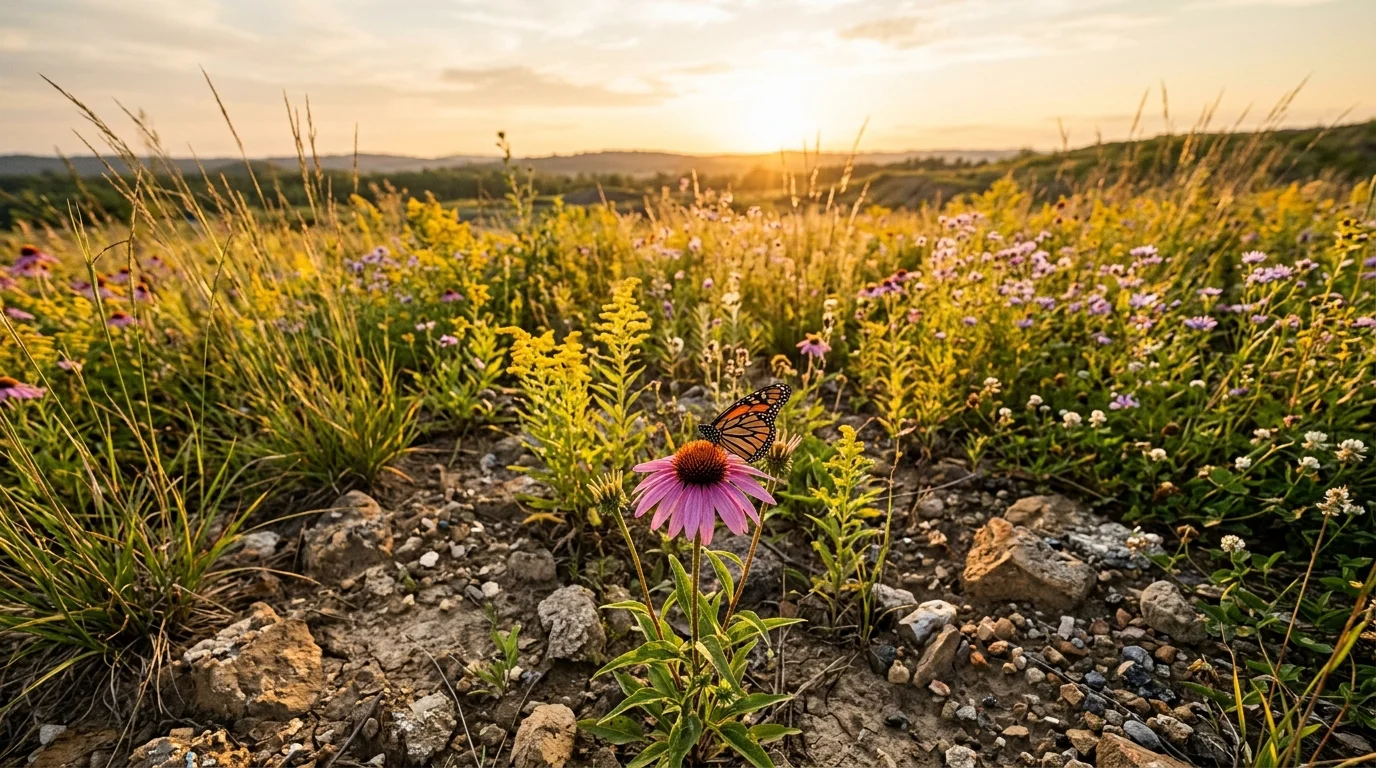
For decades, the standard fix for land scarred by abandoned coal mines was to regrade the rubble and spread whatever grass seed was cheapest. The result: landscapes that looked green from the road but were ecologically hollow, hostile to pollinators, and often invasive. A newly posted reclamation seeding project signals that approach is changing.
An unnamed state agency has posted a solicitation for native seed to restore abandoned mine land, part of a program that mirrors the federal Abandoned Mine Land effort administered by the Office of Surface Mining Reclamation and Enforcement. The agency and exact jurisdiction weren't identified in the record, but the program language points to one of the country's most active coal-legacy states, likely Pennsylvania, West Virginia, Kentucky or Ohio.
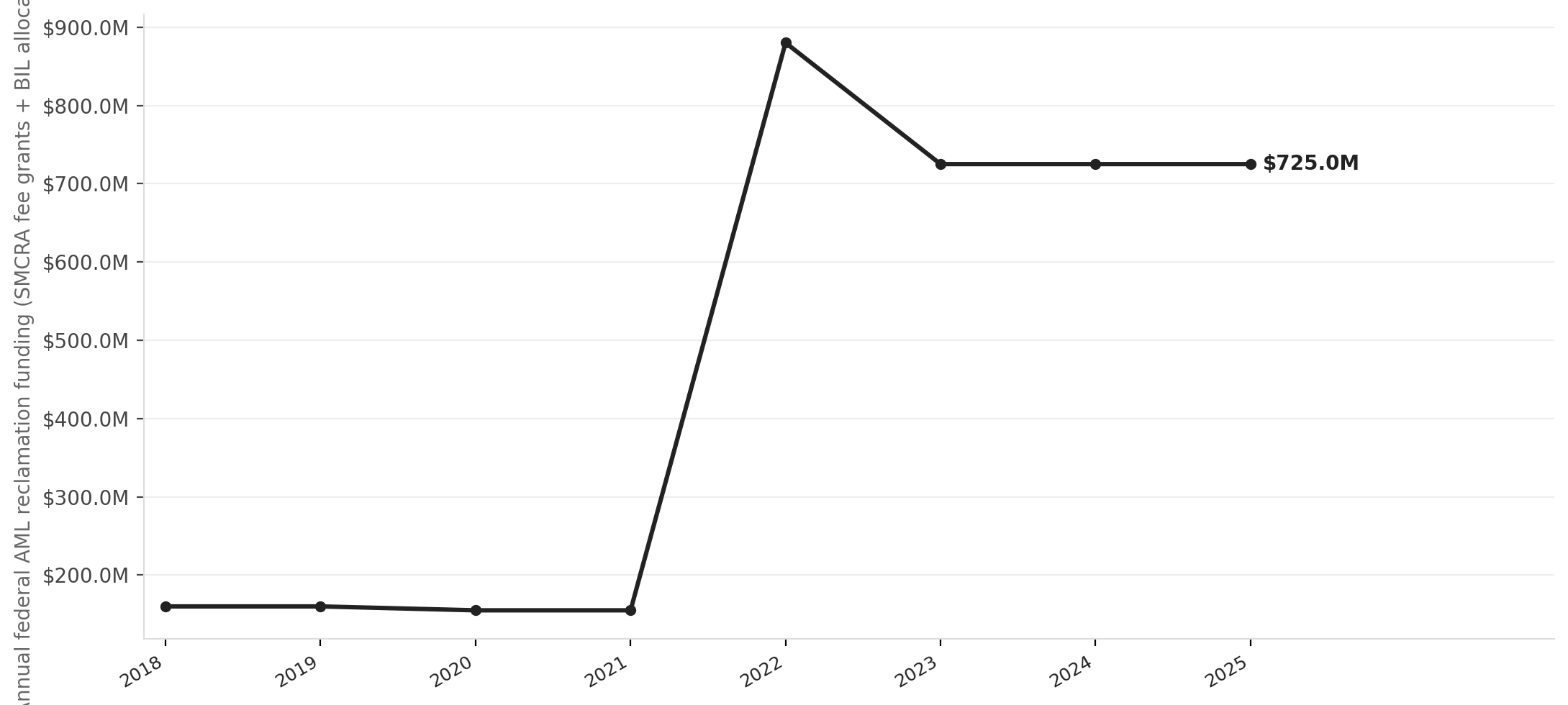
The timing reflects a broader transformation in how the government approaches old mine sites. The 2021 Bipartisan Infrastructure Law committed $11.3 billion to abandoned mine reclamation over 15 years, the largest infusion in the program's nearly 50-year history. As that money flows to states, federal overseers have pushed recipients to aim higher than stabilization: the goal now is rebuilding functional ecosystems, not just capping hazards with turfgrass.
Source: NationGraph.
The science behind that shift has been building for years. Non-native pasture species like tall fescue, planted widely in 20th-century reclamation, suppress tree regrowth and offer little to wildlife. Monarch butterfly populations have fallen roughly 80% since the 1990s, and honeybee colony losses have prompted a federal Pollinator Health Task Force. Native seed mixes, by contrast, support insects, birds and eventual forest canopy.
Meeting that ambition is not simple. A 2023 National Academies report warned that the native seed industry is small and fragmented, and that exploding demand from reclamation and conservation programs risks outrunning supply. Whether enough seed is available, at the right species and quantities, will shape how quickly projects like this one can scale.
The jurisdiction behind this project has not been publicly confirmed, and the full scope of the seeding work remains unclear from the solicitation alone. As the agency moves toward selecting a supplier, more details about which sites are targeted and how many acres are involved should become public.