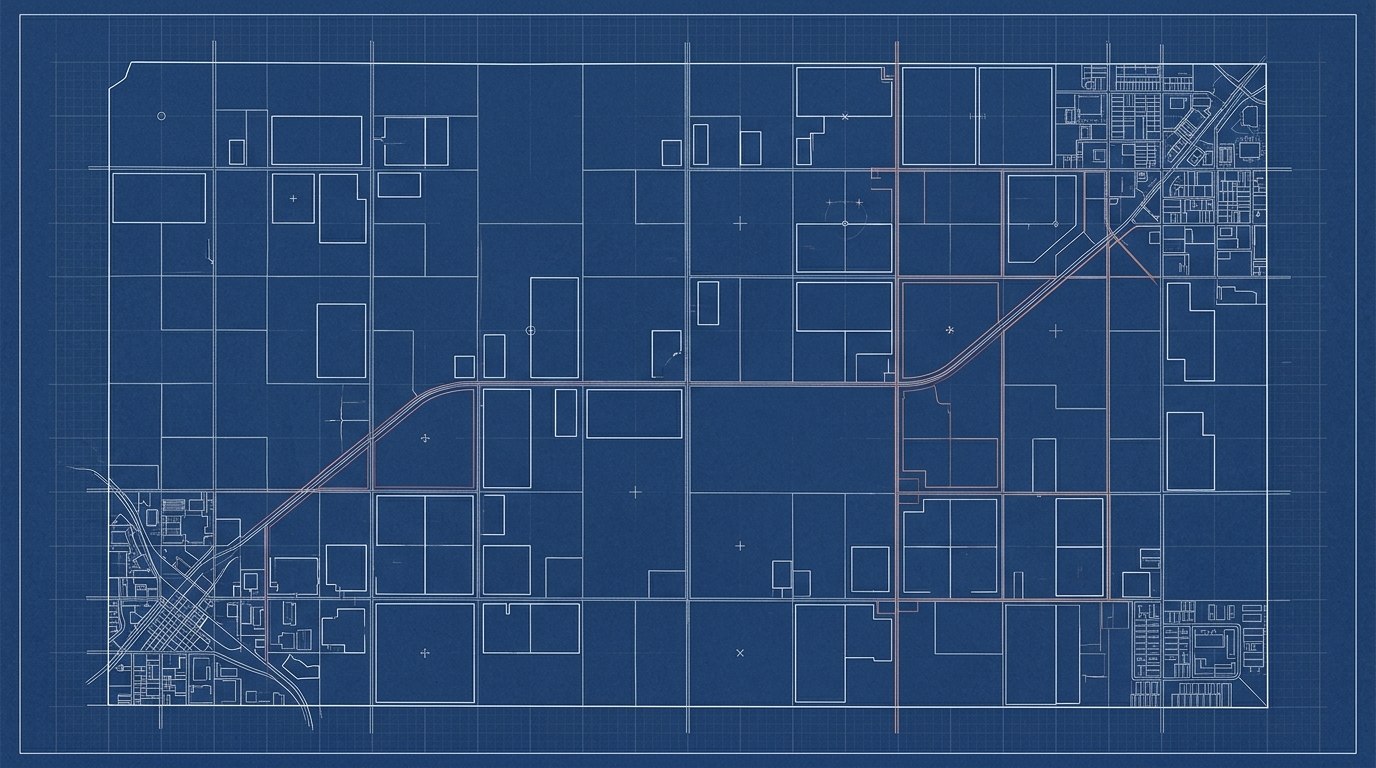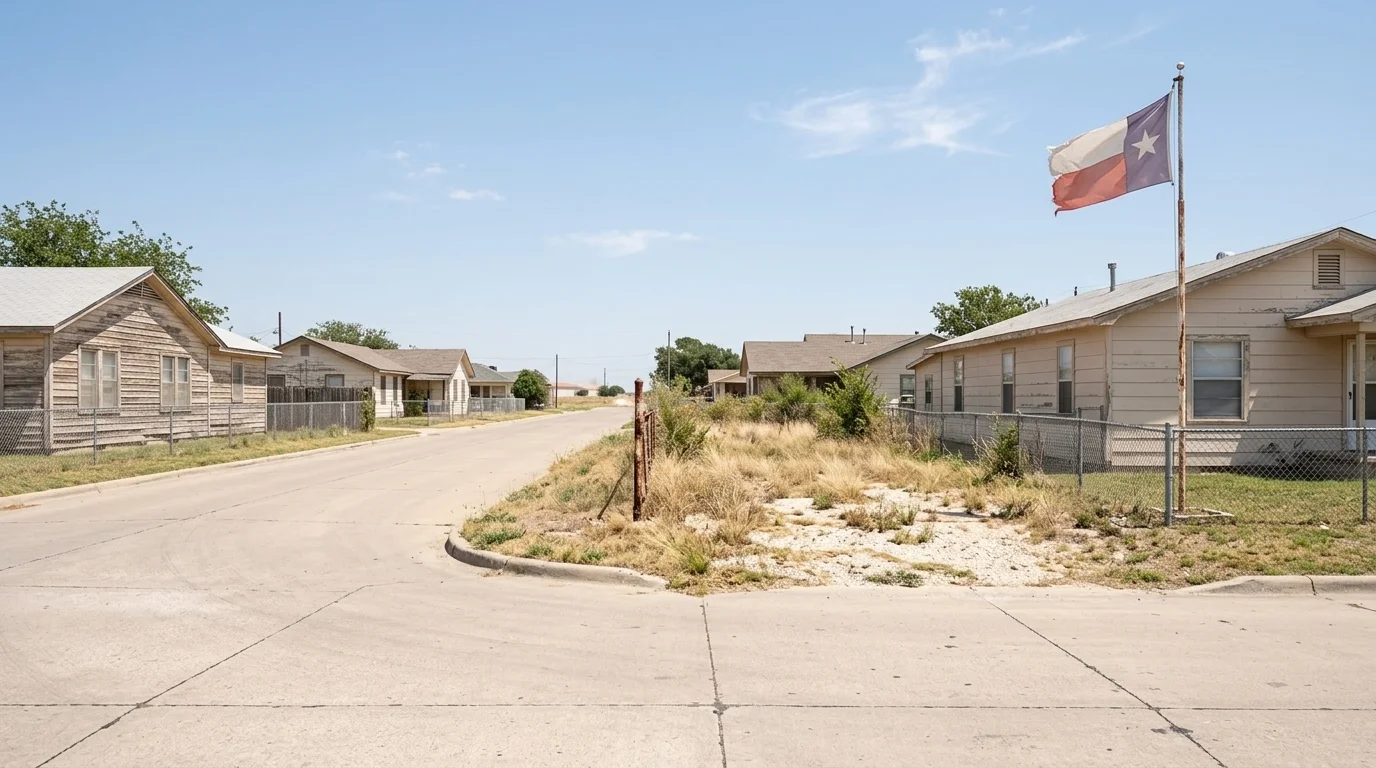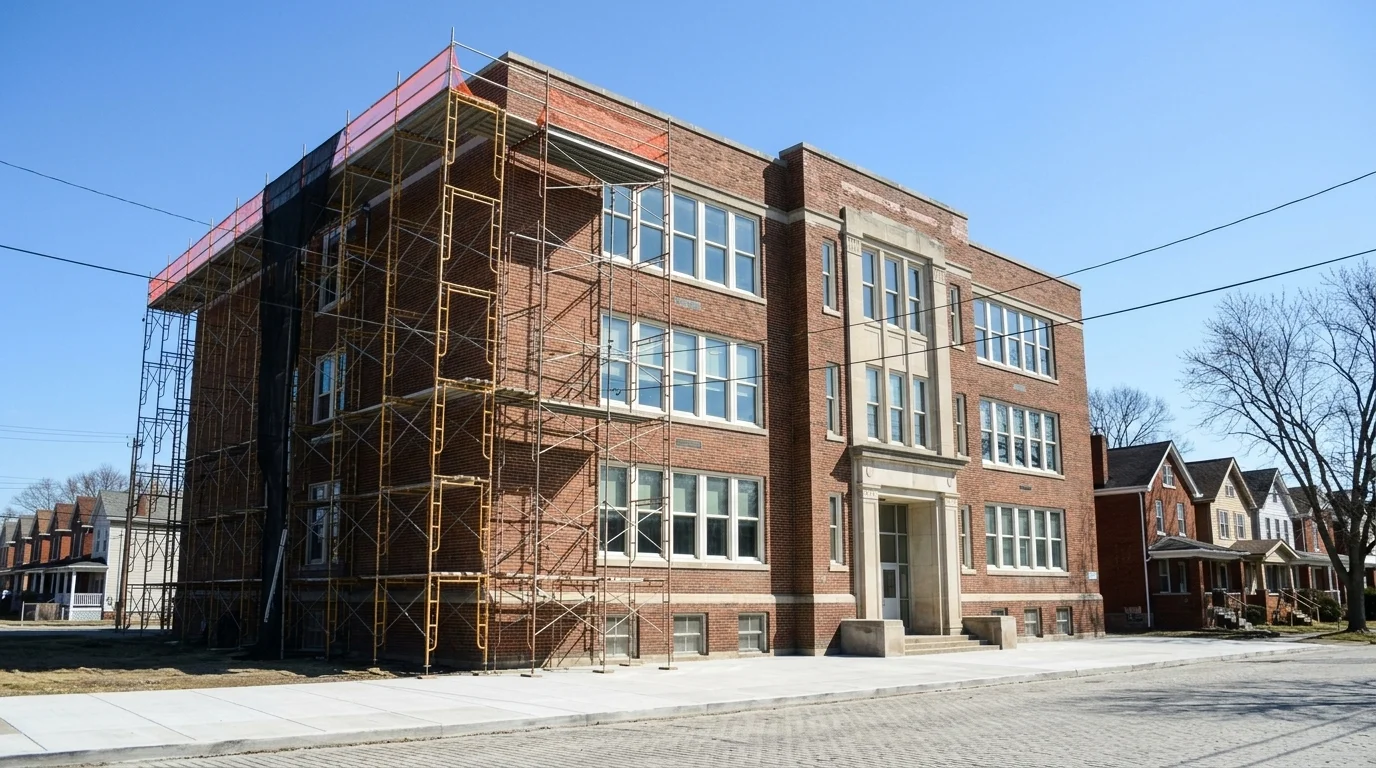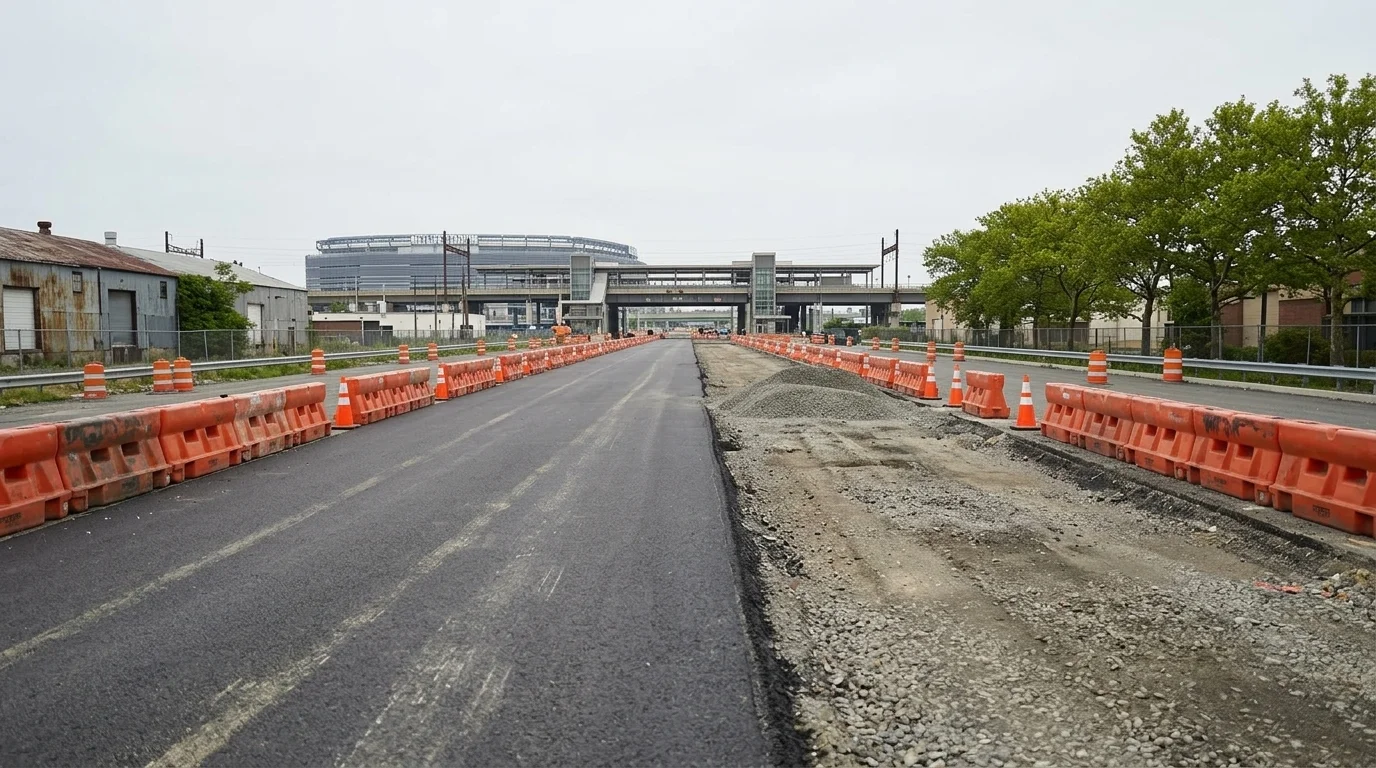
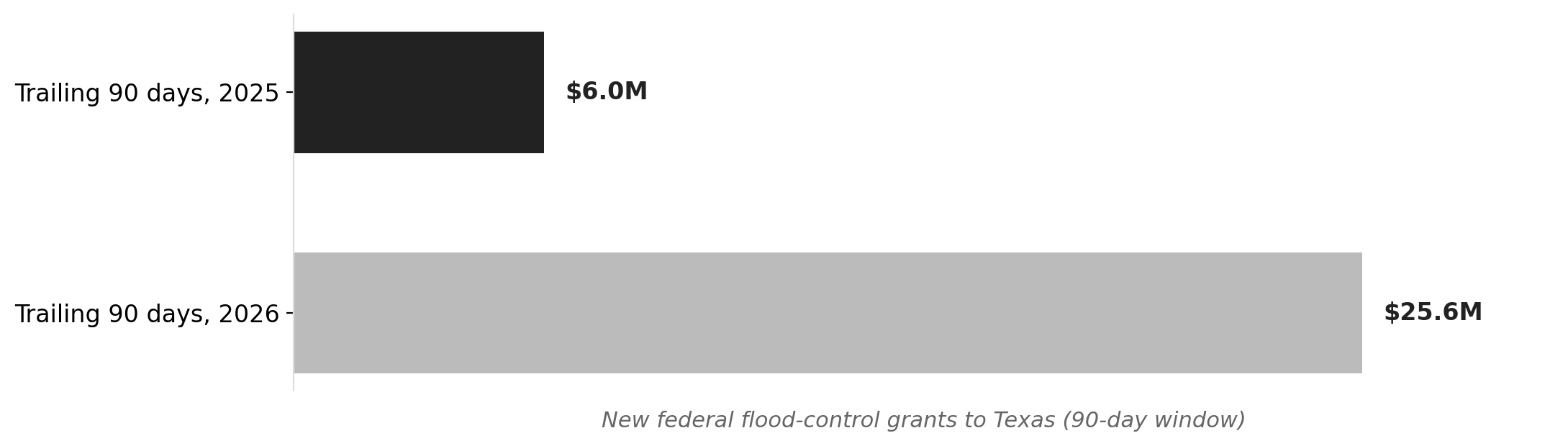
Federal flood-control grants newly awarded to Texas have hit $25.6 million in the trailing 90 days, a 325% jump from $6 million in the same window a year ago. The surge is not a coincidence of timing. It is the financial output of an 18-month pipeline that began when two 2024 presidentially declared disasters unlocked a specialized FEMA program, matured through a federal grant cycle, and landed its largest check the week before the 2026 hurricane season opened on June 1.
The single award driving almost the entire increase is a $24.3 million FEMA Flood Mitigation Assistance grant to the Texas Water Development Board, issued April 24, 2026, and running through April 2029. That one award represents more than 95% of Texas's 90-day total. Harris County Flood Control received an additional $959,000 EPA grant in April 2026, adding to a $5 million EPA award it had already secured earlier in the year. Everything else in the window is a rounding error by comparison.
The trigger is a pair of back-to-back disaster declarations. FEMA's Flood Mitigation Assistance program includes a Swift Current component that allocates $40 million per presidentially declared flood disaster directly to the affected state. Texas qualified twice: DR-4781, covering severe storms and flooding from April through June 2024, and DR-4798, the Hurricane Beryl declaration following the storm's landfall on July 5-9, 2024, which swept across 121 counties and left 92 eligible for mitigation funding. That sequence put $80 million in Swift Current money on the table for Texas, and the April 2026 TWDB award is the first large institutional draw against it.
Source: NationGraph.
The TWDB's role here matters structurally. Texas designates the board as its FMA pass-through agency, which means federal flood dollars are funneled through a single institution capable of executing large block grants quickly rather than being parceled out county by county at the application stage. That bottleneck, when it moves, moves at scale.
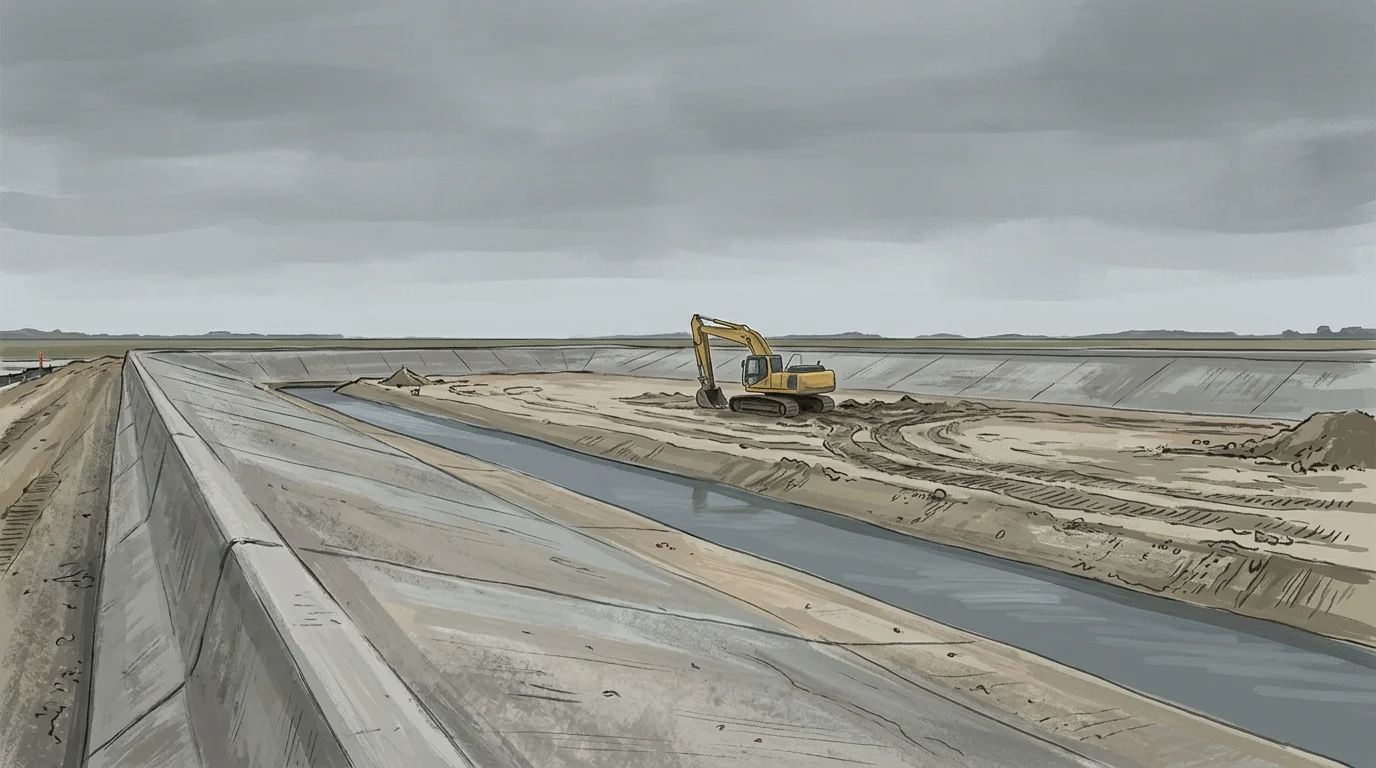
On the ground, the lag between declaration and construction is about 18 months. Jefferson County Drainage District 6, in the Beaumont-Port Arthur area that was part of both 2024 declarations, is currently in final construction on a FEMA FMA-funded stormwater detention project, the East China and Ditch 600 drainage corridor. That project is nearing completion precisely as the 2026 season begins, illustrating both how quickly the money can reach the ground and how close the timing cuts.
A second wave is already in motion. FEMA reissued its FY 2024 FMA Notice of Funding Opportunity on April 30, 2026, with $600 million available nationally and Texas applications due through the TWDB by June 25, 2026. FEMA announced more than $235 million in FMA awards nationally on April 22, 2026, and the TWDB's FMA program page confirms the state is actively accepting applications for that next cycle. Texas is entering hurricane season not just collecting on its 2024 disasters but simultaneously filing for the next round.
The regional context is worth noting. Among Gulf South peers in the same 90-day window, Texas ranks second at roughly $27 million behind South Carolina at $30.8 million, and well ahead of Louisiana at $7 million and Florida at $6.3 million. That ranking suggests the surge is partly a Texas story and partly a broader post-2024-disaster spending pulse across the region, with South Carolina likely drawing on its own recent disaster declarations.
For residents in the 92 counties covered by the Beryl declaration, concentrated in Southeast Texas and the Houston-Galveston corridor, the practical meaning is straightforward: the federal money for flood infrastructure has arrived and is moving into project pipelines. Texas holds more FEMA-designated repetitive-loss flood structures than nearly any other state, most of them in that same corridor, so the scale of the investment reflects the scale of the exposure.
The next signal to watch is the TWDB's June 25 application deadline. What Texas submits in that window will determine whether a second large award follows later in 2026 or early 2027. Given the two active Swift Current allocations still being drawn down, the probability of another substantial grant is high. The question is how quickly the money reaches drainage ditches and detention basins before the season's first named storm.