Thousands of homes in Chapel Hill and Carrboro, North Carolina may have a slow-moving lead problem hiding in their water lines, and the utility that serves them is now moving to fix it.
OWASA, the Orange Water and Sewer Authority, has launched its Galvanized Requiring Replacement program, targeting a category of pipes that the EPA has identified as a quiet but persistent lead hazard. The utility serves roughly 80,000 customers across Chapel Hill, Carrboro, and the UNC-Chapel Hill campus.
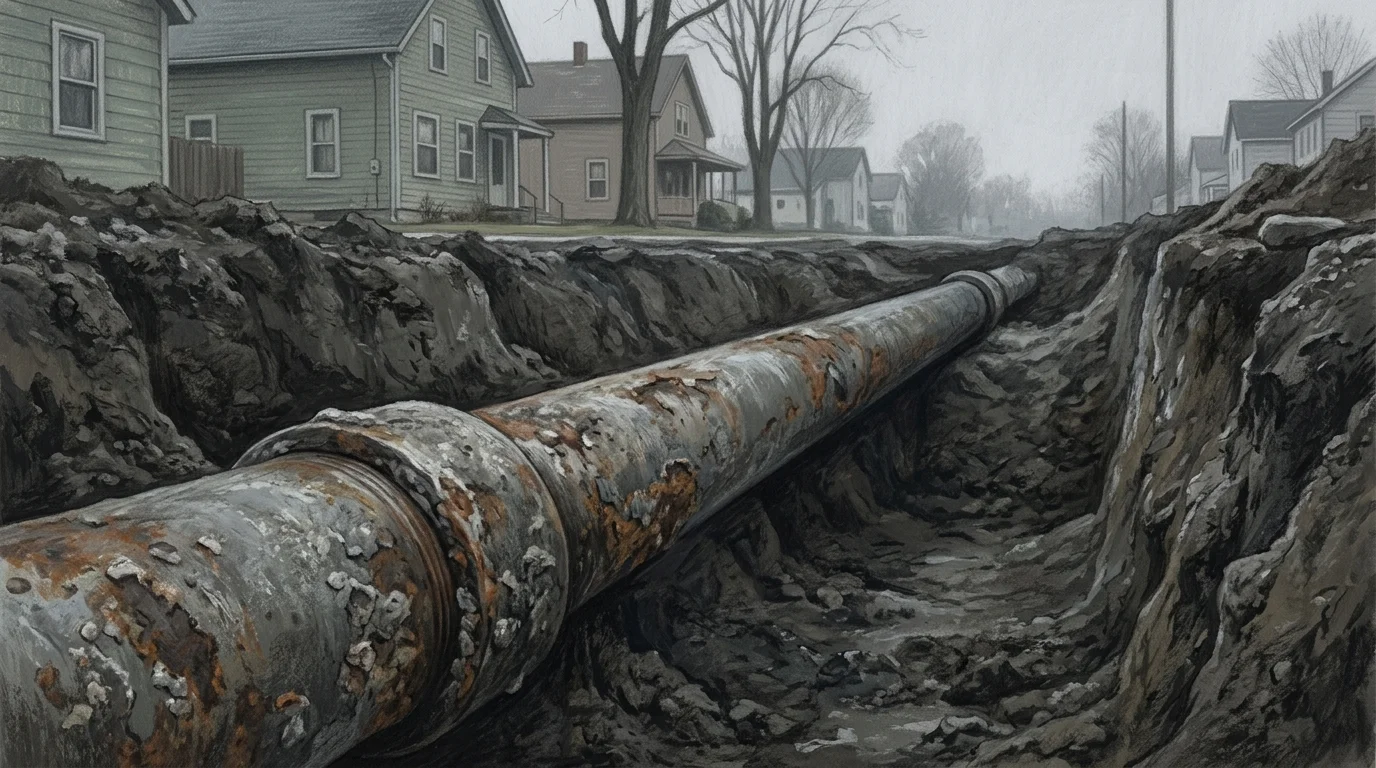
The problem is easy to miss. Galvanized iron pipes, standard in homes built from the early 1900s through the 1960s, were routinely connected to the water main with small lead "gooseneck" fittings. Over decades, those galvanized pipes absorbed lead from the upstream connector and now slowly release it back into tap water, even in homes where the lead fitting was long since removed. By the time many residents think their pipes are safe, the damage may already be built into the metal.
Source: NationGraph.
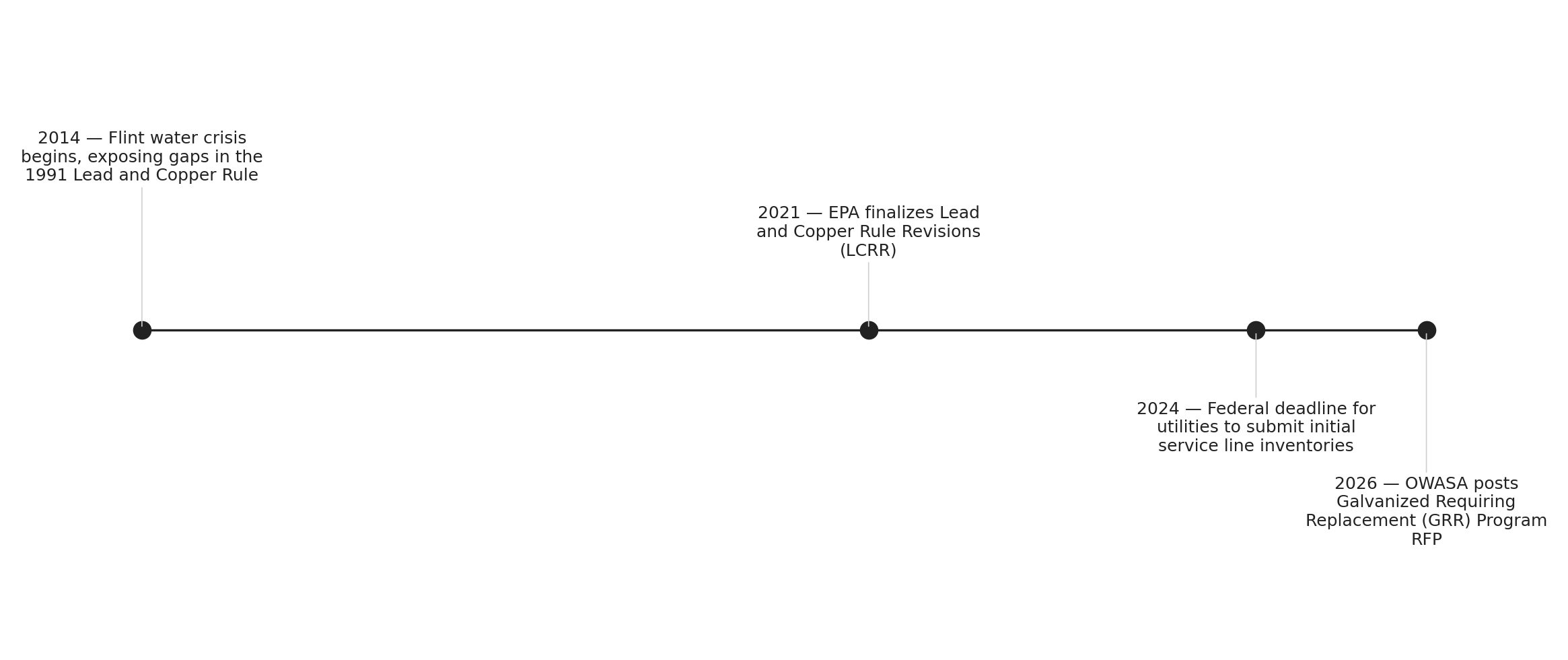
The federal push behind OWASA's program traces directly to the Flint, Mich. water crisis of 2014-2015, which revealed how badly the country's lead pipe rules had aged. The EPA finalized sweeping new Lead and Copper Rule Improvements in October 2024, requiring water systems nationwide to replace both lead service lines and these galvanized lines on a 10-year clock starting in 2027. OWASA, like utilities across the country, was required to complete an initial inventory of its service lines by Oct. 16, 2024. This program marks the shift from counting the pipes to replacing them.
The utility is now seeking contractors through its bid opportunities portal to carry out the work. Key details, including how many lines need replacement, the total project cost, and which neighborhoods will be prioritized first, have not been publicly released.
Those gaps matter in a community like Chapel Hill. OWASA rates are already among the highest in the Triangle, and the utility's board has historically faced pushback on rate increases. Older, centrally located neighborhoods in both Chapel Hill and Carrboro, precisely the areas with pre-1960s housing stock where galvanized pipe was standard, are likely to have the highest concentrations of affected lines. How OWASA sequences that work, and who bears the cost, will be closely watched.
The utility has navigated water quality controversies before, including a 2017 chemical overfeed that triggered a do-not-drink order and ongoing scrutiny over PFAS contamination. The galvanized pipe replacement program represents a longer, quieter challenge, but one with a firm federal deadline. If OWASA follows the EPA's 10-year timeline, the bulk of replacements would need to be completed by 2037.