Federal transit grants newly obligated to Minnesota over the trailing 90 days total $14.99 million, more than double the $7.32 million committed in the same window last year. The surge is not a signal that new projects are being planned. It is a sign that existing ones are in the final sprint, with Rochester's Link BRT scheduled to open in November 2026 and federal money still arriving to cover the fleet.
Two awards are driving the 105 percent year-over-year increase. The first: a $7.44 million FTA Low or No Emission grant obligated to the City of Rochester on May 15, 2026, for electric bus procurement. The second: a $6.59 million Section 5310 Enhanced Mobility grant obligated to MnDOT on June 4, 2026, funding statewide senior and disability transit coordination through December 2029. Together they account for nearly the entire jump over last year's pace.
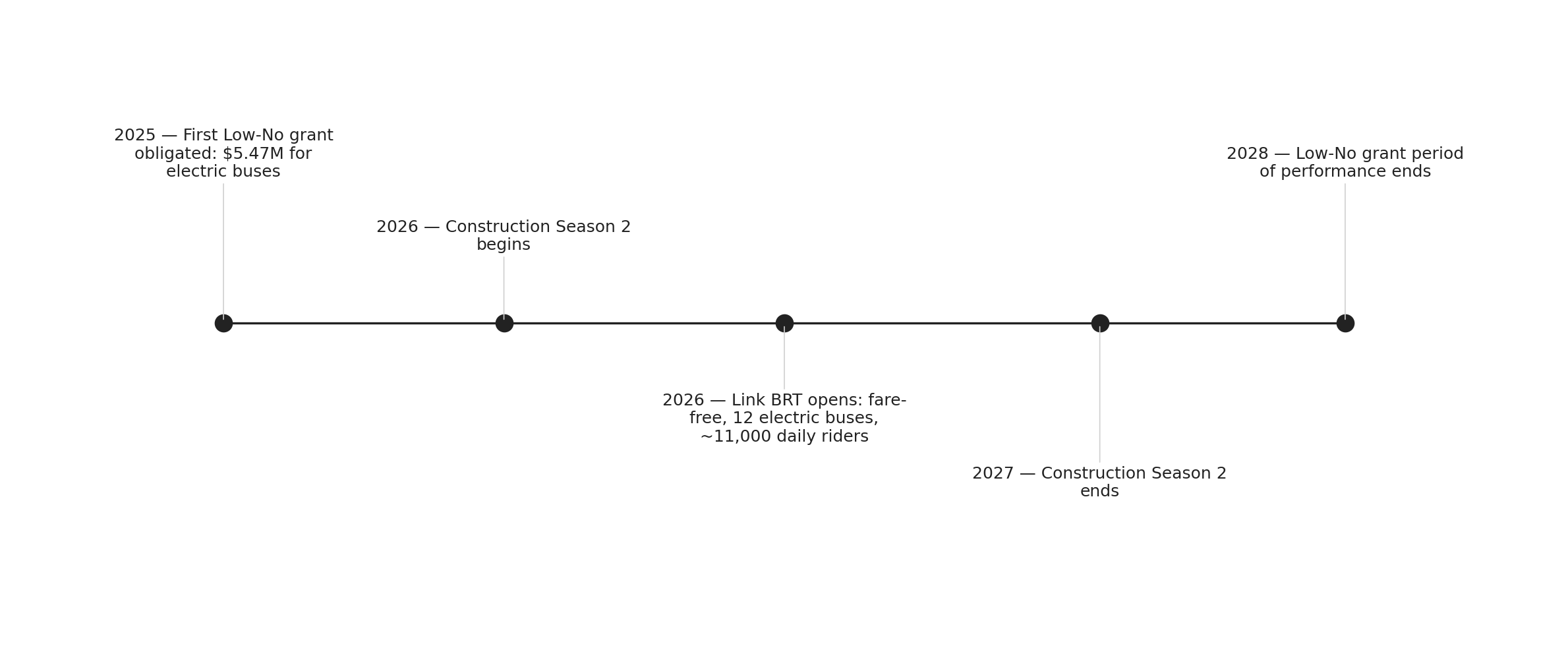
The Rochester grant is the more time-sensitive of the two. Link BRT is already under construction in its second season (March 2026 through August 2027, with a November 2026 opening targeted), and the city is assembling its electric fleet against that fixed deadline. The $7.44 million Low-No award is Rochester's second such grant in under 12 months, following a $5.47 million Low-No award that began in July 2025. Stacking fleet-electrification funding on top of a capital infrastructure grant is now standard practice for cities using the FTA's competitive programs, but Rochester's pace, two Low-No awards in less than a year, is notable. The FY2026 Buses and Bus Facilities program that produced this latest award drew 479 proposals requesting $6.8 billion, and distributed $388.3 million across 34 projects nationally. Rochester was one of those 34.
Source: NationGraph.
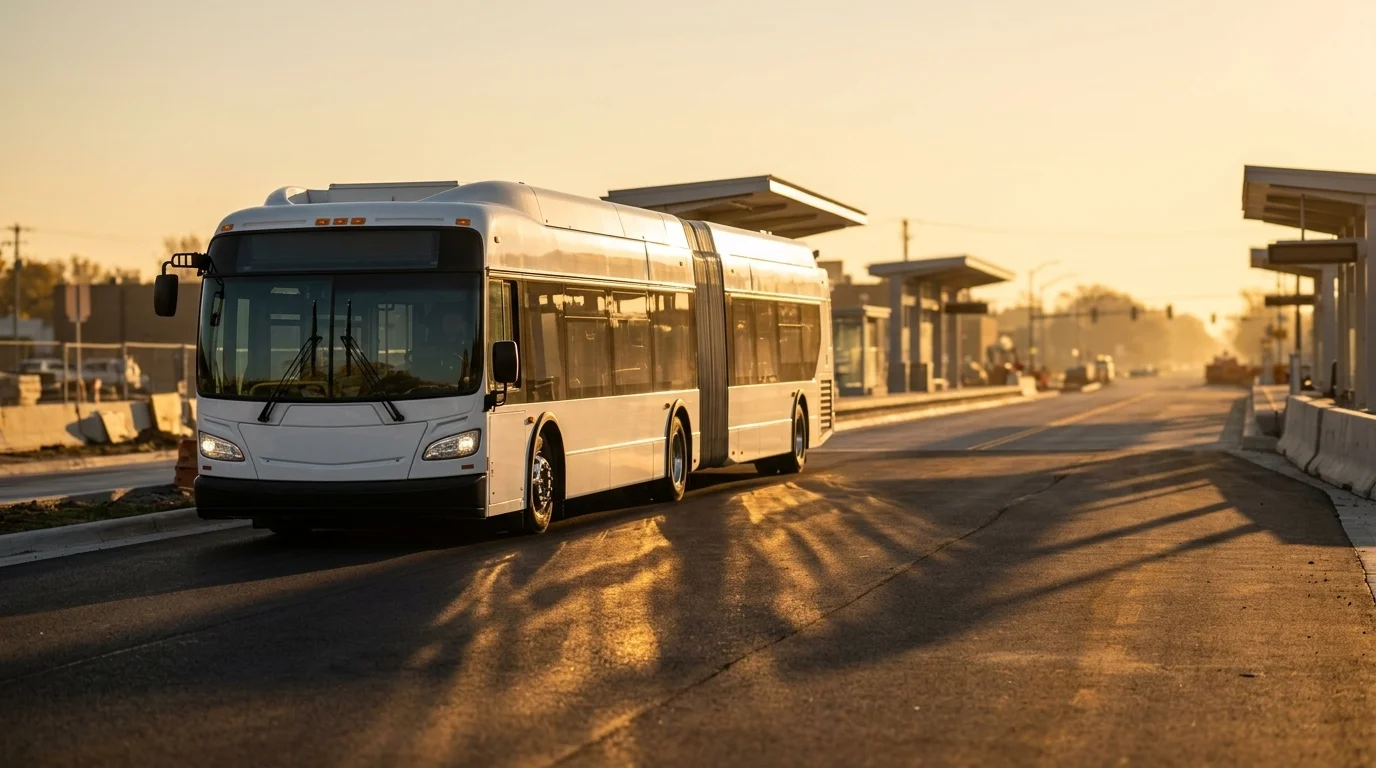
The backbone of the Rochester build is an $84.9 million Capital Investment Grant awarded in November 2024, with $18.1 million already disbursed. That CIG, plus the two Low-No awards, puts Rochester's active federal BRT portfolio at roughly $23.7 million beyond the capital grant itself. Mayor Kim Norton has described Link as the first project of its kind outside of the Twin Cities, and the numbers bear out the ambition: 12 all-electric 60-foot buses, fare-free service, headways of five minutes at peak, and an estimated 11,000 daily riders along a 2.8-mile corridor anchored by Mayo Clinic campuses. Rochester is projected to grow 30 percent by 2040, and Mayo is one of the largest single employers in the country. The corridor already has the demand; the city is building the infrastructure to match it.
The MnDOT Section 5310 award tells a different story but one that runs parallel. Greater Minnesota's rural and small-urban transit networks are under pressure from an aging population, and the FTA apportions Section 5310 funds by formula based on each state's share of older adults and persons with disabilities. Minnesota's demographics made it a strong candidate. The $6.59 million, running through December 2029, supports MnDOT's Transit Coordination Assistance Project network, a statewide framework for coordinating mobility services for seniors and people with disabilities in areas where fixed-route transit is thin or absent. That is a different transit problem than Rochester's, but it sits under the same federal funding authority and the same 90-day grant window.
Zoom out and the scale of what Minnesota has already obligated becomes clear. The Metropolitan Council, which runs the Twin Cities' bus and light-rail network, carries an active federal transit portfolio of nearly $1.3 billion, including $928.8 million in CIG funds (with $746.8 million already outlayed), $161 million in formula grants, $130.8 million in community project funding, and $65 million in Low-No bus awards, all active through 2030 to 2032. The new Rochester and MnDOT awards land on top of that base. St. Paul's Rice Street Corridor is also moving toward rapid bus transit, extending the Metro's BRT footprint further.
The Bipartisan Infrastructure Law is the structural engine under all of it. The CIG and Low-No programs are seeded by Biden-era awards now obligating follow-on tranches under the same legislative authority, meaning the money was committed before this year's budget debates and is disbursing on its own schedule regardless of what happens in Washington in the months ahead. The November 2026 Rochester opening is effectively locked in at this point. The question is execution: whether construction Season 2 stays on schedule through August 2027, and whether the electric fleet arrives in time for opening day.
The next signal to watch is Rochester's fall construction update, which will indicate whether the corridor is on pace for a November ribbon-cutting or whether the opening slips into 2027. For the MnDOT statewide network, the 2026-2027 grant cycle closes its first reporting period in late 2026, when coordination metrics for Greater Minnesota will begin to show whether the $6.59 million is moving riders.