Federal transit grants to Maine have jumped 389% year over year, from $4.8 million to $23.5 million in the last 90 days, and a single award accounts for every dollar of that spike. On May 18, 2026, the U.S. Department of Transportation obligated a $23,529,000 RAISE grant to MaineDOT, the largest competitive transit award the state has ever received. Two days later, Governor Janet Mills cut the ribbon on the $27.7 million Acadia Gateway Center in Trenton.
The timing was not accidental. Senator Angus King and Congresswoman Chellie Pingree lobbied DOT directly to align the bus grant with the Gateway Center's opening, framing the two pieces as a single infrastructure system. MaineDOT Commissioner Dale Doughty stood at the ribbon-cutting and described the grant and the facility as the capstone of a buildout more than 25 years in the making. The money flows from the Bipartisan Infrastructure Law's RAISE program, which funds competitive grants at $1.5 billion annually through FY2026, and Maine's award is now its signature example.
The grant will pay for roughly 40 low-emission buses for Downeast Transportation's Island Explorer fleet, replacing 21 aging propane-powered vehicles and adding two new routes' worth of capacity. The Island Explorer has carried more than 9 million cumulative riders since its 1999 launch as a fare-free, federally subsidized shuttle serving Acadia National Park. The park draws about 4 million visitors per year to a geographically constrained island where parking is a chronic bottleneck. The bus system is, functionally, part of the park's infrastructure, and it has run on competitive grants rather than farebox revenue or state formula funds for its entire existence.
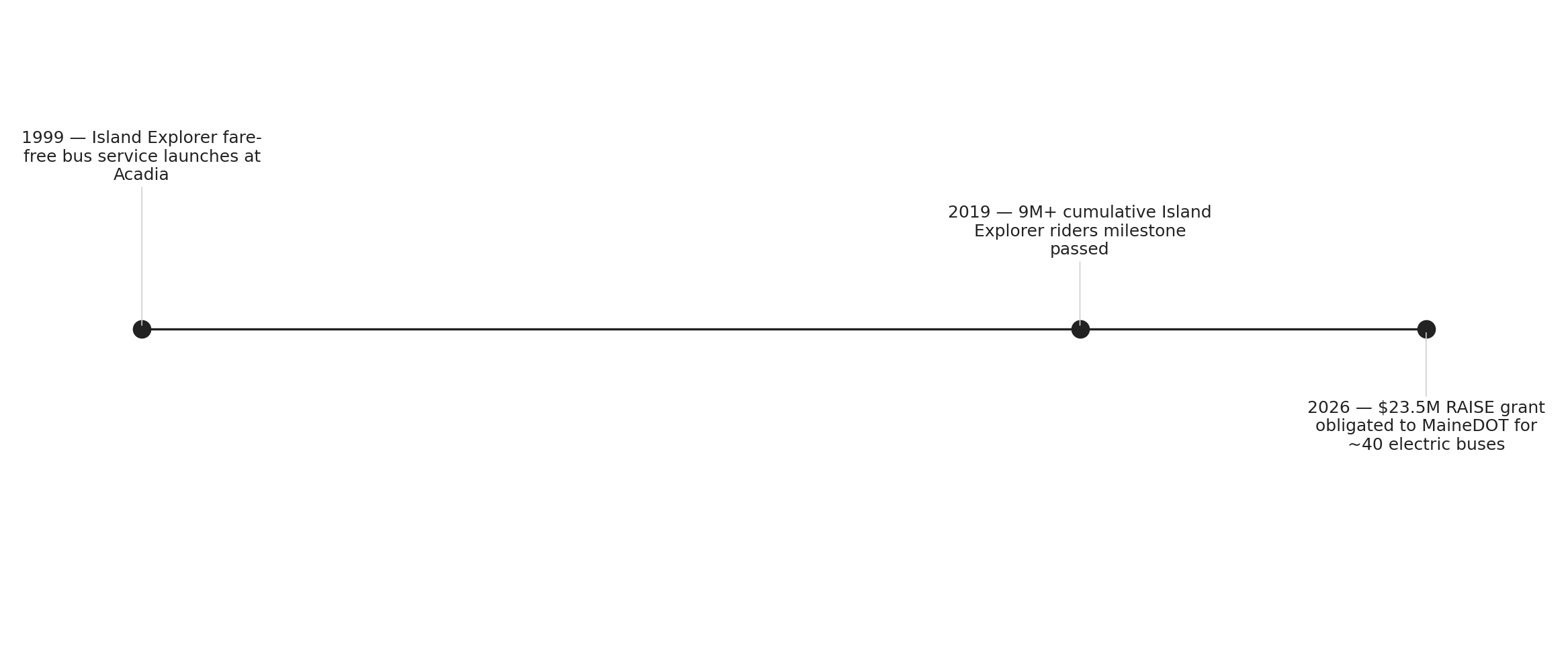
Source: NationGraph.
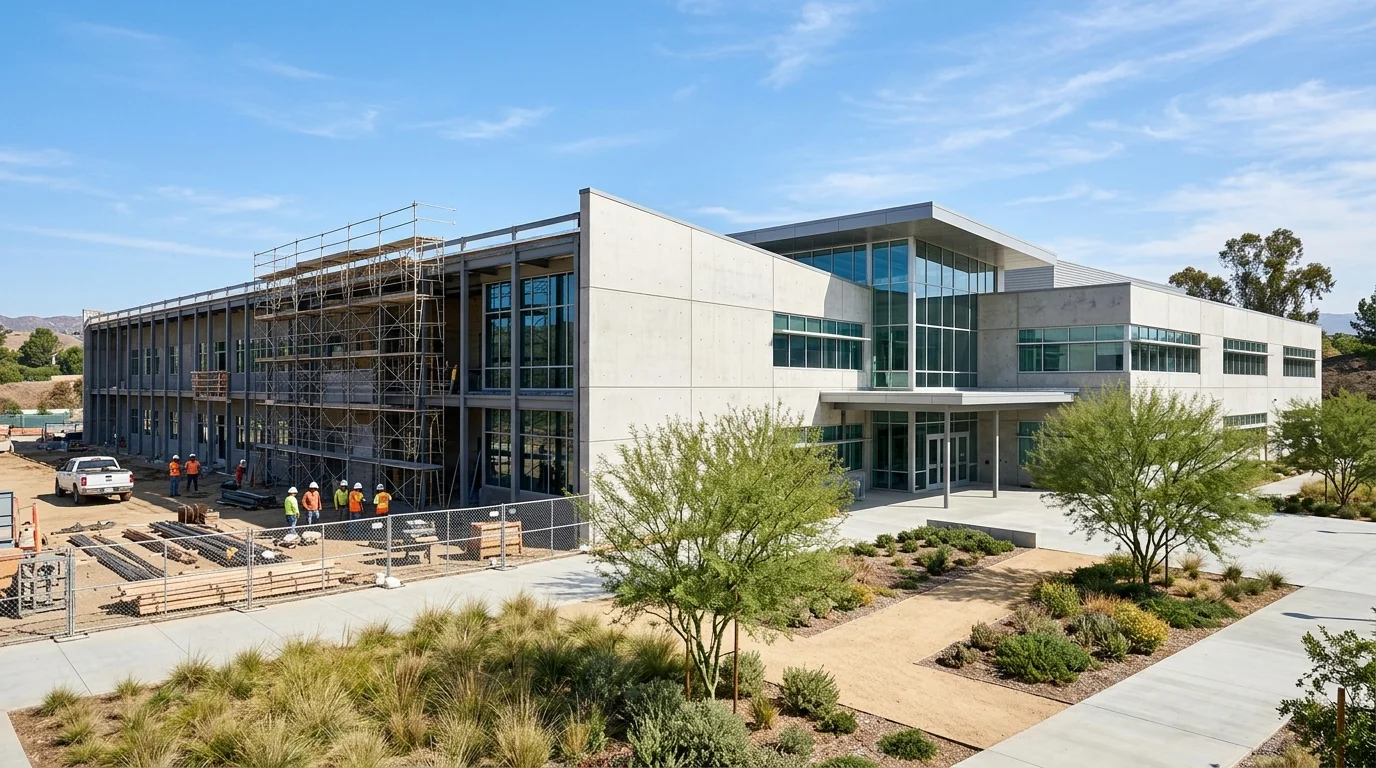
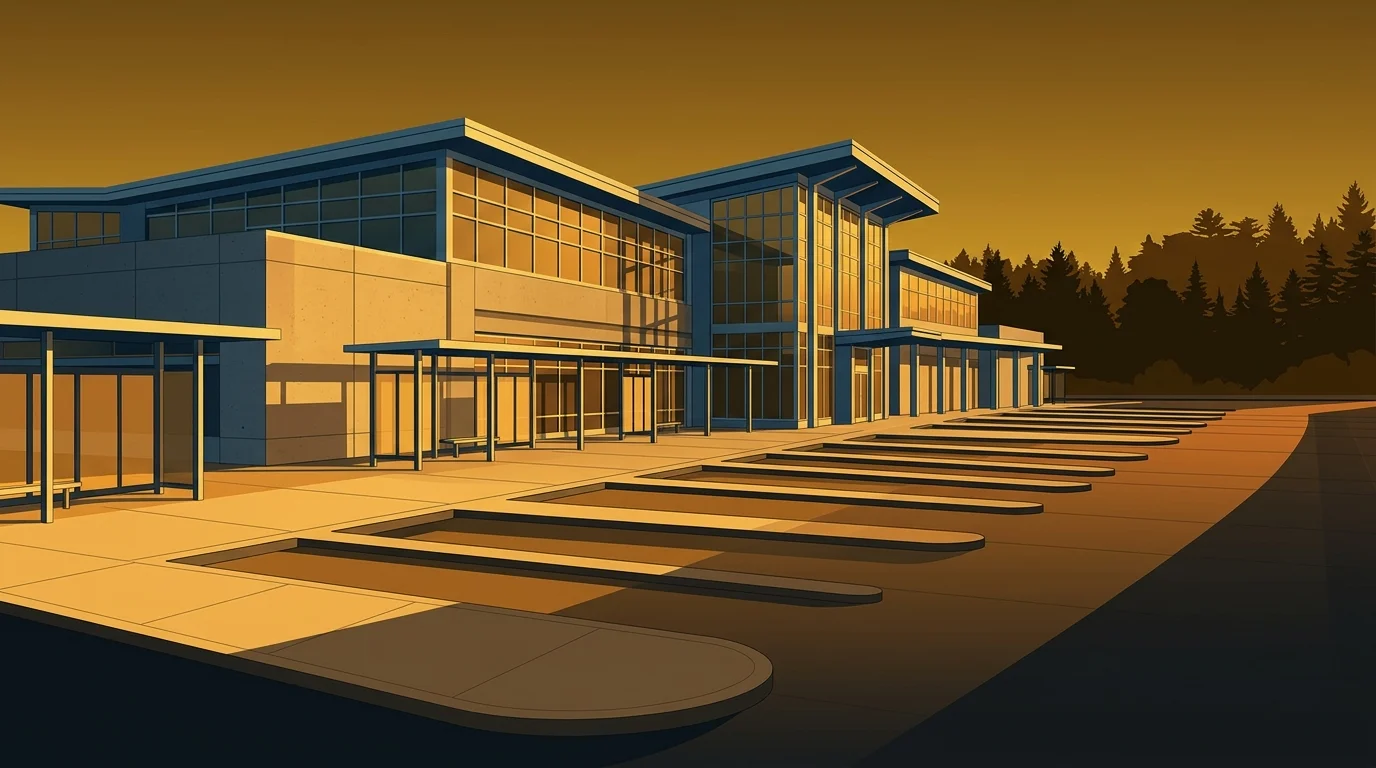
The Acadia Gateway Center was designed to be the missing first mile of that system: a mainland intermodal hub in Trenton where visitors can park, board the Island Explorer, and reach Mount Desert Island without adding cars to the causeway. The $27.7 million facility was funded through a partnership among FTA, MaineDOT, the National Park Service, and Friends of Acadia, with Acadia National Park Superintendent Kevin Schneider among those at the opening ceremony on May 20. The center represents the physical infrastructure. The electric buses are supposed to be the moving part.
Here is the problem: they will not be moving for a while. Downeast Transportation Executive Director Paul Murphy has noted that battery-electric buses carry an 18-to-24-month manufacturing lead time from the time an order is placed. Spec development and competitive bidding have to happen first. Realistically, the new fleet won't enter service until spring or summer 2028 at the earliest, meaning the Gateway Center will run its first two full tourist seasons on the same propane buses the grant is meant to retire.
That gap matters because the Gateway Center was explicitly built to shift visitor behavior. If the buses can't absorb new demand the facility generates, the congestion the center was designed to reduce could persist or worsen in the short term. The 21 existing propane vehicles were adequate for the Island Explorer's current ridership profile; whether they scale to the traffic a new mainland hub is designed to funnel is a different question.
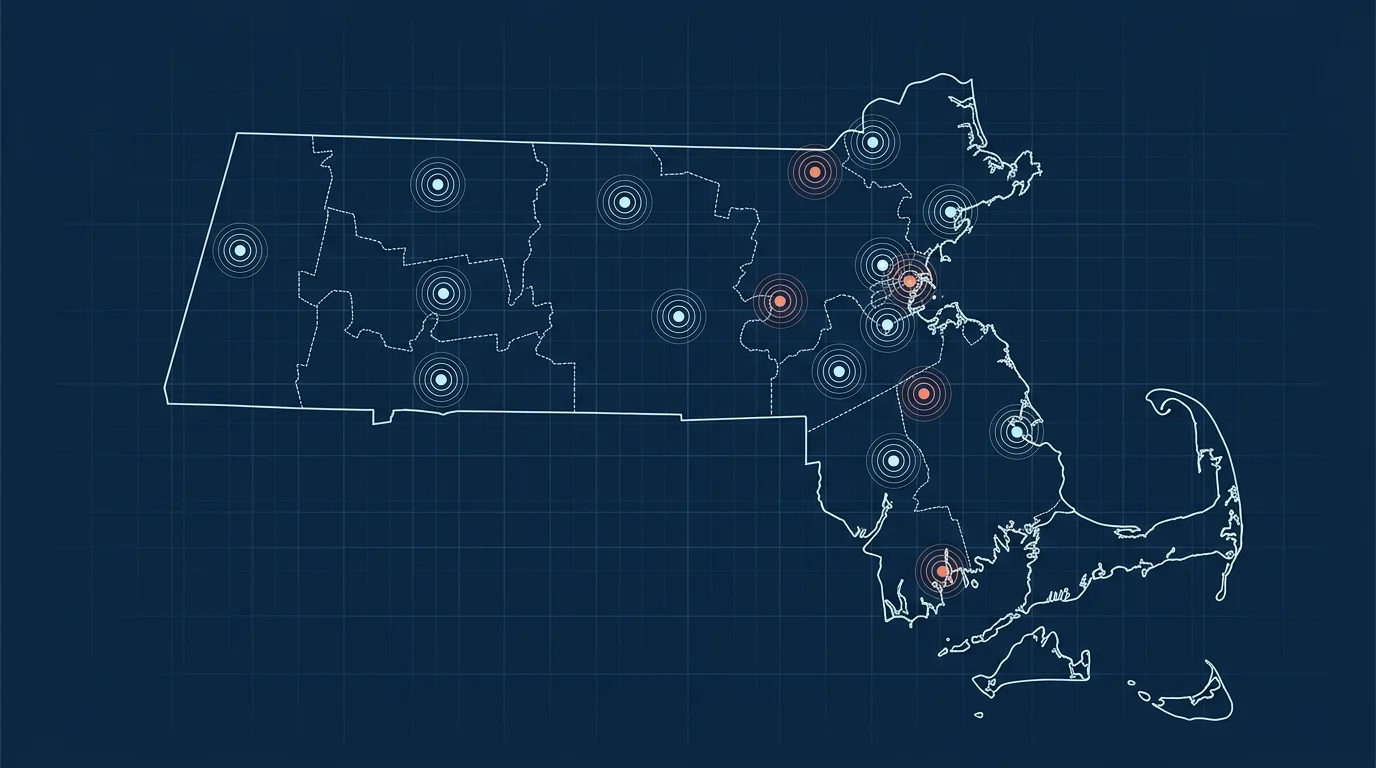
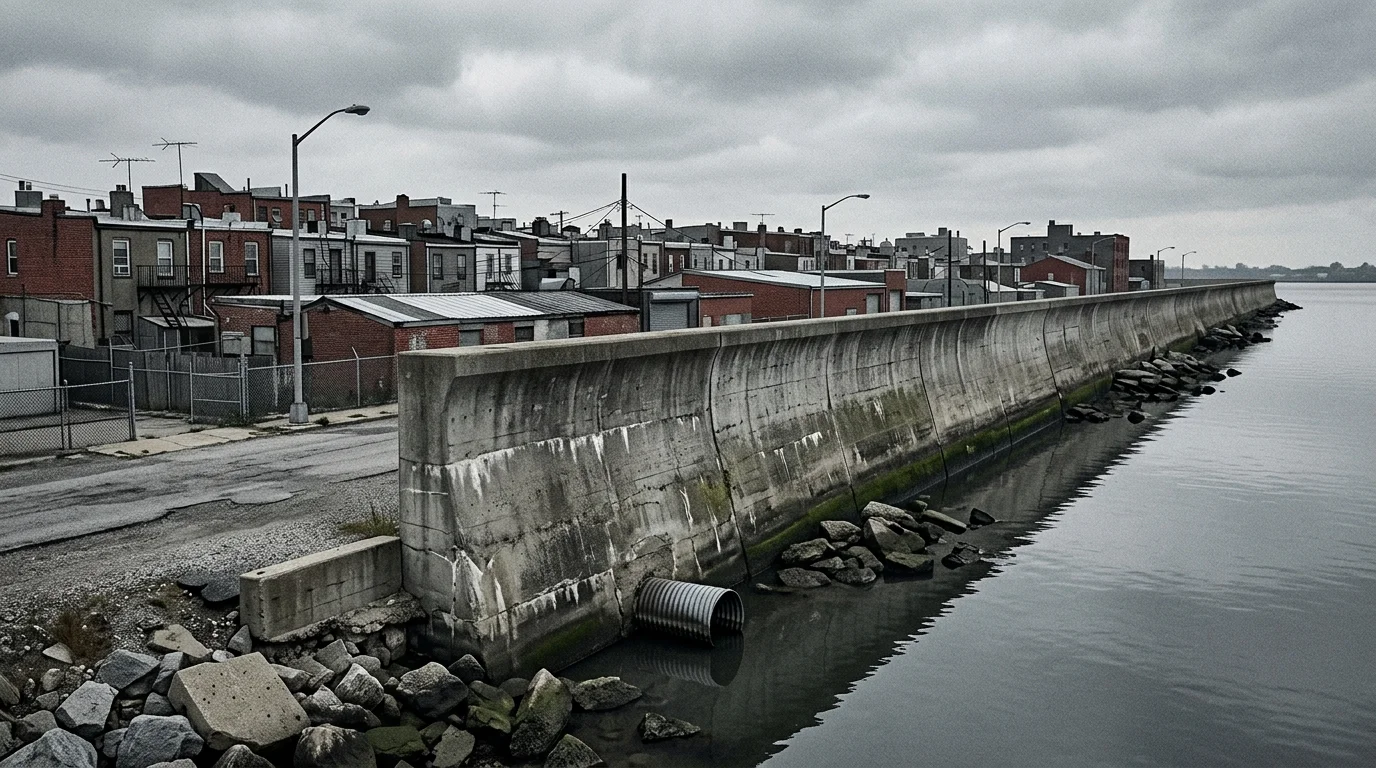
Maine's broader transit portfolio provides some context for how unusual this award is. The 389% year-over-year spike is real in the data but narrow in its origin: the prior comparison window held only about $4.8 million in routine FTA formula grants, the kind of steady-state funding that flows to systems like Greater Portland Transit District (currently carrying $8.3 to $9 million in active FTA bus and formula grants) and Bangor's Community Connector ($2.3 million active). Maine has 20 bus-service providers and no urban heavy rail. Its transit funding is typically incremental and formula-driven. A $23.5 million competitive award is, by the state's own standards, a structural outlier.
What it means practically: the RAISE grant is obligated through April 2031, giving MaineDOT and Downeast Transportation a procurement runway but also a deadline. The electric buses need to be specified, bid, ordered, manufactured, delivered, and integrated with charging infrastructure at the Gateway Center before the grant period closes. The grant program itself sunsets after FY2026 under current law, which means there is no obvious second bite if the procurement timeline slips.
The next signal to watch is the procurement announcement from Downeast Transportation: when the bus specifications are published for bid, the 2028 delivery estimate will either firm up or slide. That moment will tell observers whether the Gateway Center's first full season as an operational hub will end with its transit fleet catching up, or still waiting at the factory.