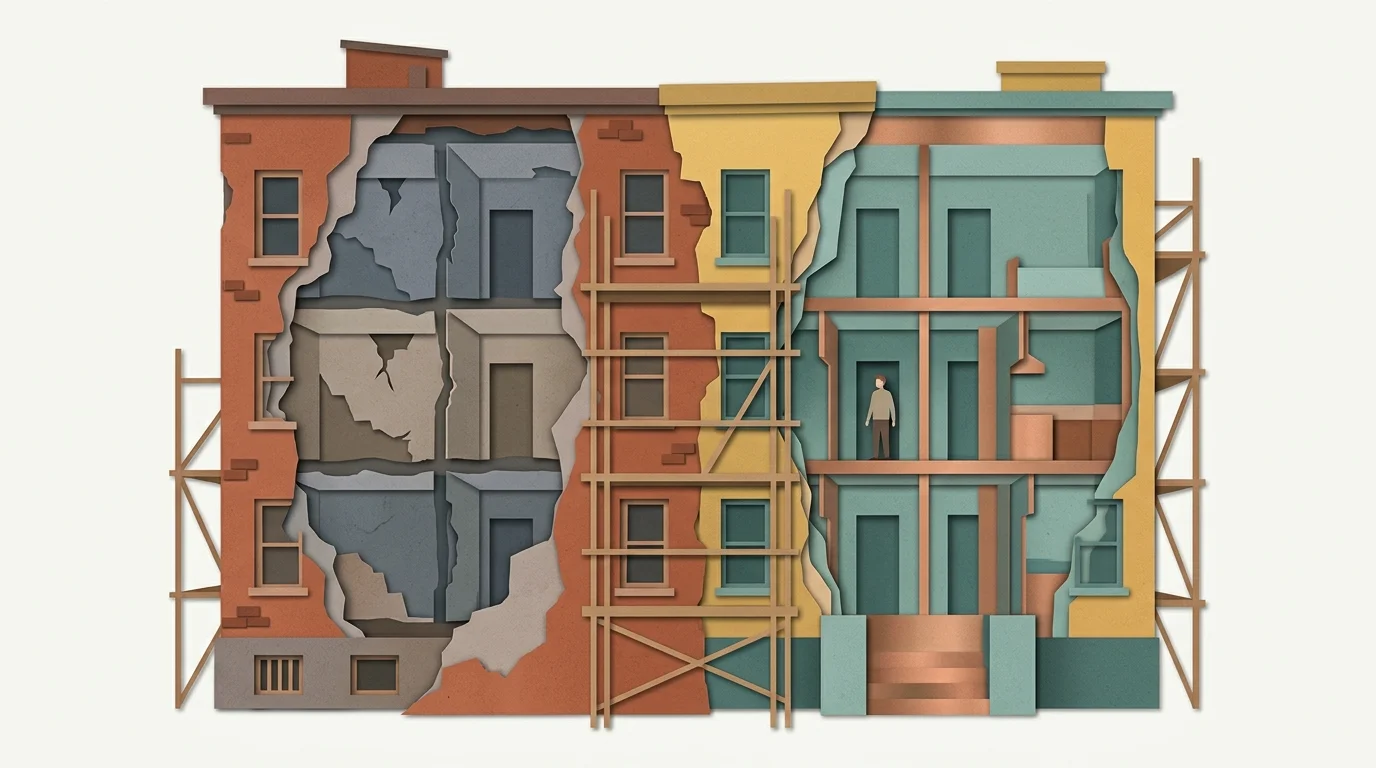
Boston's public housing stock, much of it built between the 1940s and 1970s, is crumbling under decades of deferred maintenance and chronic federal underfunding. Now the Boston Housing Authority is mounting a broad effort to address the damage before more units become uninhabitable.
The BHA manages roughly 27,000 apartments across about 63 developments, and conditions at many of them have drawn sustained media scrutiny in recent years. Tenants at Old Colony, Mary Ellen McCormack, and other properties have reported mold, pest infestations, heating failures, and elevator outages. Mary Ellen McCormack, opened in 1938, is one of the oldest public housing developments in the country. The authority has posted a bid opportunity seeking contractors for what it's calling its Restore Rebuild initiative, which targets restoration and rebuilding work across the portfolio citywide.
The stakes are unusually high in Boston, where median two-bedroom rents exceed $3,000 a month and the BHA waitlist has historically stretched into the tens of thousands. Apartments that fall out of service due to neglect have no affordable equivalent anywhere in the private market.
Public housing nationally faces an estimated $70 billion repair backlog, a product of decades of Congressional underfunding of the federal Capital Fund. BHA's own deferred maintenance burden runs into the billions. The broader challenge is finding enough money to tackle it all: recent federal legislation, including the Inflation Reduction Act and the Bipartisan Infrastructure Law, has opened new funding streams for energy efficiency and climate resilience that housing authorities can potentially tap. HUD's Rental Assistance Demonstration program, which lets authorities convert public housing to project-based Section 8 to unlock private financing, has also given BHA tools it didn't previously have. The authority used a similar approach in the ongoing $1.5 billion redevelopment of Bunker Hill in Charlestown, one of the largest public housing transformations in the country.
Specific dollar amounts and which developments are prioritized in the Restore Rebuild initiative have not been publicly detailed. What's clear is that BHA is trying to move faster on repairs than traditional public procurement usually allows, using a contractor vehicle that can serve multiple sites rather than going through a separate bidding process for each property.
Many BHA developments also sit in flood-vulnerable areas, including the Columbia Point waterfront, adding climate resilience to the list of urgent concerns alongside basic habitability.
The contractor selection process is now underway.