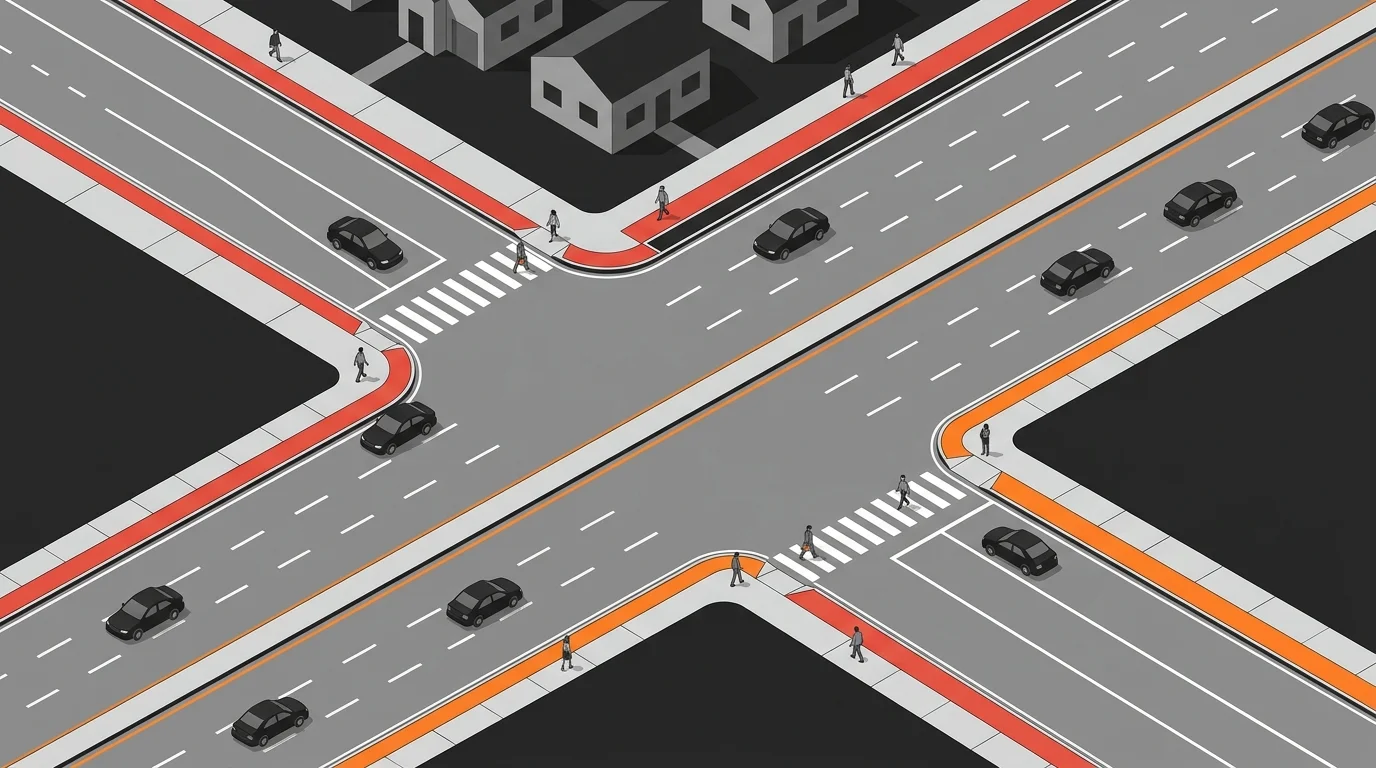
Westport, Connecticut is preparing to make physical changes to one of its busiest state routes after years of planning, moving forward with pedestrian safety improvements on Easton Road, the Route 136 corridor that cuts through the eastern part of town toward the neighboring town of Easton.
The project reflects a challenge familiar to many Connecticut suburbs: roads built in the mid-20th century for car traffic now run through neighborhoods where residents want to walk safely. Route 136 combines the features that make pedestrian conditions most dangerous on state highways, including higher speeds, wide lanes, and crossings that were never designed with foot traffic in mind.
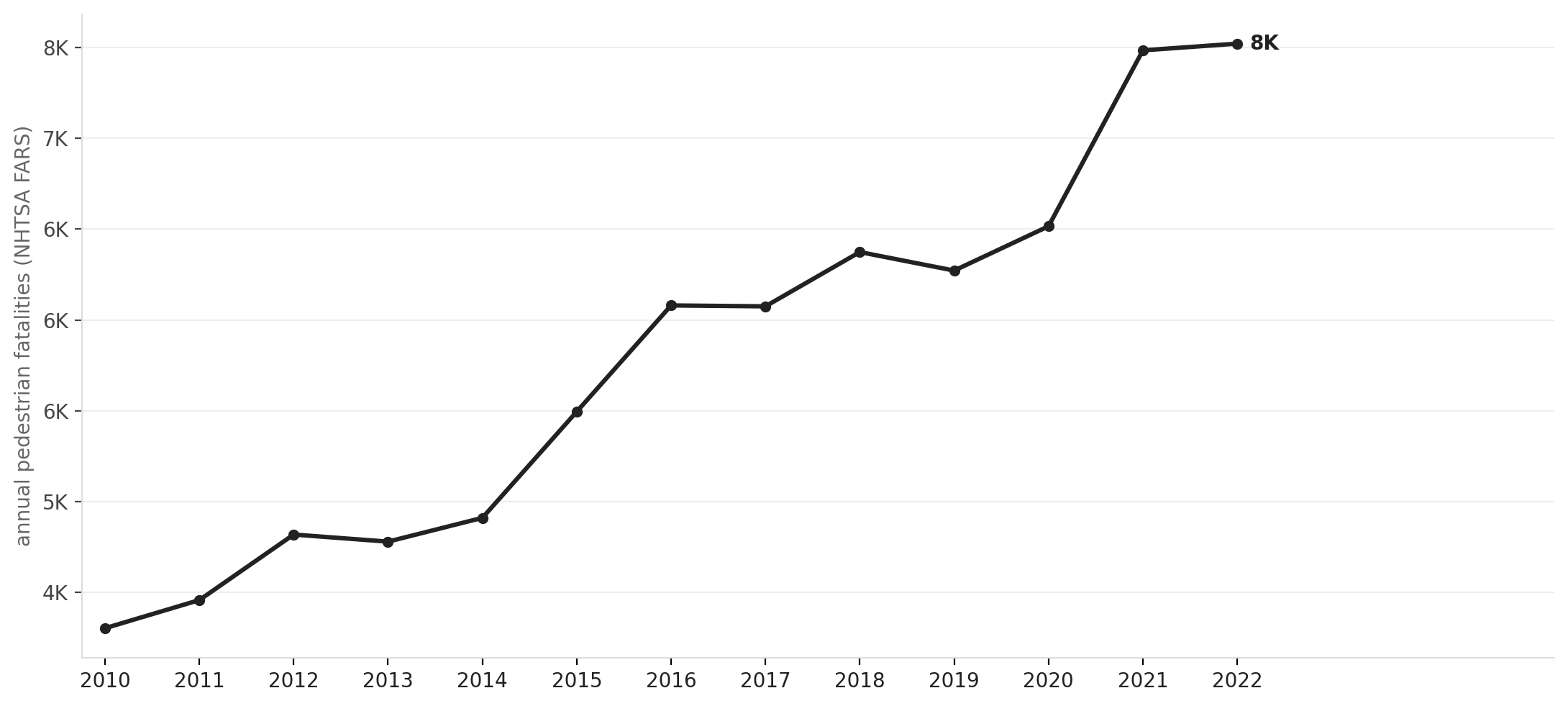
The backdrop is sobering. Pedestrian deaths in the United States climbed roughly 77 percent between 2010 and 2022, reaching levels not seen since the 1980s. Connecticut identified pedestrian safety as a priority in its Strategic Highway Safety Plan, and the state has been pushing Complete Streets policies requiring road projects to accommodate all users. Federal dollars from the 2021 Bipartisan Infrastructure Law's Safe Streets and Roads for All program have helped fund similar projects in communities across the state.
Source: NationGraph.
For Westport, a town of about 27,000 residents with strong commuter rail connections to New York City, walkability has become a quality-of-life priority alongside safety. The town's Plan of Conservation and Development specifically called for improved pedestrian connectivity, and the RTM has reviewed capital spending on infrastructure with that goal in mind.
The bid posted by the town's Finance Department signals that design and engineering work is already complete, meaning the project has cleared the longest and most complicated phases. The specific improvements, whether crosswalks, sidewalks, signals, or curb changes, are detailed in the full bid documents, which are available through the town. Because Route 136 is a state-numbered road, the project involves coordination with the Connecticut Department of Transportation.
The exact cost and funding sources were not specified in the town's posting. It's worth noting that Connecticut's Local Transportation Capital Improvement Program has been a major funding pipeline for projects like this, and federal Safe Streets grants have supported similar work in towns across Fairfield County. The town has not publicly confirmed whether outside grants contributed here.
With the bid now open, contractor selection is the next step before construction can begin.