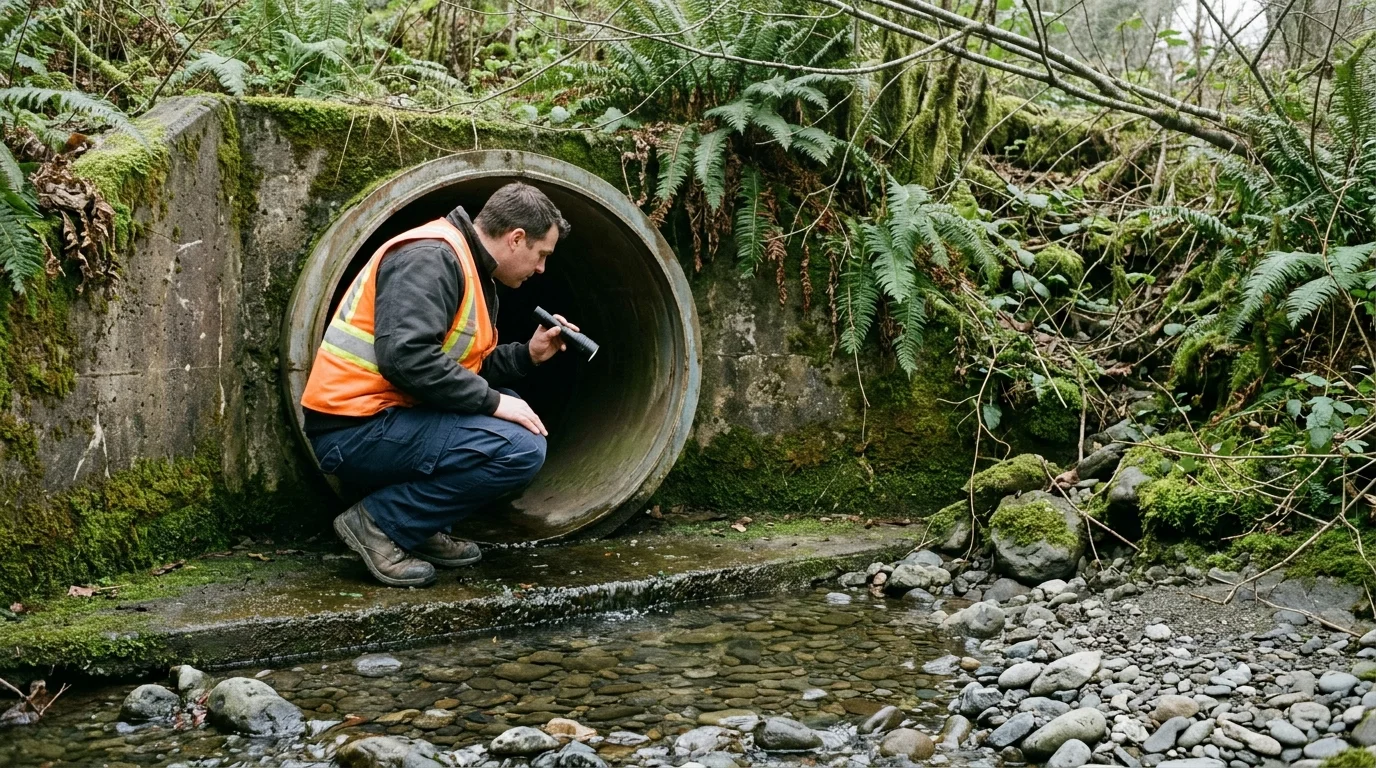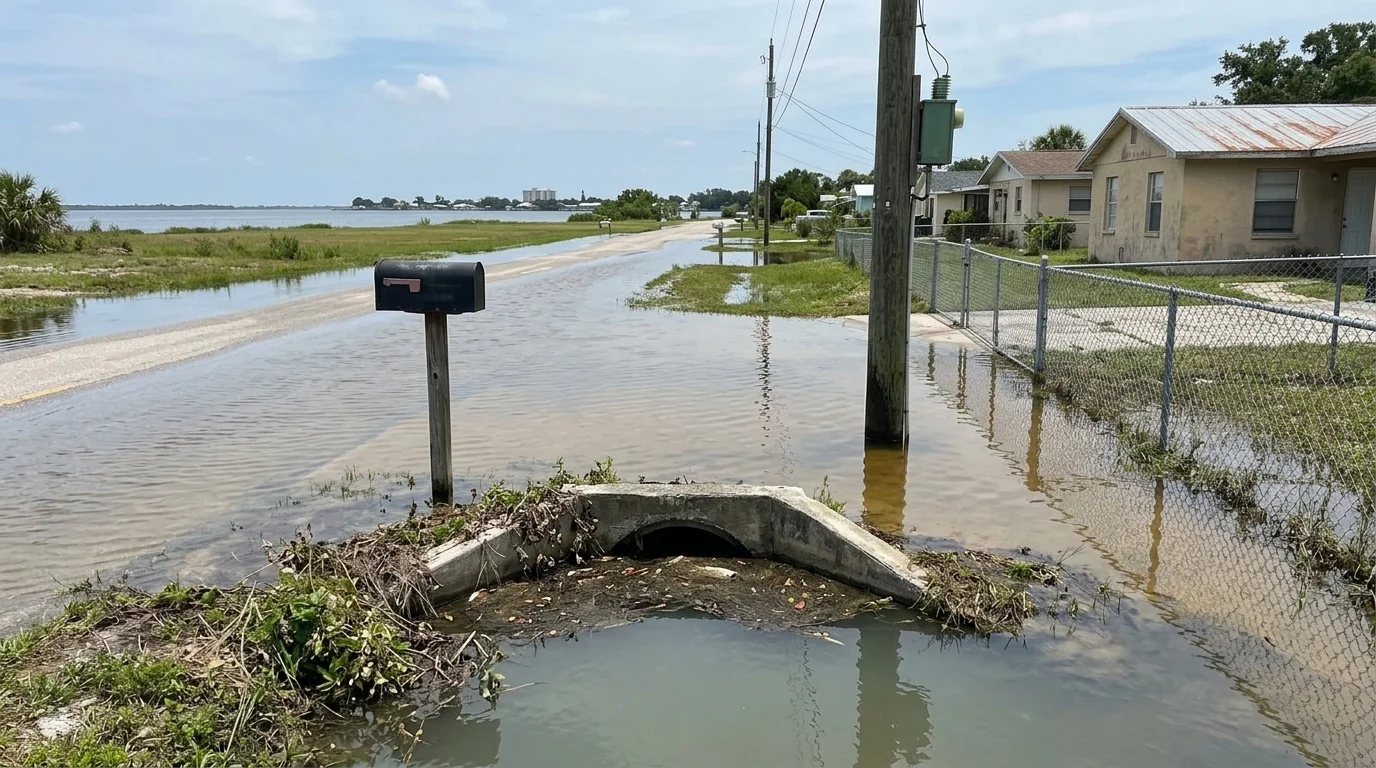
Twelve Florida municipalities issued their first stormwater management RFP in more than a year during the last 30 days, a burst of procurement activity concentrated almost entirely in towns with populations under 40,000 and, in several cases, under 5,000. The towns entering this market now are not Florida's large counties, which have been spending disaster recovery funds for months. They are the places that, until recently, had no budget to redesign anything.
The reason they have one now is traceable to a single federal announcement. On January 16, 2025, HUD allocated $925.4 million in Community Development Block Grant Disaster Recovery funds to Florida for damage from Hurricanes Debby, Helene, and Milton, the three named storms that struck the Gulf Coast in a 13-month span from August 2024 through October 2024. Separate direct county allocations followed: $813 million to Pinellas, $585 million to Pasco, $252.7 million to Manatee, $210 million to Sarasota, and $100.7 million to Lee County, all with six-year spending windows. Those action plans were finalized and submitted to HUD through mid-2025, and the money has now begun cascading down to sub-county governments as sub-grantee awards.
At the same time, FDEP's Resilient Florida Program opened its 2026 implementation grant application portal on July 1, with a September 1 deadline. That deadline is the acute pressure point. To submit a competitive application, a municipality needs an engineering scope, a cost estimate, and ideally a vendor already under contract. Towns that want a piece of the Resilient Florida program have roughly six weeks to procure what larger governments spend months assembling. The result is a procurement crunch visible in the raw monthly numbers: 38 Florida institutions issued stormwater RFPs in July 2026, up from 32 in June, and August is already tracking above June's pace in its first 11 days.
The individual cases illustrate the demographic skew. Estero, a Lee County community of 38,200, issued a comprehensive Stormwater Master Plan RFP, a foundational document the village needs before it can apply for any implementation funding. Eatonville, an Orange County municipality of 2,284 people, went further, issuing a combined engineering and landscape architecture RFP for the Lake King Stormwater Resiliency, Flood Mitigation and Wetland Restoration Project. Redington Beach, a Pinellas barrier-island town of 1,373 residents, is bidding the Boca Ciega Bay Stormwater Quality Improvement Project. These are not large public works offices with in-house engineering capacity. They are small general-purpose governments that have historically deferred stormwater investment because they could not afford it and, after major storms, could only afford to patch.
What CDBG-DR offers that previous federal disaster programs did not is flexibility. FEMA Public Assistance funds repair of damaged infrastructure to its pre-disaster condition. CDBG-DR funds redesign, resilience upgrades, and future-proofing, making it the first mechanism that gives a town like Eatonville or Redington Beach a legal path to spend federal money on a better system rather than the same broken one. Hillsborough County, working with $709 million in CDBG-DR, approved a $95 million stormwater and drainage improvement plan in April 2026, with projects entering design phase this summer, a template smaller governments are now racing to replicate at their own scale. FEMA added $90 million in supplemental Florida recovery funding in June 2026, including a $765,000 stormwater restoration grant to the City of Anna Maria, signaling that federal agencies are still actively approving project-level awards even as the CDBG-DR pipeline matures.
For residents in these smaller communities, the shift is concrete. A town that issues a Stormwater Master Plan RFP today is, at minimum, 12 to 18 months away from any physical construction, assuming procurement, design, permitting, and contracting proceed without delay. But without the RFP, the town has no project and no path to any state or federal matching grant. The engineering scope that looks like a procedural step is actually the gate that determines whether a community gets into the funding queue at all.
The next signal to watch is the September 1 FDEP deadline. The municipalities issuing RFPs now are betting they can complete procurement, execute contracts, and assemble grant applications in under two months. Some will not make it. Those that do will be positioned to draw from a Resilient Florida program that, according to FDEP's 2025-2026 annual plan, is distributing implementation grants in the hundreds of millions of dollars statewide. Those that miss the window face a straightforward choice: wait for the next grant cycle or attempt to proceed on CDBG-DR sub-grantee funds alone, which carry their own spending deadlines and compliance requirements. For a town of 1,373 people, neither option is simple.