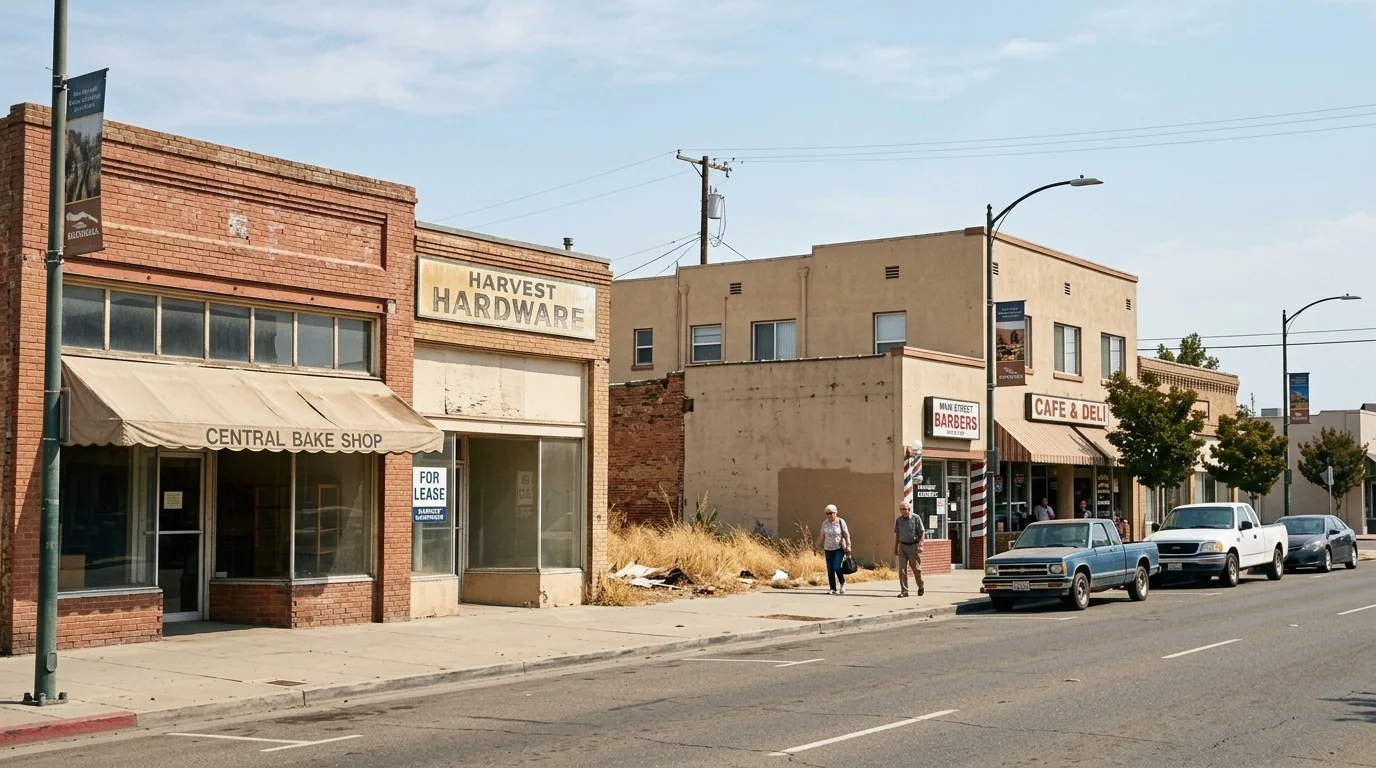
Twenty-three California institutions issued housing-related RFPs for the first time in more than a year during a single 30-day window in September 2026, and the cities driving that surge are not Los Angeles, San Francisco, or San Diego. They are Madera, Turlock, Porterville, Paso Robles, Morro Bay, Solana Beach, and a cluster of rural county agencies from Shasta to Mendocino to Yuba. The big metros set the terms of California's housing debate. The smaller cities are apparently where the money is finally landing.
The explanation is not a single policy. It is at least five separate funding streams whose deadlines, disbursement cycles, and compliance windows all happen to be converging in roughly the same 90-day period, and that convergence is doing what political ambition alone could not: forcing procurement.
The most immediate pressure is REAP 2.0, a $600 million state appropriation that was originally due to be spent by June 2025. When the 2024 budget threatened to gut the program, including SCAG's $231 million allocation, the legislature intervened with AB 130 and AB 131, extending the expenditure deadline six months to June 2026. That extension bought time, but it also concentrated urgency: cities that received sub-allocations through their metropolitan planning organizations now had a fixed horizon to show activity. Madera's RFP for a downtown mixed-use implementation strategy is a direct result. The grant reached Madera not through a competitive application the city filed with Sacramento, but through SCAG's sub-allocation process, which is how REAP 2.0 was designed to work, and why its downstream effects show up in places the housing headlines rarely mention.
Source: NationGraph.
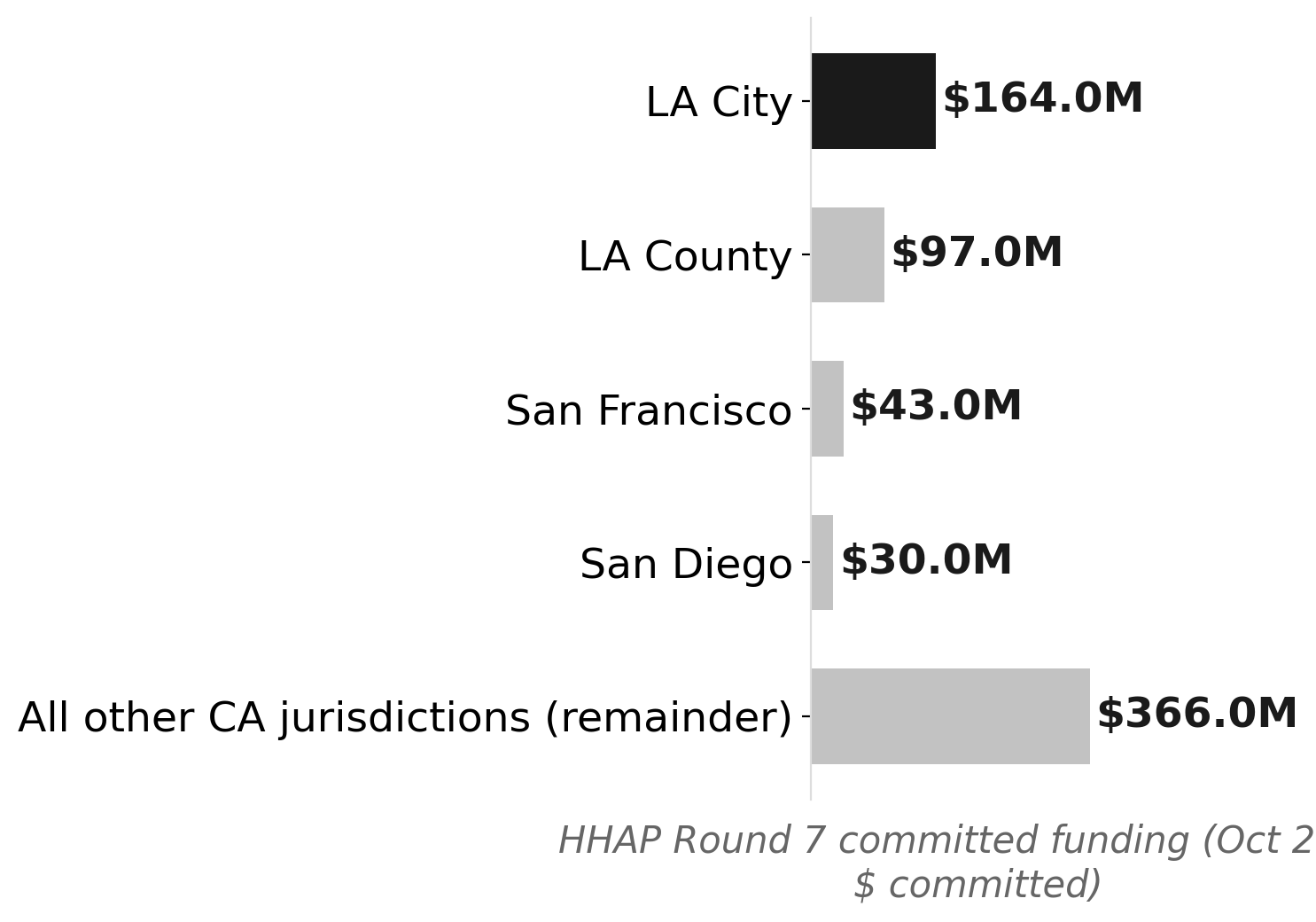
A second stream running in parallel is HHAP, the state's Homeless Housing, Assistance and Prevention program. Round 6 grants exceeding $700 million were committed to California cities and counties starting in October 2024, with a five-year performance period running through 2029. The anchor awards went to LA City ($164 million), LA County ($97 million), San Francisco ($43 million), and San Diego ($30 million). But smaller jurisdictions received their own grants and, in some cases, are now procuring the transitional housing placement services those grants were meant to fund. Yuba, Mendocino, San Mateo, and Marin counties all appear in the September re-entrant list for exactly this kind of service contract. On July 13, 2026, Governor Newsom signed the More Housing, Faster package, which authorized $900 million in new HHAP Round 7 funding alongside One-Stop Shop financing reforms projected to cut per-unit construction costs by $60,000 to $70,000, signaling the pipeline will keep refilling even as current-round dollars are being spent.
Turlock's procurement this window is driven by HOME-ARP, a federal HUD program funded through the American Rescue Plan with a national pool of $5 billion, focused specifically on affordable rental housing construction. Porterville's RFP covers Year 4 of its PLHA five-year plan, the Permanent Local Housing Allocation, a state formula grant for housing production whose annual disbursement windows create their own recurring pressure. These are not the same program as REAP 2.0 or HHAP. They have different eligibility rules, different administrators, and different timelines. The convergence is circumstantial, not architectural.
The September timing adds one more layer. The California Tax Credit Allocation Committee set a September 8, 2026 deadline for its final LIHTC application round of the year. Developers assembling tax credit applications need local commitments and site-control documentation in place before that date, which means cities that want to be part of a LIHTC deal have to move in August or September. Paso Robles and Morro Bay, both procuring consultants for their 7th Cycle Housing Element updates covering 2029 to 2036, are on a slightly different clock: the state's RHNA compliance window is the long-term forcing function, but the practical deadline is having an adopted element in place before the next penalty exposure period begins.
The Terner Center documented in February 2026 that California's housing finance system is highly fragmented and inefficient, a conclusion that prompted the legislature to create the new California Housing and Homelessness Agency to consolidate oversight. Enterprise Community Partners estimated in March 2026 that nearly 40,000 shovel-ready affordable units statewide are awaiting final funding. The re-entry of 23 smaller institutions into active procurement is a signal that some of that funding is moving, not because the system became less fragmented, but because enough deadlines arrived at once to overcome the inertia that fragmentation creates.
The next signal to watch is whether this September cluster produces executed contracts before the REAP 2.0 extended deadline closes in late 2026, and whether the November ballot measure, the $11.25 billion Veterans and Affordable Housing Bond Act of 2026, placed by the legislature as a proposed bond measure, passes and restarts the cycle for cities that miss this window entirely.