Federal flood infrastructure commitments to Washington County, Utah have jumped from $712,000 to more than $10.4 million in the past 90 days, a 1,361 percent increase driven almost entirely by a single USDA grant program that has been slowly working its way through environmental review since the Obama administration. The timing is stark: the federal government finalized its largest flood-protection decision for Hurricane City on September 17, 2026, the same day as this story, one month after a monsoon event proved exactly why the project exists.
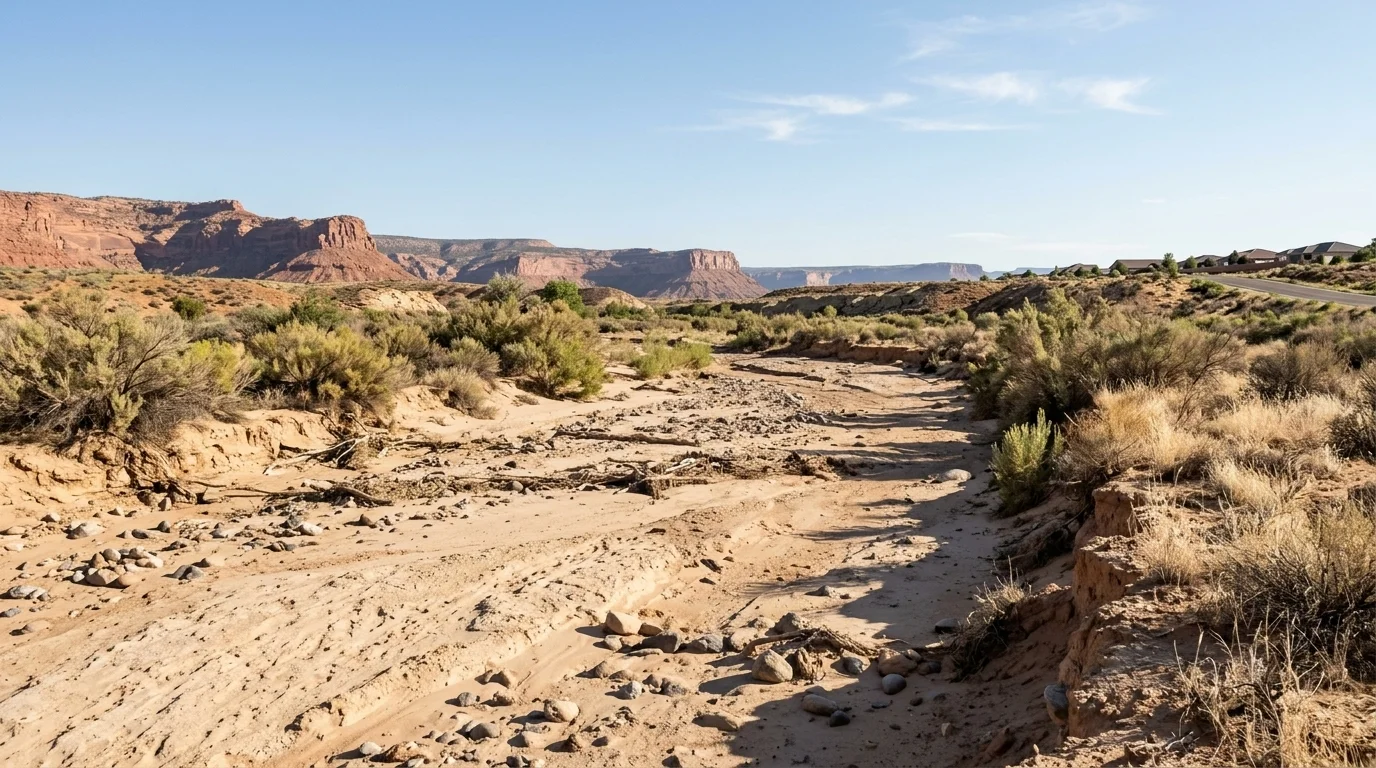
The mechanism behind both investments is the Watershed Protection and Flood Prevention Act of 1954, known as PL-566, administered by USDA's Natural Resources Conservation Service. It is not a disaster recovery program in the conventional sense. It funds structural flood control and water management infrastructure in small watersheds, built in partnership with local sponsors, and it moves slowly. In Washington County's case, the original federal watershed plan for Warner Draw dates to 1968. Fifty-eight years of population growth, road construction, and residential development in former agricultural floodplains have dramatically increased what engineers call the flood exposure of the area surrounding Hurricane City, a fast-growing community of roughly 25,000 residents at the confluence of multiple washes draining a 298-square-mile watershed.
The first of the two distinct PL-566 investments to arrive was a $9.94 million NRCS construction grant to Washington County, awarded June 22, 2026, for Phase 2 of the Warner Draw Watershed Irrigation Efficiency project. That grant covers infrastructure improvements to reduce agricultural water loss and improve conveyance along the lower watershed through May 2029. It is a water management project, not a dam, and it addresses a different portion of the flood and irrigation challenge.
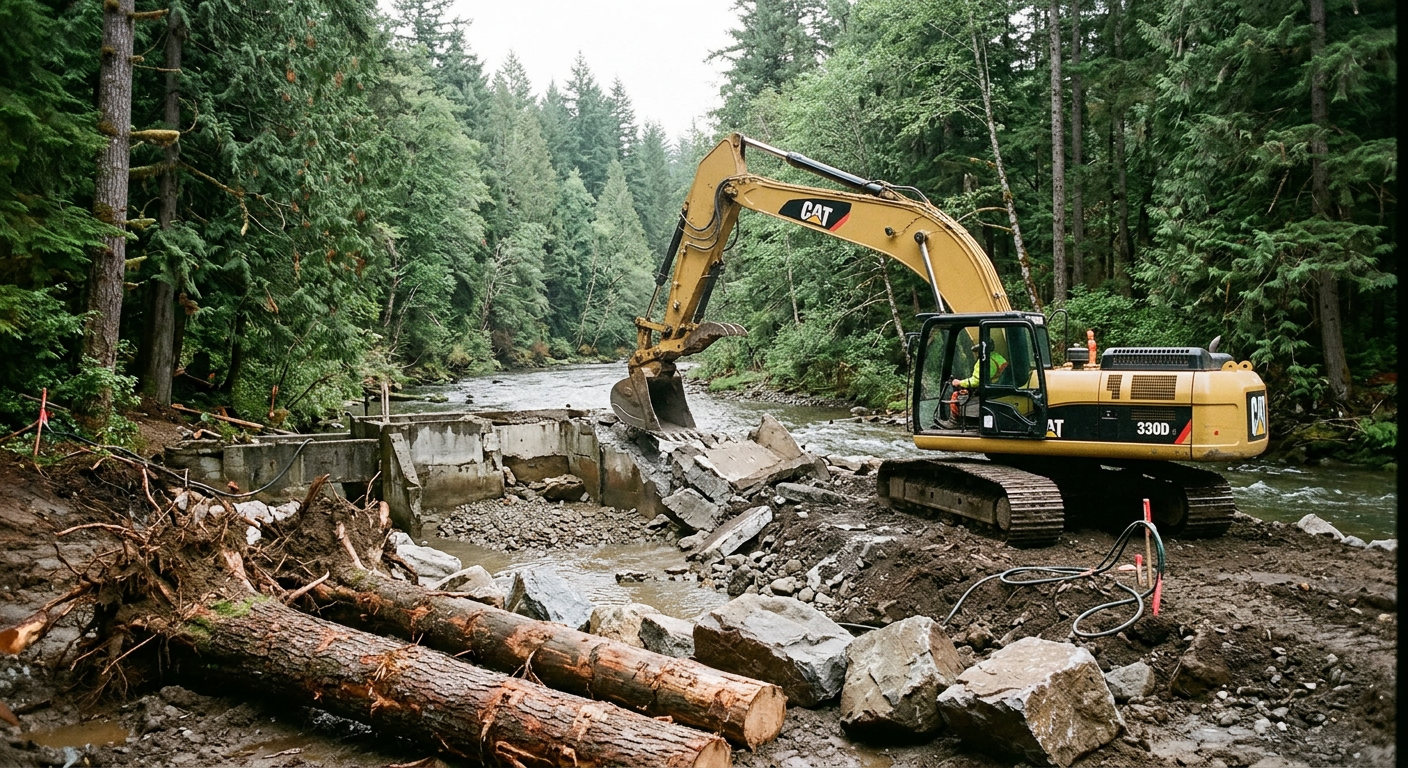
The larger and more consequential action came today. NRCS published its Record of Decision for the Gould Wash Flood Protection Project in the Federal Register, selecting the alternative that calls for a dry detention dam upstream of Hurricane City combined with 12,540 linear feet of Gould Wash channel modifications capable of conveying 3,000 cubic feet per second. Total project cost is approximately $63 million. NRCS will contribute $57.7 million; Washington County and Hurricane City will cover roughly $4.9 million. No comparable PL-566 watershed grant was awarded to neighboring states, including Nevada, Arizona, Colorado, New Mexico, or Idaho, in the same 90-day window.
The NEPA process for the Gould Wash project formally concluded with the Final Plan and Environmental Impact Statement published on March 20, 2026, in the Federal Register. The Record of Decision completing that review arrived today. What arrived in between was August 14.
On that date, monsoon rains sent flows at the Gould Wash and Virgin River confluence to approximately 4,000 cubic feet per second, exceeding the 3,000 CFS design capacity of the channel the project is designed to build. Streets flooded from Hurricane to Apple Valley. As Fox13 reported in the flood's aftermath, the plan was in the works, but too late for many. The August event was not historically unusual for this drainage. Washington County's flood record stretches to the winter of 1861-62, and the 2005 Virgin River flood destroyed 18 homes and damaged 200 more in the same corridor. The infrastructure gap has been documented for decades; the PL-566 process simply takes time.
The irony embedded in this story's headline metric is worth naming directly. The 1,361 percent year-over-year spike in federal grants tagged to "hurricane recovery" in Utah is a naming artifact: the keyword pulls grants referencing Hurricane City, a municipality named for an 1860s settlement, not for Atlantic or Pacific storms. The prior-year $712,000 baseline reflects two smaller Department of Transportation airport improvement grants to Hurricane City's municipal airport. There is no disaster declaration, no FEMA involvement, and no storm named Hurricane anywhere in this ledger. What there is instead is a Depression-era federal statute, a multi-year environmental review, a county willing to put up nearly $5 million in matching funds, and a city that flooded again while it waited.
For residents of Hurricane City and the broader Washington County area, the practical question is now construction timing. The Record of Decision unlocks the construction award process, but federal infrastructure projects of this scale typically require additional contracting and mobilization time before ground breaks. The Warner Draw Phase 2 grant runs through May 2029; the Gould Wash project timeline has not been publicly specified. The next signal to watch is whether NRCS and Washington County execute a project agreement for construction funding, and when that agreement moves the Gould Wash detention dam from a Record of Decision to an active construction contract.