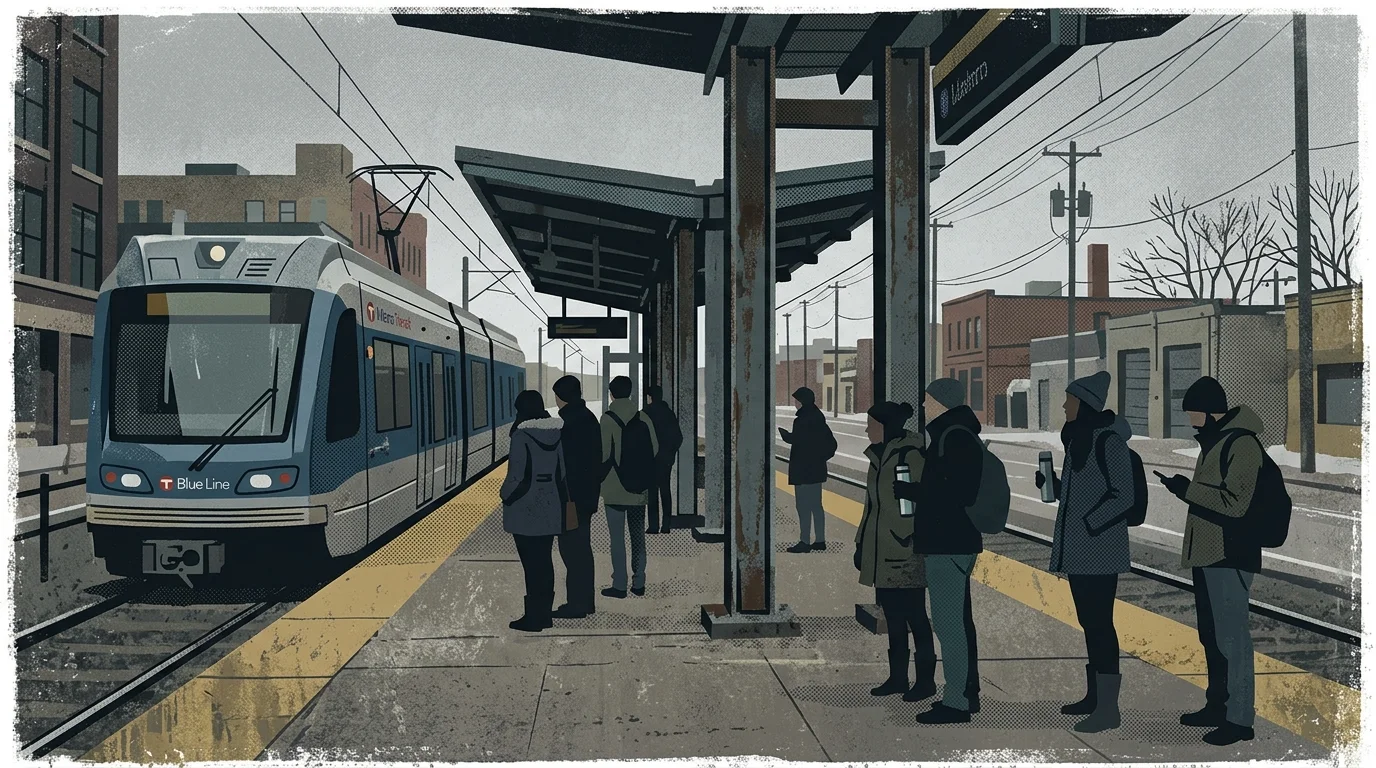
The Lake Street / Midtown station, one of the busiest stops on Minneapolis's Blue Line light rail, is getting a renovation after more than two decades in service, as the Metropolitan Council moves to modernize aging infrastructure at a transfer point that thousands of riders use daily.
The station sits where the Blue Line meets Lake Street, one of Minneapolis's most heavily traveled east-west corridors and a hub for bus connections serving the city's large Latino, Somali, and East African communities. It opened in 2004 as part of the Twin Cities' first modern light rail line and, like the rest of that first generation of infrastructure, is now at the age where platforms, elevators, escalators, lighting, and passenger systems need serious attention. The specific scope and budget of the renovation have not been publicly detailed.
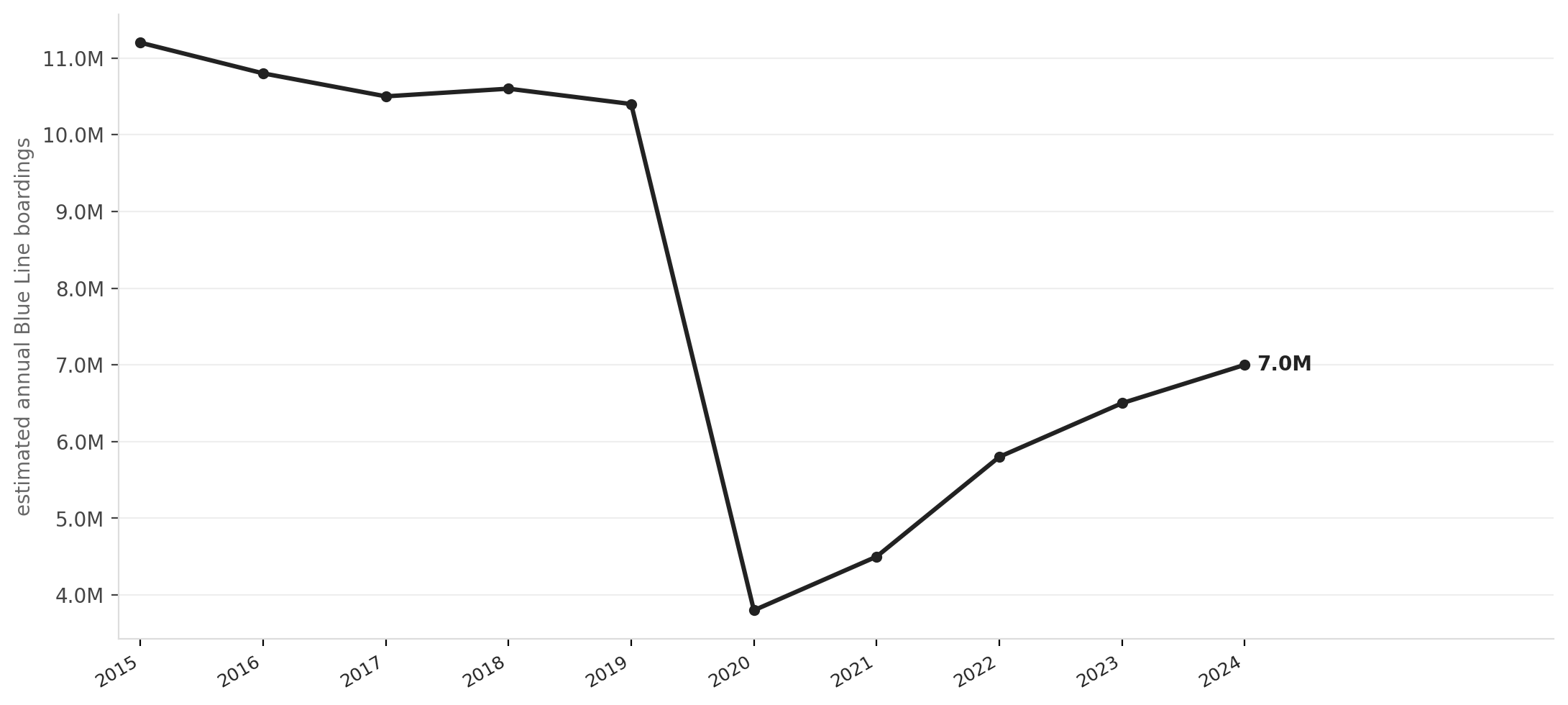
The project comes at a difficult moment for Metro Transit. Ridership on the Blue Line has recovered more slowly from the pandemic than at peer systems, and safety concerns including assaults, drug activity, and fare evasion have eroded public confidence and fueled political fights at the Minnesota legislature. The Lake Street corridor itself was heavily damaged during the civil unrest that followed George Floyd's murder in May 2020, and its recovery has been slow and uneven.
Source: NationGraph.
For the Metropolitan Council, the regional authority overseeing transit in the seven-county Twin Cities metro, the investment reflects a shift in focus. With the Green Line Extension bogged down by billions in cost overruns and repeated delays, maintaining and improving the system that riders already depend on has taken on new urgency. Federal infrastructure funding passed in 2021 expanded grant programs specifically for state-of-good-repair projects, making capital work like this more financially viable.
The Council has posted the construction solicitation as it moves to select a contractor. The renovation is also part of a broader question facing the region's transit system: whether targeted reinvestment in existing infrastructure can rebuild the public confidence that years of safety headlines and service struggles have worn down.