Minneapolis is moving to put attorneys on the side of low-income renters facing eviction, a recognition that the legal system's built-in imbalance leaves many tenants defenseless when landlords move to remove them.
The city's Community Planning & Economic Development department has posted a solicitation for a legal services provider to represent low-income tenants in eviction proceedings and other housing disputes. The contract amount and duration have not been publicly specified.
The stakes are significant. Roughly 90% of landlords in eviction court show up with attorneys; fewer than 10% of tenants do. That gap has been well documented by housing advocates for years, but it grew more urgent after Minnesota's COVID eviction moratorium ended in June 2022 and a backlog of cases flooded the courts. Hennepin County eviction filings climbed from about 5,600 in 2021 to more than 12,000 by 2023, with Minneapolis accounting for the bulk. Over the same period, Minneapolis rents rose roughly 20 to 25 percent while wages lagged.
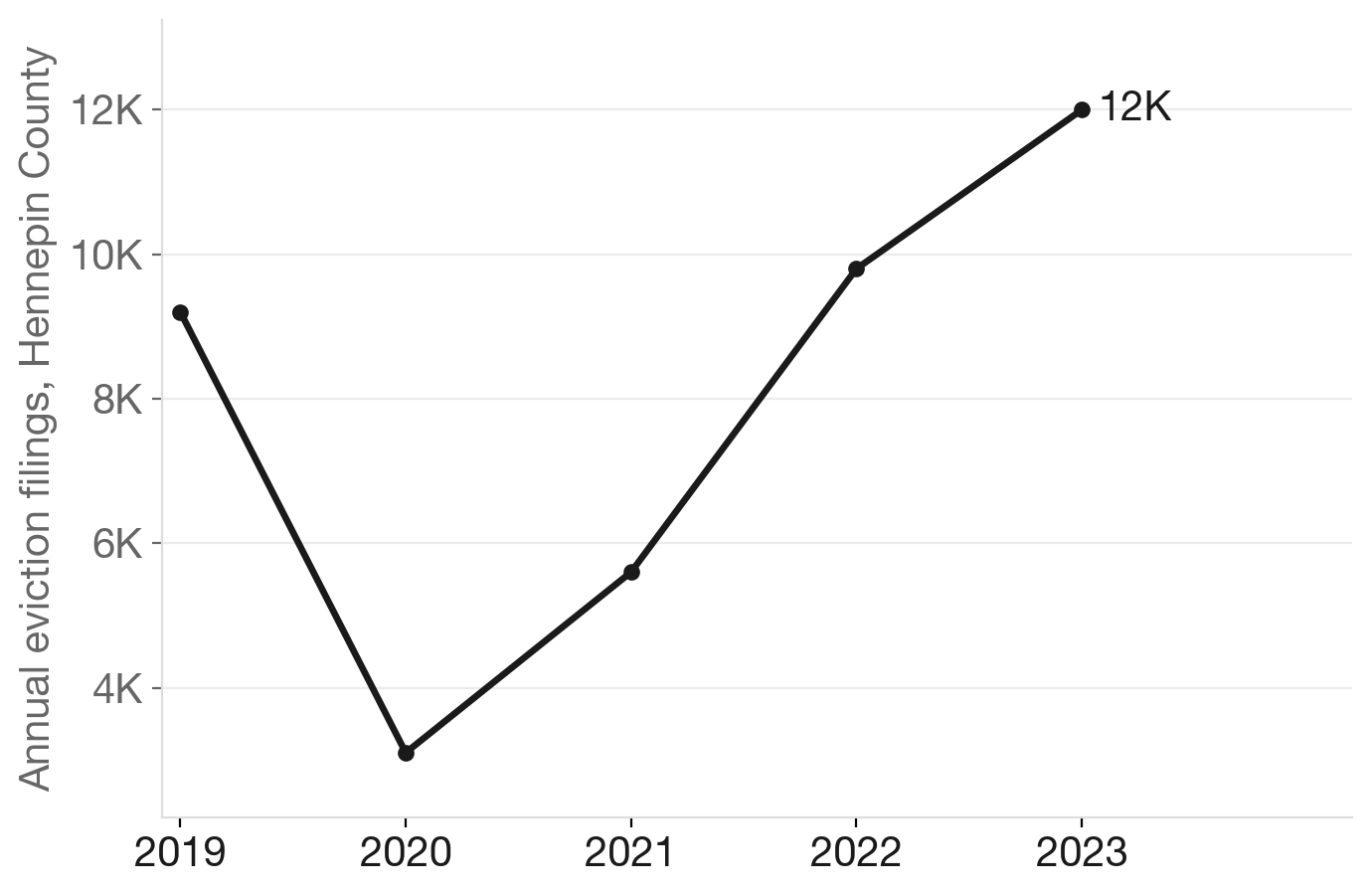
Source: NationGraph.
Minneapolis has about 425,000 residents and a renter population that makes up around 52% of households, one of the higher renter shares among major Midwestern cities. Eviction hits that population unevenly: Black residents make up about 19% of Minneapolis renters but over 60% of eviction defendants, according to a 2023 University of Minnesota study.
The city has been building a tenant protection framework since 2019, when it passed a Tenant Protection Ordinance, and the state added new tools in 2023 with sweeping reforms including pre-eviction notice requirements and expungement rules. But rent stabilization, approved by voters in 2021, remains tied up in implementation disputes, leaving legal defense as one of the few protections functioning on the ground.
The timing also raises a budget question. Federal ARPA pandemic relief dollars are sunsetting in 2026, and it is unclear whether this contract is backfilling expiring funding or represents new city investment in tenant services.
Organizations like Mid-Minnesota Legal Aid and HOME Line have historically provided this kind of representation in Minneapolis. Which provider the city selects, and how many tenants the program will serve, will become clearer as the process moves forward.