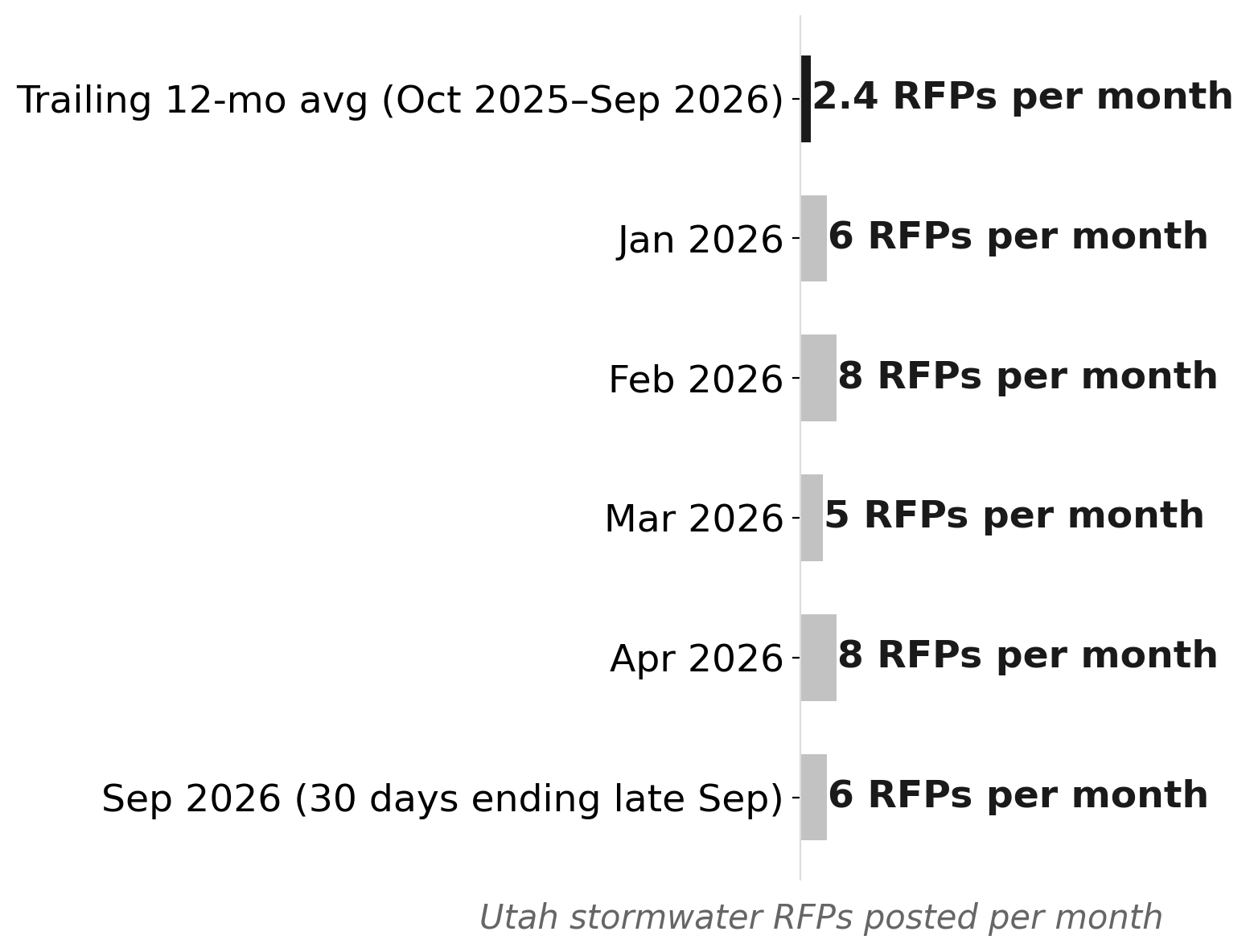
Utah municipalities posted six stormwater procurement solicitations in the 30 days ending late September 2026, two and a half times the trailing 12-month average of roughly 2.4 per month. This is not a spending boom. It is what a regulatory deadline looks like when it lands on dozens of cities at once.
The trigger is a single permit: Utah's Small MS4 General UPDES Permit No. UTR090000, administered by the Utah Division of Water Quality under delegated Clean Water Act authority, expired at midnight on May 11, 2026. Under the renewal terms, every small MS4 permittee, cities and towns whose storm systems drain to state waters, must submit a revised Storm Water Management Program to the state Director within 180 days of the new permit's effective date, then begin implementation within 30 days of filing a completed application. Those two deadlines, stacked together, compress planning into execution with little slack. Cities that spent the winter updating their SWMPs on paper are now translating those documents into engineering contracts.
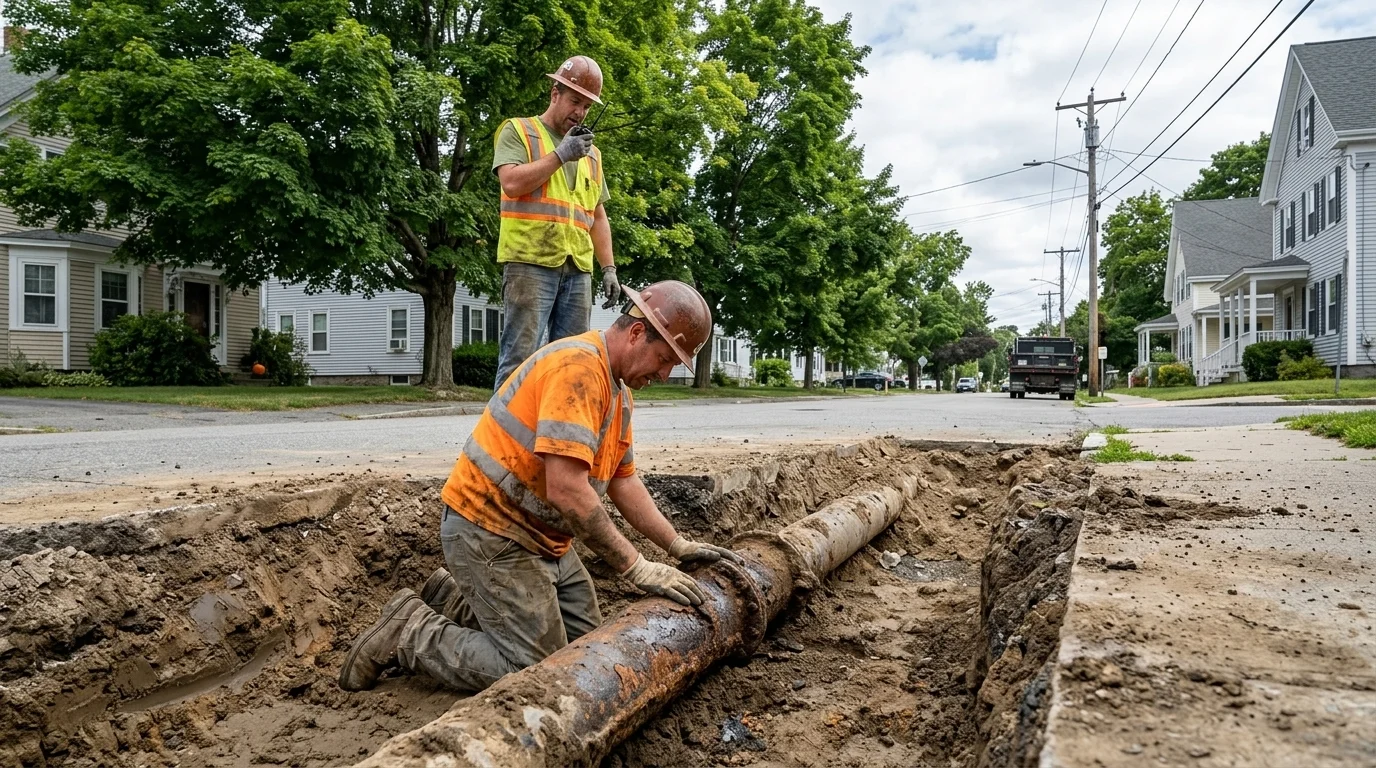
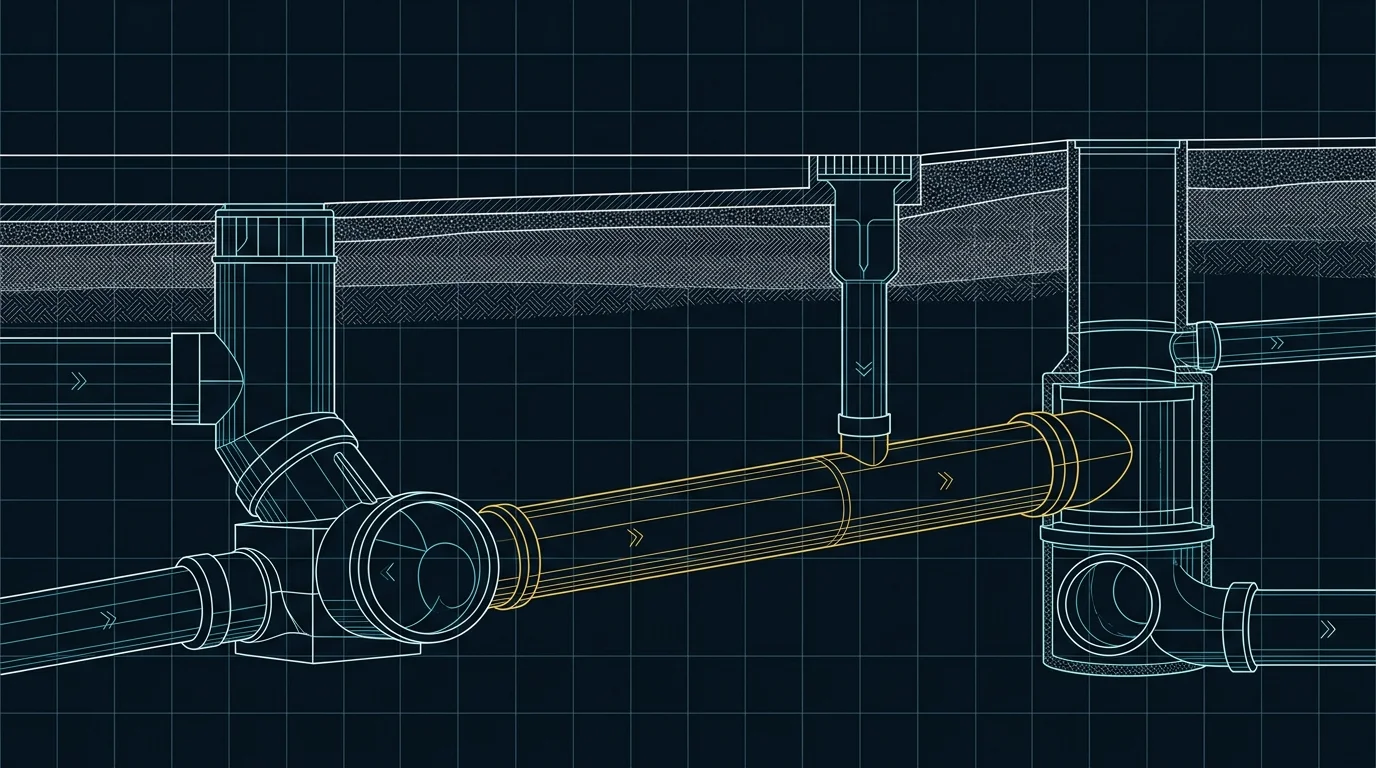
The active solicitations span the Wasatch Front and beyond. Park City is procuring a full Stormwater Master Plan. South Jordan issued an RFP for drywell installation on Lake Avenue. Ogden is moving on East Central infrastructure improvements. Spanish Fork has an open procurement tied to a public works building. These are distinct projects in distinct cities responding to the same compliance clock, not a coordinated state program, but parallel municipal sprints triggered by the same expiration date.
Source: NationGraph.
The monthly volume tells the fuller story. Utah's stormwater RFP count was elevated throughout 2026: six in January, eight in February, five in March, eight in April, before the September spike of six. That sustained elevation is different in character from a July 2025 peak of 19 solicitations, which was dominated by on-call engineering services contracts, the kind cities issue when they are still in planning mode and need consultants on retainer. The 2026 activity has shifted toward project-specific capital procurements, a signal that cities have moved from writing plans to building infrastructure.
Utah's growth context amplifies the pressure. The state is among the fastest-growing in the country, and the Wasatch Front corridor from Ogden through Salt Lake City to Provo has added impervious surface faster than aging stormwater systems were designed to absorb. Cities like South Jordan, Spanish Fork, and Saratoga Springs have expanded substantially since the last permit cycle in 2021. Some communities are newly designated MS4 permittees this cycle, with no prior permit history and therefore no existing SWMP to update, they are building compliance frameworks from scratch while the calendar runs. Utah's aridity adds a further twist: the state receives relatively little precipitation, but when storms arrive they tend to be intense and episodic, generating high-velocity runoff into systems calibrated for low baseline flows.
Federal financing is available to cities that clear the planning hurdle first. Utah DEQ holds approximately $21 million in active EPA Clean Water State Revolving Fund capitalization grants awarded in March 2026, running through 2029, which the agency sub-loans to municipalities for water quality infrastructure. Separate EPA grants under the Sewer Overflow and Stormwater Reuse Municipal Grant Program total roughly $416,000 in active Utah awards through 2027 to 2030. Section 319 Nonpoint Source Implementation Grants add another $869,000 administered through Utah DEQ. These are supplementary financing tools, not the cause of the procurement surge, cities must complete their SWMP filings before they can access most of this capital, but they meaningfully lower the cost of moving from plan to shovel.
A parallel compliance process is running simultaneously for state road infrastructure. UDOT's own MS4 permit, UTS000003, entered public comment for renewal as of July 23, 2026. That permit covers state highway drainage systems, not municipal storm sewers, and operates on its own track, but it expands the overall compliance surface and the demand on Utah's engineering and consulting capacity at the same moment cities are competing for the same contractors.
The next signal to watch is the 180-day SWMP submission window. Cities that received the new permit on or near its May 11 effective date face a submission deadline in mid-November 2026. Implementation must begin within 30 days after that. Municipalities that have not yet posted procurement solicitations are either ahead of the curve with existing master contracts or are cutting it close. A second wave of project-specific RFPs in Q4 2026 and Q1 2027 is the likely outcome for cities still working through their planning obligations now.