Seven California institutions issued a homelessness-related procurement request for the first time in more than a year over the past 30 days, a burst of contracting activity that makes California the most active state in the country by a wide margin: 14 agencies in California are currently seeking homelessness service vendors, compared to 5 in New York and 3 in Washington.
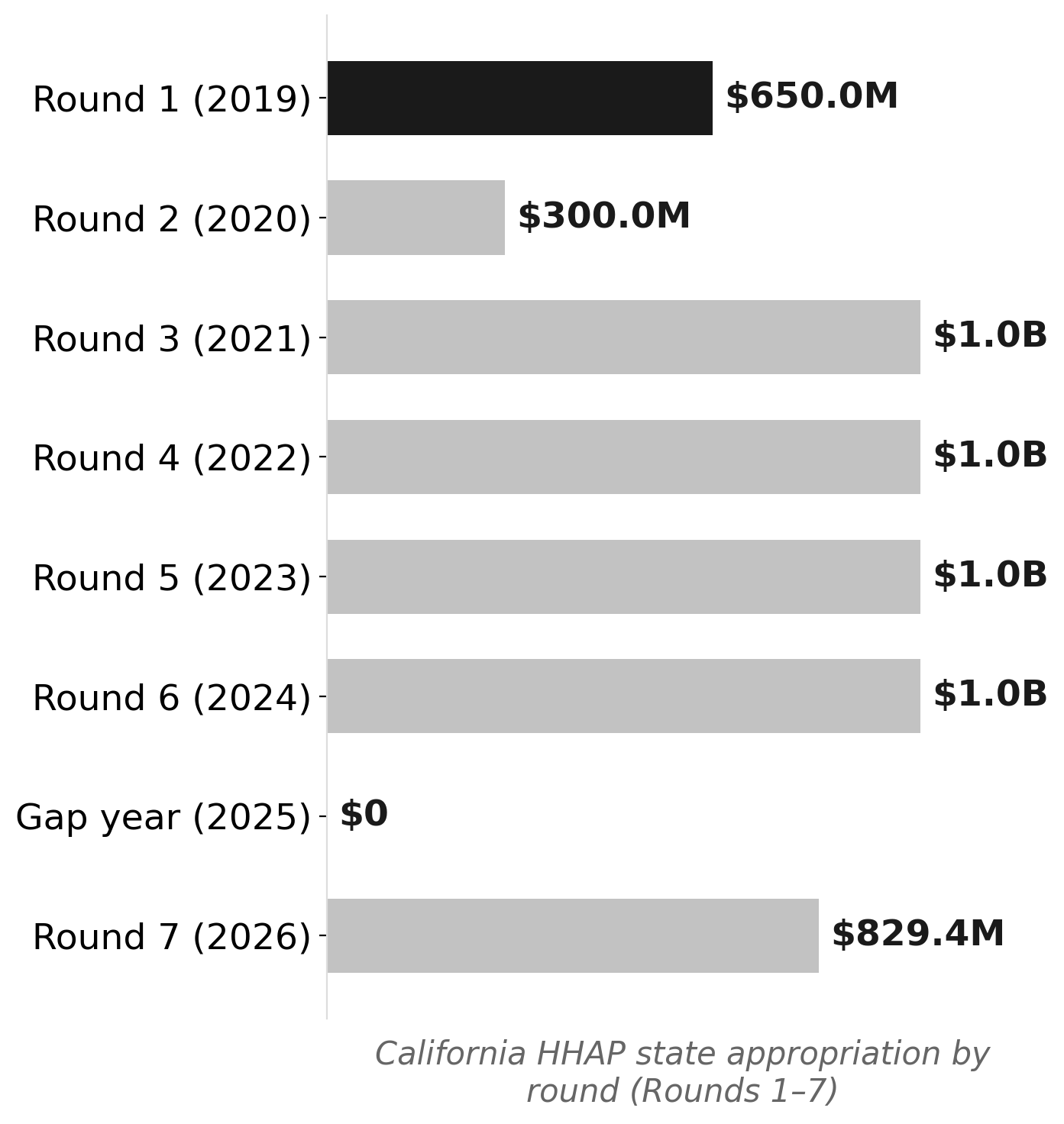
The common thread is a single state law and a hard deadline. AB 179 (Chapter 68, Statutes of 2026), signed by Governor Newsom on July 13, 2026, appropriated $900 million for Round 7 of California's Homeless Housing, Assistance and Prevention program. The California Department of Housing and Community Development issued an amended NOFA in August 2026 making $829.35 million available to existing HHAP 6 regional grantees. Those regional grantees have now begun issuing their own sub-grant notices, San Luis Obispo County's, for example, carried an October 30, 2026 deadline, and cities and service providers that want access to pass-through funds must line up qualified vendors before the money arrives. That sequence is what the seven new RFPs represent.
The deeper reason these agencies are procuring from scratch, rather than simply renewing existing contracts, is that HHAP received zero new funding in the 2025-26 fiscal year. It was the first year since the program launched in 2019 with no new appropriation, and advocates spent months pushing to restore the funding. The gap year allowed local service contracts to lapse. When Round 7 money was finally authorized, agencies could not simply extend what they had; they had to re-compete. That is a meaningfully different procurement posture than issuing a routine renewal, and it explains why jurisdictions that had been quiet for over a year are suddenly active at the same time.
Source: NationGraph.
The geography of the new entrants is striking. Victorville, an inland exurb in San Bernardino County, is seeking vendors for a Senior Housing Stability Assistance Program under the city's HHIP framework. Oceanside, a mid-size coastal city in San Diego County, is staffing up an outreach team through its HEART program. Mendocino County's Sheriff's Office, not typically a lead homelessness procurement agency, is seeking providers for transitional youth housing and a point-in-time count. Marin County's Health and Human Services department is issuing what it describes as a full System of Care Strategic Refresh. The Marin Healthcare District and the Oakland Housing Authority are also in the pool.
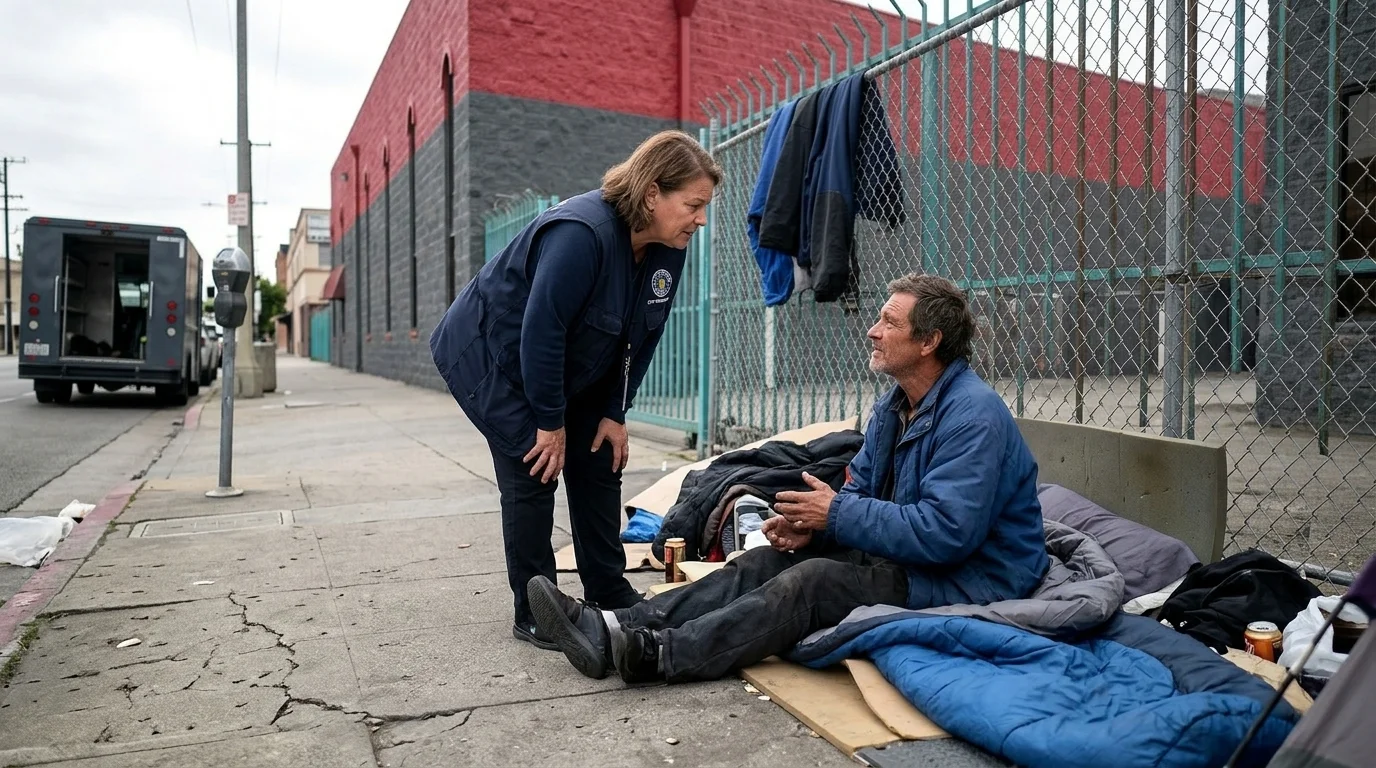
The range of RFP types reinforces the reading that this is a new programmatic cycle, not incremental contract management. Outreach teams, interim shelter, transitional youth housing, and system-level redesigns are being procured simultaneously and by agencies that do not normally move together. The October 30 sub-grant deadline is the forcing function pulling them into the same window.
The scale of what is flowing through California's homelessness infrastructure makes the downstream effects significant. There are currently 78 active HHAP-related grants totaling $864.7 million committed through 2029 in the state. The City of Los Angeles holds a $164.3 million active HHAP grant; the Los Angeles County Continuum of Care holds $102.6 million; Oakland holds $28.4 million. Round 7 is structured as additional disbursements under approved Round 6 plans, which means no new top-level application is required at the state level, but grantees must have obligated at least 50 percent of their Round 6 funding and must satisfy new encampment-policy and housing-element compliance conditions before HCD will release Round 7 disbursements. Meeting those conditions, in turn, requires having service contracts in place, adding another layer of urgency to the procurement timeline.
For residents in jurisdictions now issuing RFPs, the practical consequence is that service capacity that may have thinned during the 2025-26 gap year is being rebuilt, but on a compressed schedule. Outreach teams, transitional housing slots, and shelter beds that were not re-funded when contracts lapsed are now being re-competed. The speed of that rebuild depends on whether qualified vendors can respond to RFPs in time for grantees to satisfy HCD's compliance conditions and unlock disbursements.
The next signal to watch is whether regional grantees meet the October 30 sub-grant deadlines and whether HCD certifies their Round 6 obligation thresholds quickly enough to release Round 7 dollars before the end of the calendar year. Agencies that entered the procurement cycle late, or whose RFPs attract few qualified respondents, may find the timeline tighter than the law's passage implied.