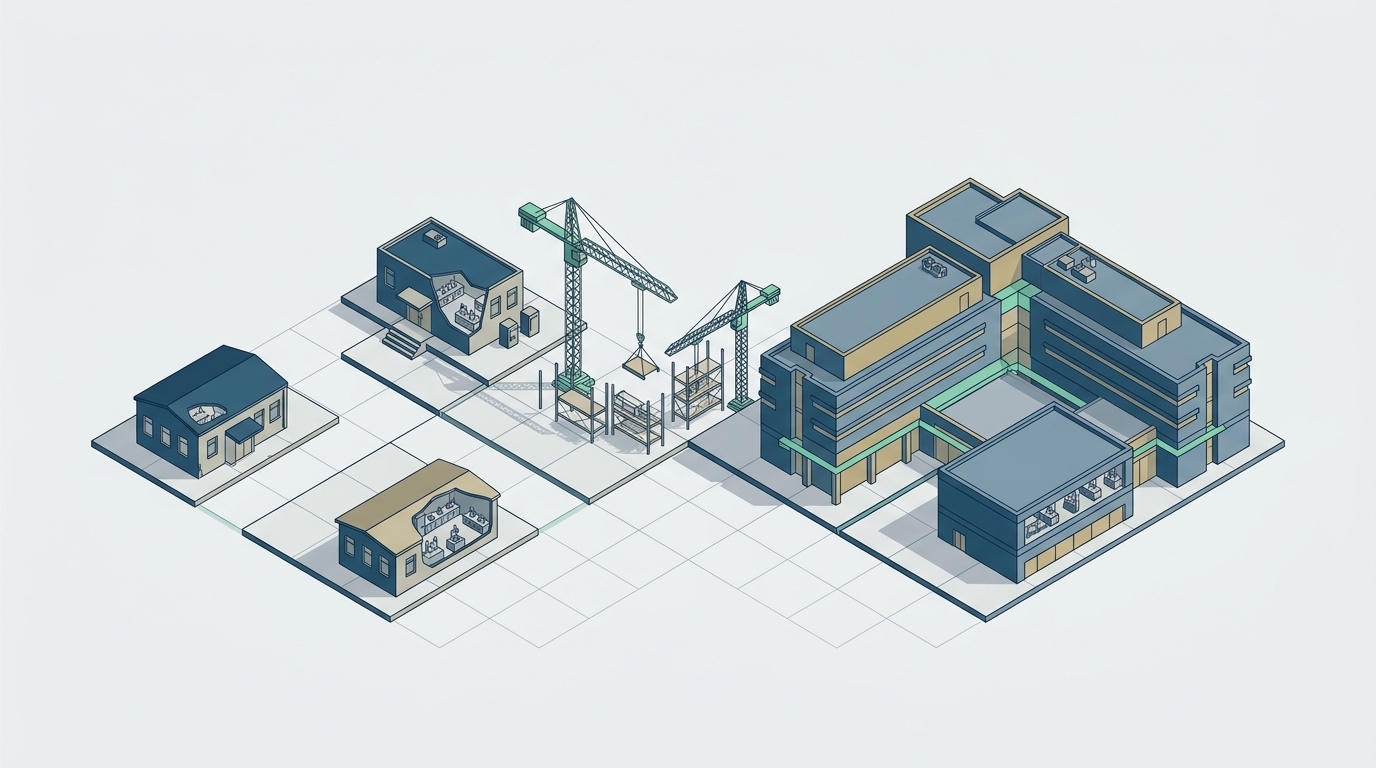
Pennsylvania is trying once again to break ground on a massive new laboratory complex in Harrisburg, with the state relaunching a revised bid process for a facility that would consolidate state police forensic labs, environmental testing operations, and agricultural testing under one roof. The project, now on at least its third procurement attempt, carries a total estimated price tag of roughly $280 million to $290 million across all construction trades.
The need is real and growing. Pennsylvania's state laboratories are spread across aging Harrisburg-area facilities that no longer meet modern safety standards or accreditation requirements. The state's forensic labs are under particular strain: Pennsylvania records more than 5,000 overdose deaths annually, and every drug seizure connected to those cases generates evidence that needs laboratory analysis. Backlogs in DNA testing, toxicology, and drug chemistry have contributed to criminal justice delays across the state. Environmental testing demand has also climbed with growing concerns about PFAS contamination in water systems and ongoing remediation from legacy coal mining.
The consolidation model, bringing multiple lab functions into one shared facility, is a recognized solution to these pressures. But getting it built has proven difficult. The current solicitation is explicitly labeled a "revised rebid," meaning earlier procurement rounds either drew bids that exceeded the state's budget or failed to attract enough competitive responses. Construction costs nationally rose 30 to 40 percent between 2020 and 2024, driven by pandemic-era supply chain disruptions, materials inflation, and persistent shortages in skilled trades. Pennsylvania's central region has not been immune.
The general construction contract alone is estimated at $118 million to $119 million. Electrical work adds another $45 million to $46 million, HVAC runs $42 million to $43 million, and plumbing is estimated at $24 million to $25 million. The stiff liquidated damages built into the contracts, $15,000 per day for the general contractor and $12,000 per day for electrical work, signal how seriously the state is treating schedule compliance after years of delays.
The state made one notable adjustment to attract more bidders this round: it is not requiring a bid bond, an unusual move for a project of this scale that lowers the financial barrier for contractors considering whether to respond.
The Department of General Services is managing the project. Contractors have until mid-May to submit proposals.