A rural stretch of US 281 in South Texas is getting rebuilt to interstate standards, bringing the region one step closer to finally having an interstate highway after decades of delays and deadly crashes on overcrowded two-lane roads.
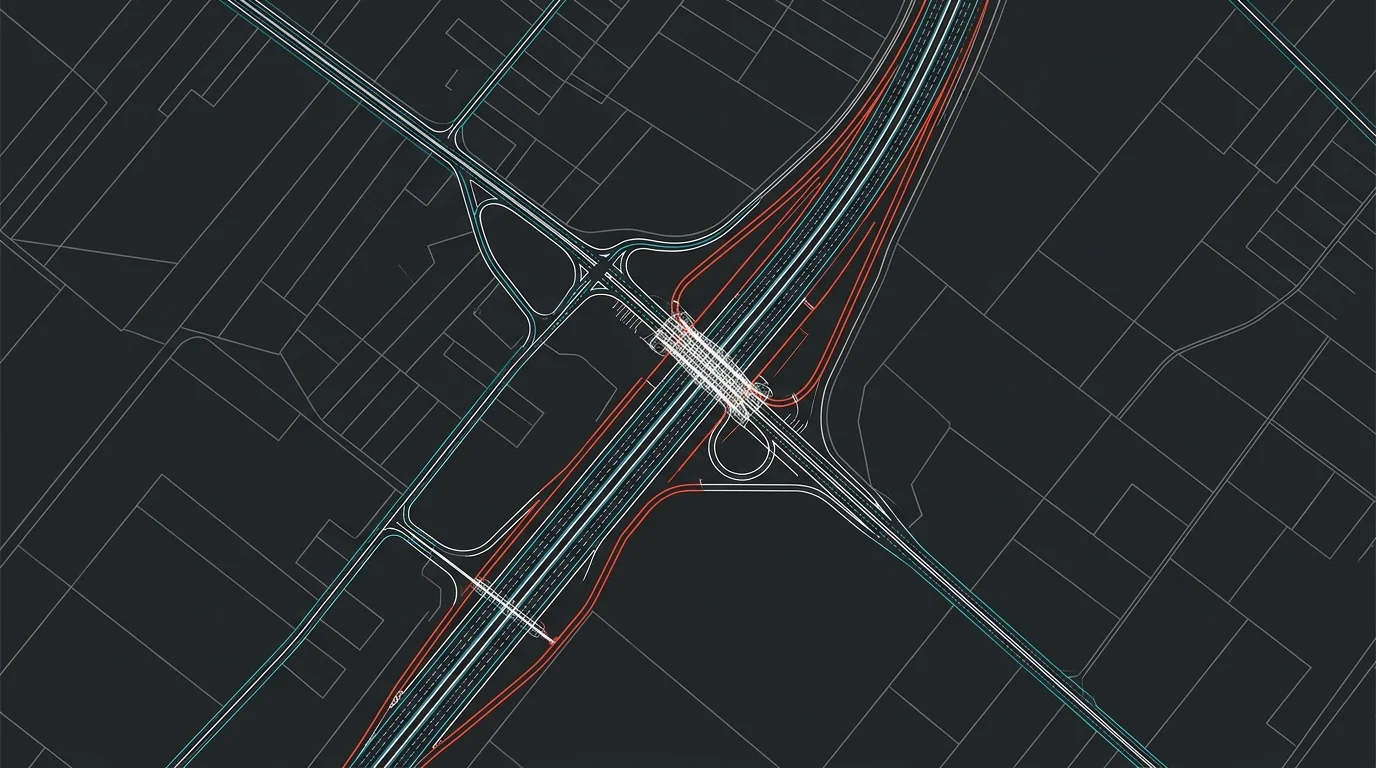
The $13.8 million federal grant, awarded through the Surface Transportation Block Grant Program, will fund construction of a 3.5-mile segment in deep South Texas, roughly between Edinburg and Alice. The work will convert the existing highway into a four-lane divided road with overpasses and frontage roads, the full package of features required for the stretch to qualify as part of Interstate 69 (I-69C), one of several planned interstate spurs through South Texas.
The stakes are significant for a region that handles enormous volumes of trade but has none of the road infrastructure to match. The Pharr-Reynosa International Bridge, at the southern end of US 281, is the top port of entry for fresh produce entering the United States and processes more than $30 billion in annual commerce. Truck traffic surged after NAFTA took effect in 1994 and again under its successor, USMCA, but the roads carrying that traffic were built for a much quieter South Texas. Hidalgo County alone now has more than 870,000 residents, making it one of the most populous counties in Texas, yet the region has no completed interstate highway.
The absence of one carries a human cost. Undivided two-lane rural highways like portions of US 281 rank among the deadliest road types in the country, with head-on collisions between passenger vehicles and heavy trucks a persistent danger. Local and state officials have long cited the fatality rate on these roads as both a public safety emergency and an economic liability.
The I-69 corridor project has been in the works since Congress first authorized it in 1991, envisioning a route connecting Canada to Mexico through the American interior. Texas planners spent years on an ambitious, and ultimately controversial, version of the project under Governor Rick Perry that would have included toll roads and rail lines, but rural landowner opposition killed that plan in 2009. What survived is the approach reflected in this grant: incremental upgrades to existing highways, segment by segment, until enough of US 281 meets interstate standards to carry the I-69 designation. In 2022 and 2023, TxDOT formally designated several South Texas segments as I-69C and I-69E, marking real progress on what had long seemed like a perpetually deferred goal.
Federal funding from the 2021 Bipartisan Infrastructure Law has accelerated that work, giving Texas billions in additional highway formula dollars over five years. This latest grant represents one piece of that larger pipeline.
How many more segments remain before South Texas has a continuous interstate corridor is an open question, but each completed stretch brings the region closer to the kind of highway connectivity that the rest of Texas has long taken for granted.