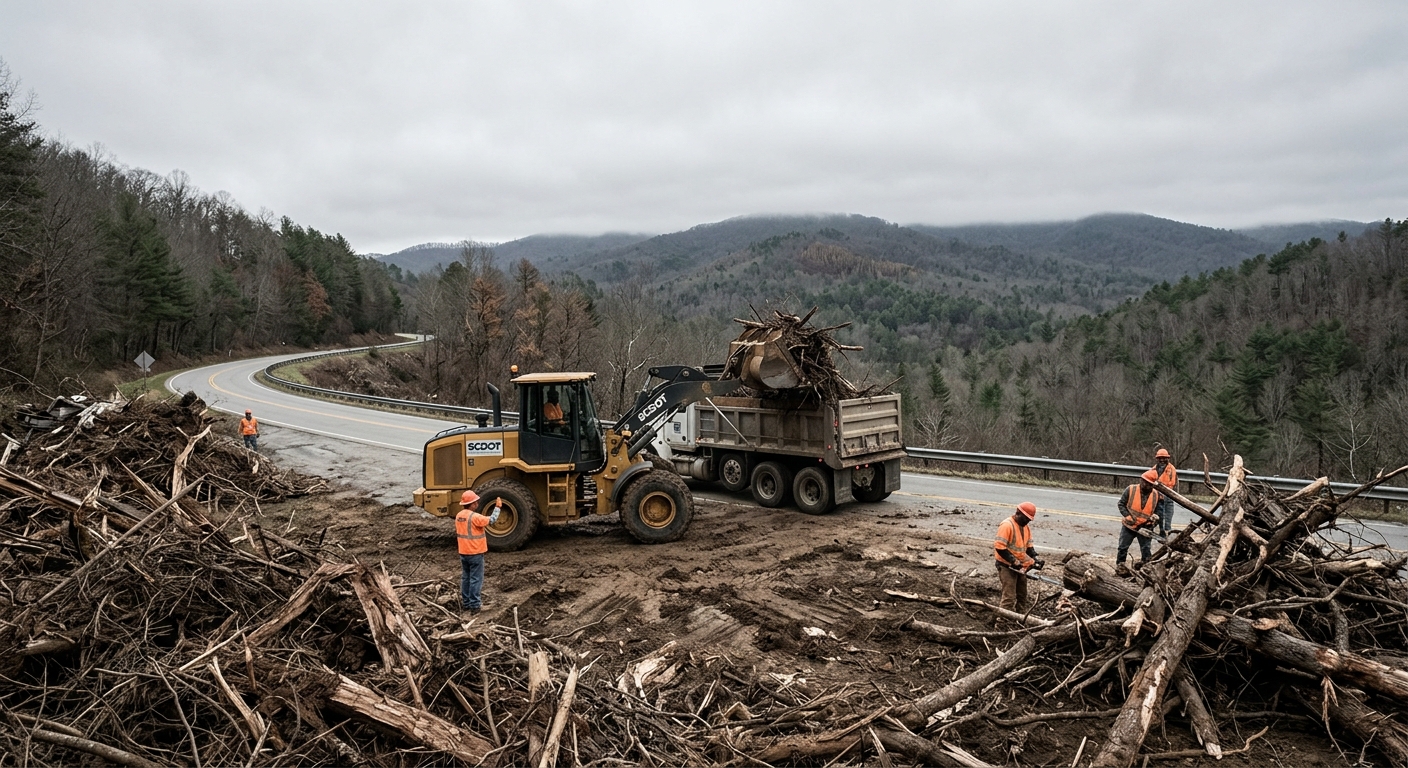
More than a year after Hurricane Helene tore through South Carolina's upstate region, $10.5 million in federal recovery money is still flowing to clear downed trees and storm debris from highways in Oconee, Pickens, and Greenville counties.
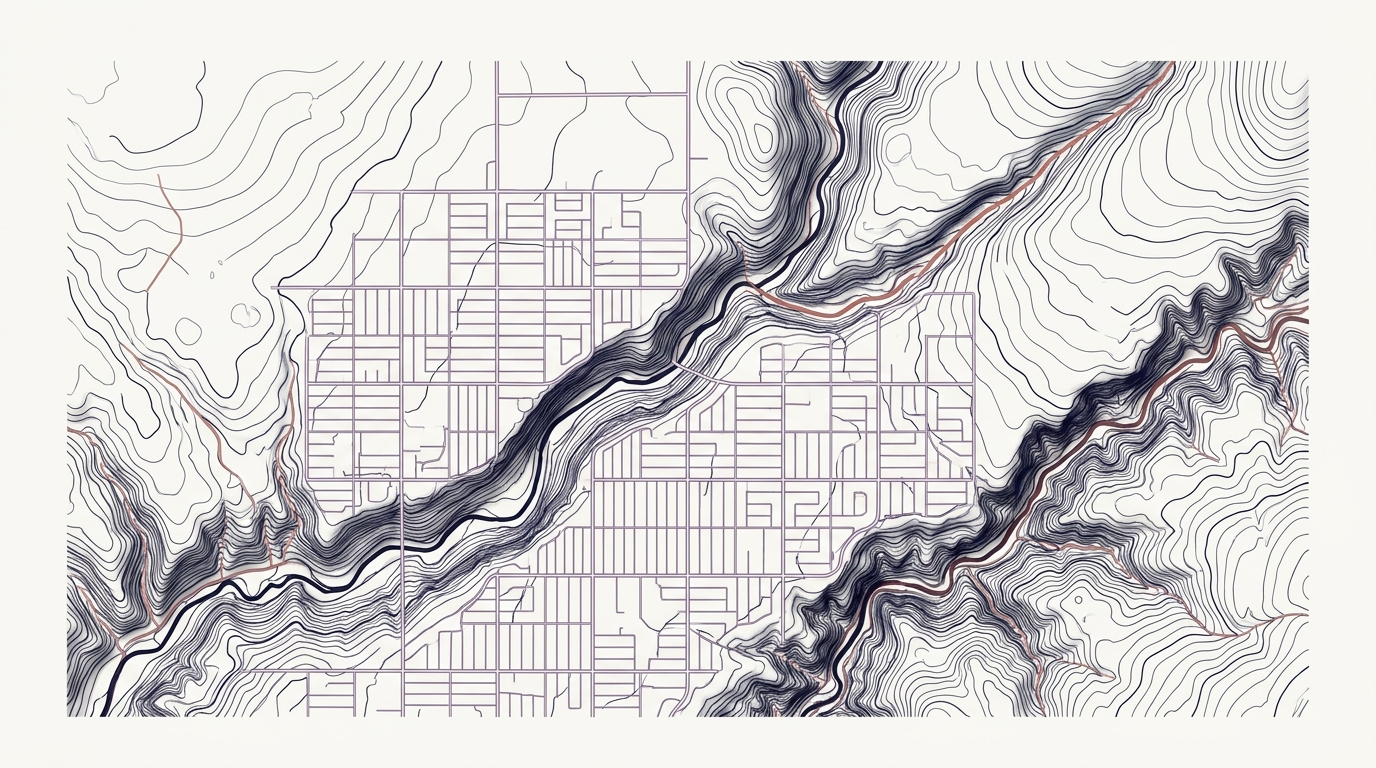
The FEMA Public Assistance grant, posted in early January, funds debris removal along state highway rights-of-way maintained by SCDOT Region 3, the South Carolina Department of Transportation district covering the northwestern corner of the state. That district manages roughly 6,000 miles of roads in an area where the Blue Ridge escarpment meets the Piedmont, terrain that funnels rainfall into narrow valleys and amplifies flooding.
Helene made landfall on Florida's Gulf Coast in late September 2024 as a Category 4 hurricane, then drove north through Georgia and into the Carolinas, triggering catastrophic flooding across the region. While western North Carolina drew most of the national attention, South Carolina's upstate counties suffered significant road damage, widespread downed trees, and infrastructure failures of their own. President Biden declared a major disaster for the state, unlocking federal aid under declaration number 4829-DR-SC.
One notable aspect of this grant: the federal government is covering 100% of the cost. FEMA's standard Public Assistance program splits the bill 75% federal and 25% state or local, but the agency can waive the local match for debris removal and emergency work in the immediate aftermath of a disaster. That means South Carolina and the three affected counties owe nothing for this particular cleanup.
Greenville County, home to roughly 540,000 people and the economic hub of the upstate, sits alongside smaller Pickens County (about 130,000 residents and home to Clemson University) and rural Oconee County (about 80,000), which borders both North Carolina and Georgia. The region has grown rapidly in recent decades, adding pavement and rooftops that worsen runoff when storms hit.
This grant is part of a still-unfolding wave of Helene recovery spending across the upstate. Federal money has been flowing to the region in pieces: four rural upstate counties received $22 million for road clearing, and South Carolina received $36.4 million to clear debris from five other upstate counties in earlier rounds of assistance. The scale of that spending reflects both the breadth of Helene's destruction and the reality that disaster recovery, especially for road infrastructure, plays out over months and years rather than days.