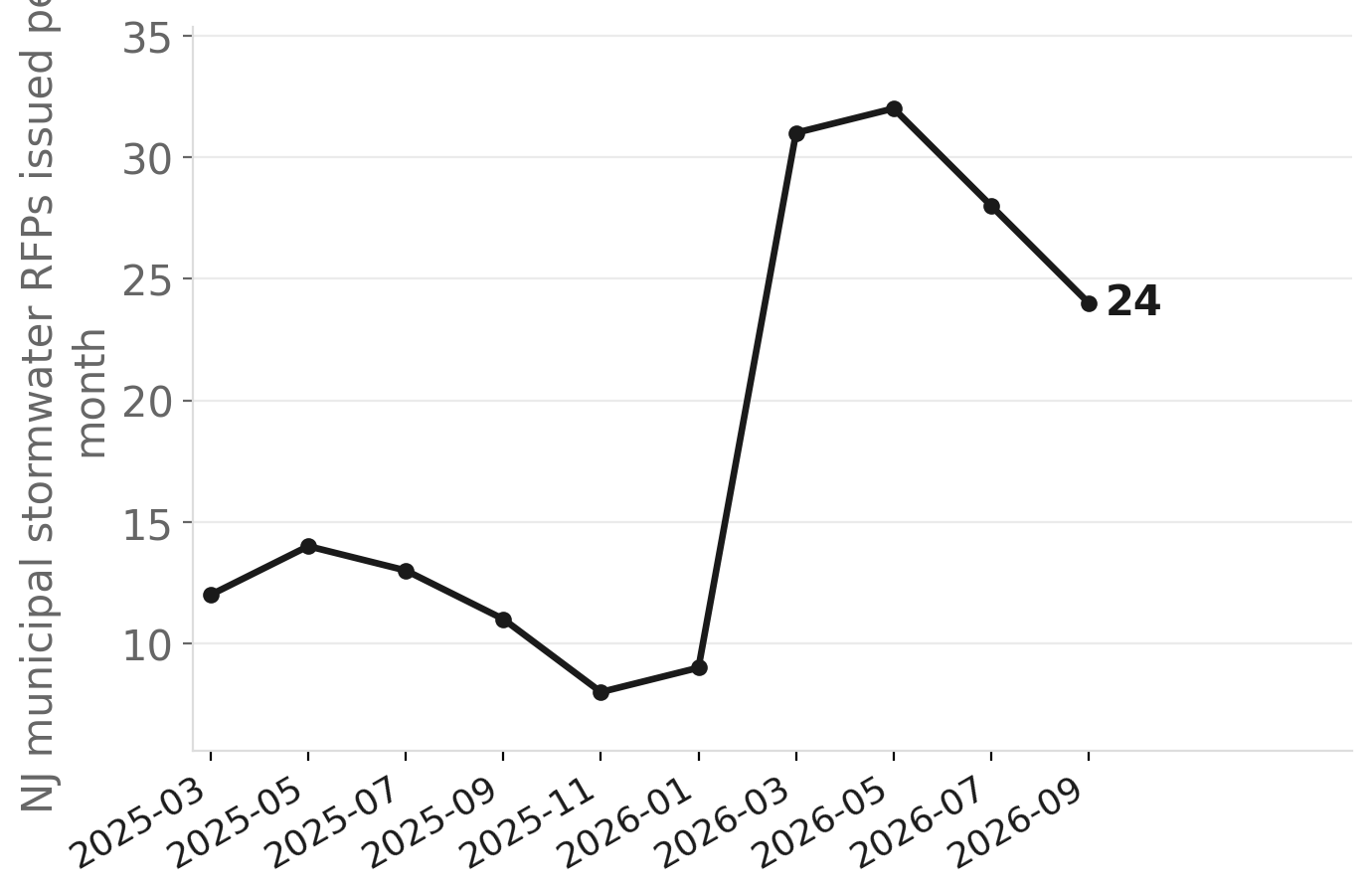
Eight New Jersey municipalities issued stormwater-related RFPs for the first time in more than 12 months during the last 30 days alone, a procurement surge that spans Hudson, Mercer, Camden, Passaic, Union, Essex, Middlesex, and Somerset counties. The math behind it is simple: New Jersey towns have roughly four months left to update their Municipal Stormwater Management Plans and Stormwater Control Ordinances before a hard state deadline, and many are only now hiring the engineers they need to start.
The deadline flows from two linked but distinct regulatory instruments. On January 20, 2026, the New Jersey Department of Environmental Protection formally adopted its Resilient Environments and Landscapes rule amendments under Governor Murphy's NJ Protecting Against Climate Threats initiative, describing them as one of the most significant overhauls of NJ land-use regulations in decades. The REAL rule changes what stormwater infrastructure must do technically, including requiring new construction in flood zones to be elevated four feet above the FEMA Base Flood Elevation, up from one to two feet, and mandating green infrastructure and climate-adjusted rainfall projections in project design. Separately, Tier A MS4 stormwater permits already required municipalities to keep their plans current; on the same January 20 date, NJDEP sent written notifications to all NJ municipalities triggering a 12-month permit compliance clock. The REAL rule defines the new standard; the MS4 permit obligation sets the deadline. Both expire January 20, 2027.
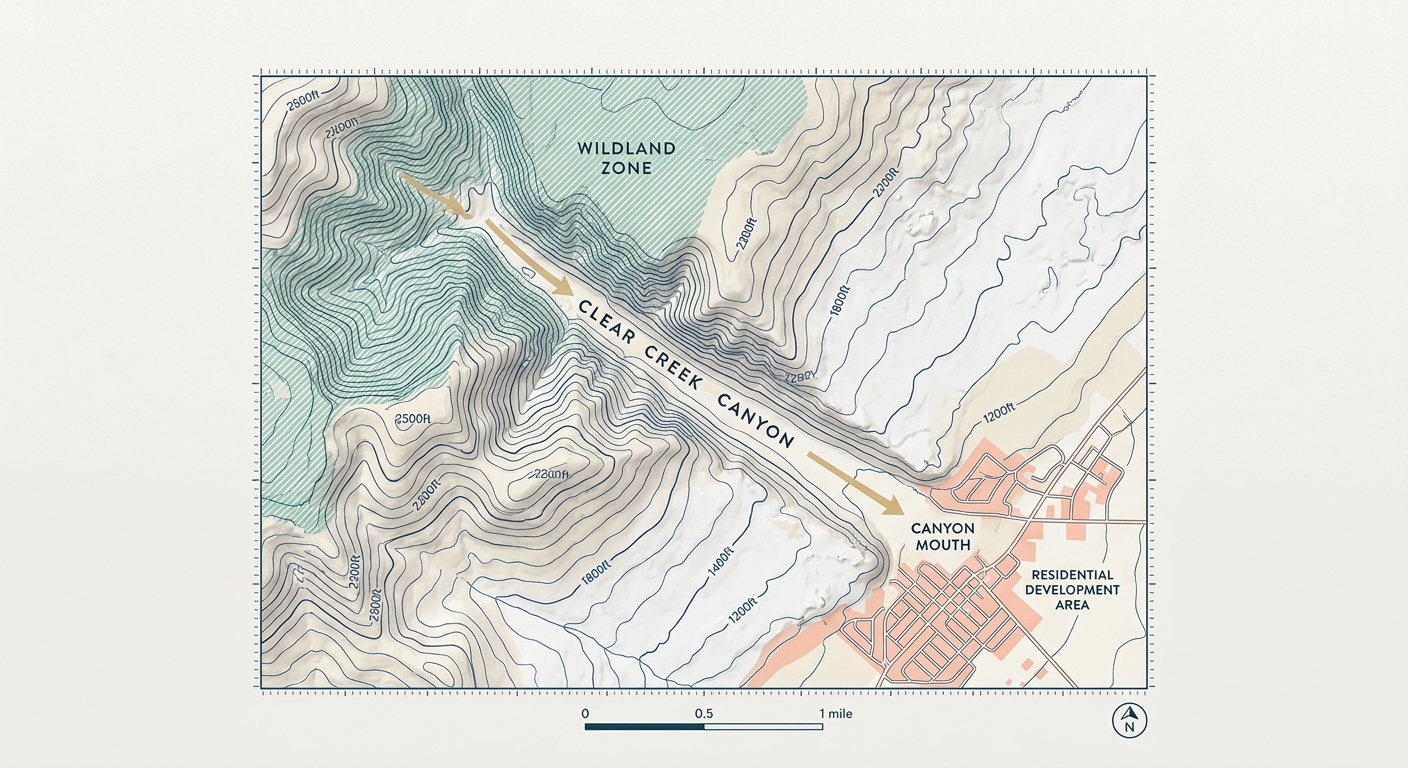
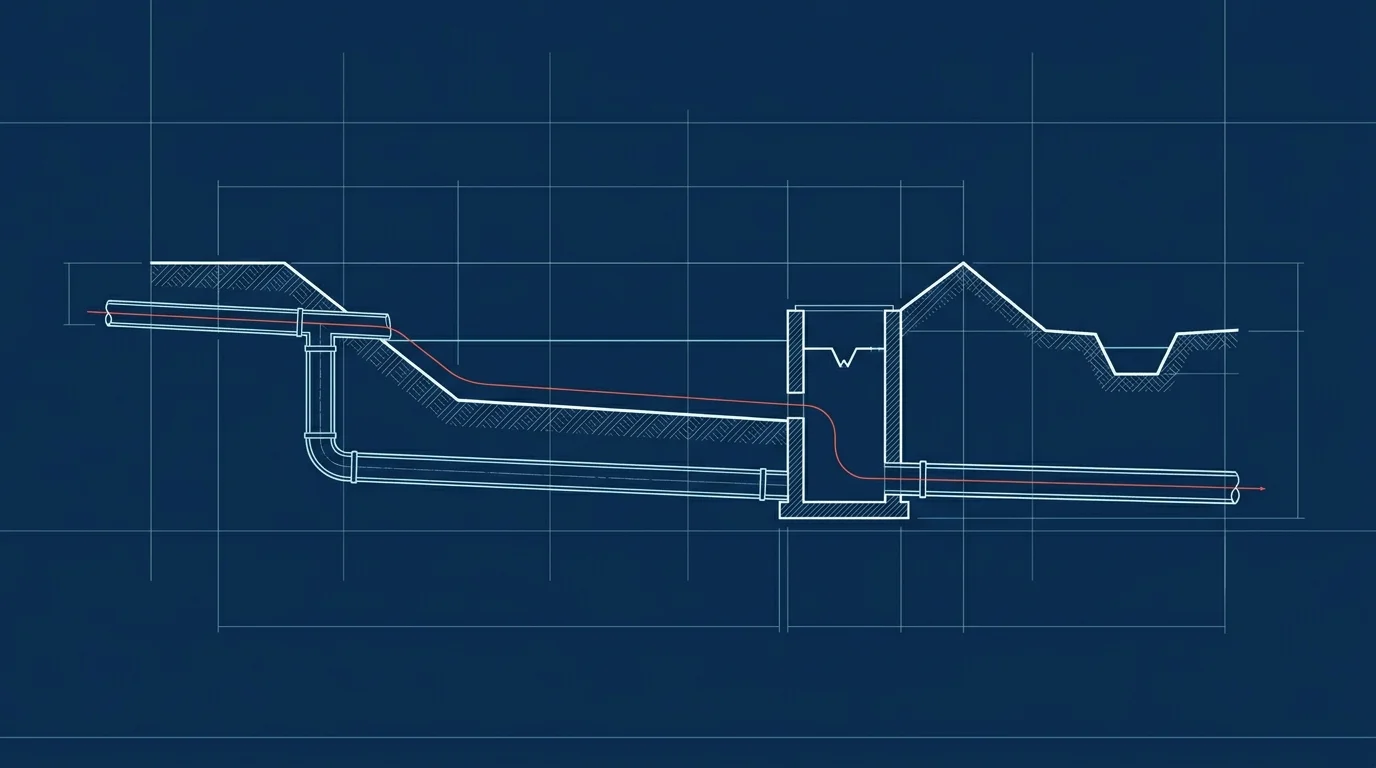
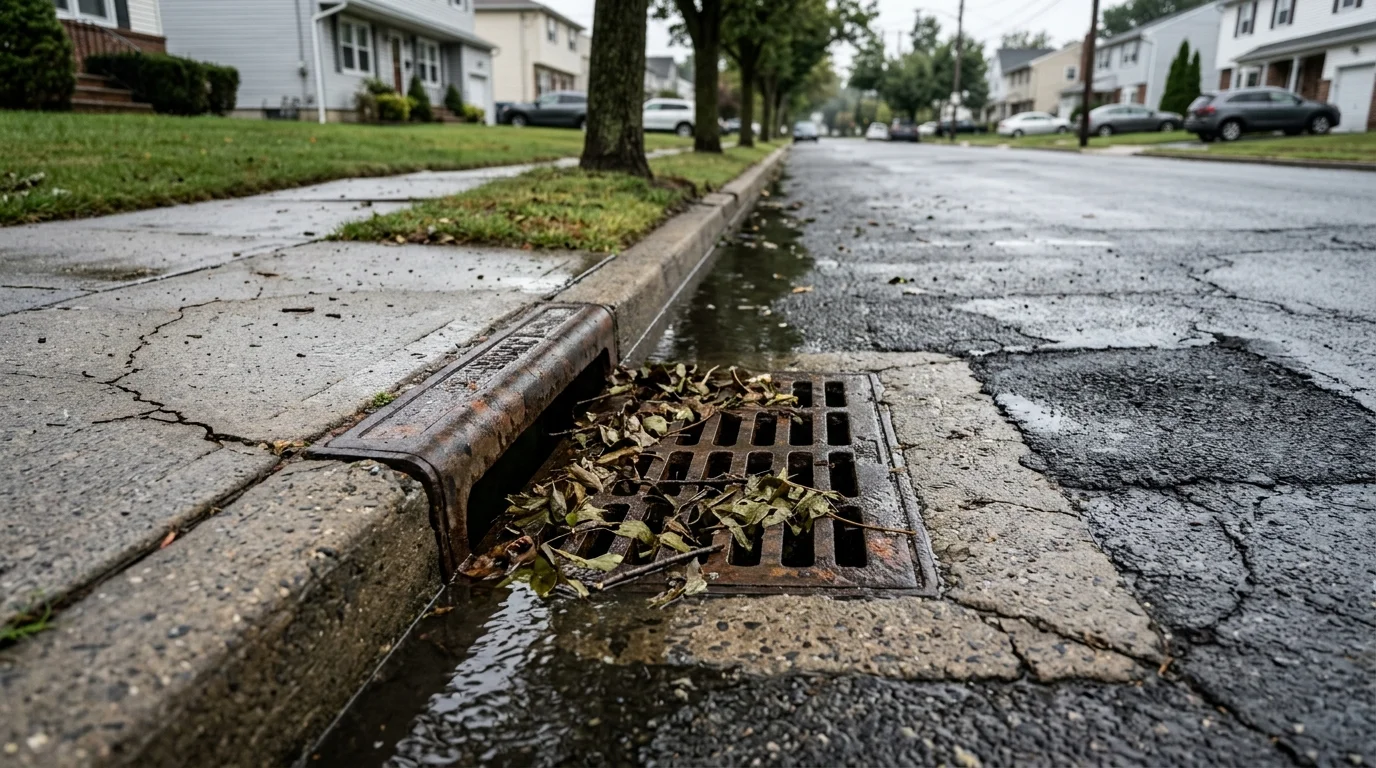
The RFP board shows what a broad, fragmented mobilization looks like in practice. Hudson County, with more than 700,000 residents, is procuring stormwater mapping. Trenton is hiring engineers to write a full Stormwater Pollution Prevention Plan. Passaic is seeking design and construction management for a major underpass drainage overhaul. Haddonfield is rehabilitating catch basins. These are not variations on a single project type. They represent the full stack of work that updating a Municipal Stormwater Management Plan requires: baseline mapping, engineering design, plan drafting, and ordinance revision. A municipality that hasn't started any of them yet is several months behind.
Source: NationGraph.
New Jersey Future, which maintains a green infrastructure toolkit for municipalities, has published a model MSWMP template that gives a sense of how extensive these updates must be under the new standards. The technical bar is not trivial. REAL requires plans to incorporate NJDEP's new Inundation Risk Zone and Climate Adjusted Flood Elevation maps, which did not exist before 2026. Engineering consultants who have reviewed the rule, including those at T&M Associates and Kleinfelder, have flagged that the updated design standards apply to all projects going through NJDEP review after the effective date, meaning municipalities that delay their MSWMP updates also delay their ability to issue conforming local approvals.
One distinction worth flagging: Governor Sherrill and NJDEP Commissioner Ed Potosnak announced on June 1, 2026, a one-year extension of the REAL rule's legacy window for private developers. That extension, which allows permit applicants to use pre-REAL standards through July 20, 2027, provided relief to builders managing projects already in the pipeline. It did not move the municipal MSWMP and SCO compliance deadline. Towns are still expected to have updated plans and ordinances adopted by January 20, 2027.
The MSWMP update obligation is also, notably, an unfunded mandate. No dedicated state or federal funding stream has been identified to cover municipalities' procurement and plan-update costs. A separate portfolio of EPA Congressionally Mandated Project grants totaling roughly $2.54 million is flowing to four specific municipalities, including Fort Lee ($848,000) and Teaneck ($560,000), for targeted infrastructure improvements, but those dollars are project-specific and do not offset the planning costs that every municipality must now absorb. The broader federal stormwater and flood-resilience grant portfolio active in New Jersey exceeds $300 million, but most of it is capital, not planning.
The volume of activity is visible at the regional level. New Jersey issued 59 stormwater-related RFPs in the trailing 90 days, second in the Northeast only to Pennsylvania's 111, and well ahead of New York's 31 and Maryland's 51. New Jersey also has more than 560 municipalities, nearly all holding Tier A MS4 permits, which means the compliance universe is large and the engineering consultant market serving it is under real pressure. A town that issues an RFP in September and expects to have a final, adopted plan by January is working against a tight timeline even if everything goes smoothly.
The signal to watch over the next 60 days is whether the RFP volume accelerates further or plateaus. Municipalities that have not yet issued procurement documents for MSWMP update work are running out of runway. The January 20 deadline does not carry an automatic carve-out for towns that started late, and NJDEP has not announced any extension of the municipal compliance window.