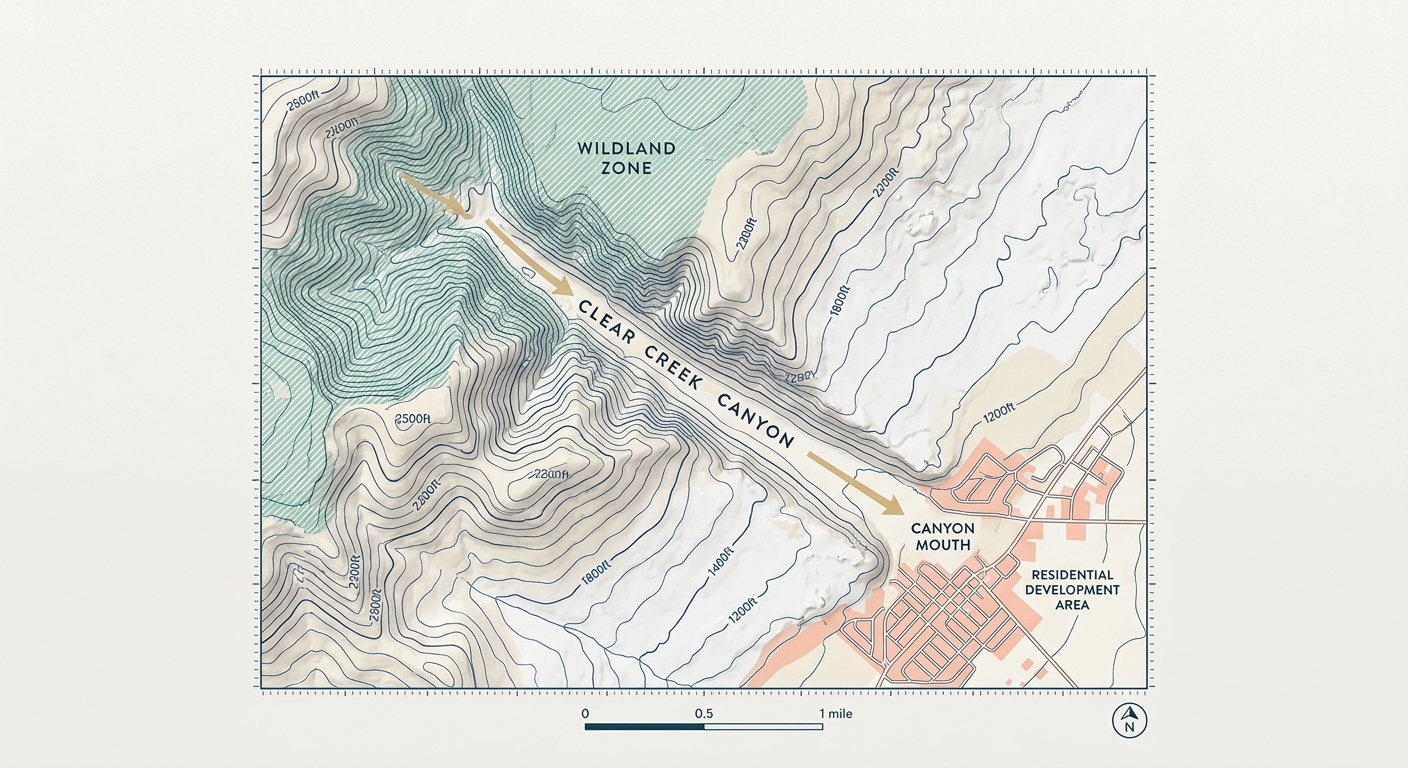
A canyon on Carson City's southern edge has long worried fire officials: when conditions are right, Clear Creek Canyon acts like a chimney, channeling wind and flame down the eastern Sierra foothills directly toward residential neighborhoods. A new $2.8 million federal grant is now funding a major effort to change those odds.
The Carson City Fire Department will use the money to treat at least 600 acres of hazardous vegetation in the Clear Creek Canyon area, reducing the buildup of dry brush and trees that turn wildfires from manageable blazes into catastrophic ones. The final acreage will depend on environmental review and weather conditions.
The funding comes from an unusual source: land sales around Las Vegas. Under the Southern Nevada Public Land Management Act of 1998, when the Bureau of Land Management sells public land around the city to accommodate growth, the proceeds are reinvested in conservation and hazard reduction across Nevada rather than going to the federal treasury. That program has generated over $3 billion since its creation. This grant is also tied to the Lake Tahoe Restoration Act, which directs federal resources toward the Lake Tahoe Basin, including wildfire fuel reduction along the eastern Sierra corridor where Carson City sits.
The stakes are not abstract for the city of about 58,000 people. The 2004 Waterfall Fire burned more than 8,600 acres and destroyed 17 homes in the area, a disaster that still shapes how the fire department thinks about its southern flank. Nevada has seen wildfire conditions worsen steadily since then, driven by prolonged drought, invasive cheatgrass, and decades of fire suppression that allowed fuel loads to accumulate to dangerous levels.
Carson City's governance structure makes the situation unusual. As a consolidated city-county, the fire department has jurisdiction over both urban streets and the wildland terrain at its edges, making it both the municipal fire service and the de facto wildland fire agency for the area. With roughly 85 percent of Nevada's land under federal ownership, partnerships like this one with the Department of the Interior are less optional than essential.
The project also includes annual community education workshops on fire-adapted living and wildfire preparedness, reflecting a shift in national wildfire strategy away from pure suppression and toward helping residents coexist with fire risk over the long term.
Environmental review will determine where and how crews begin treatment work, with the final scope shaped by conditions on the ground.