Vermont has received $28.8 million in new federal transit grants over the past 90 days, more than double the $13.1 million it received in the same window last year. That 120% jump looks like a victory for a small, rural state that has been aggressively pursuing federal transportation money for years. Most of it is a consolation prize.
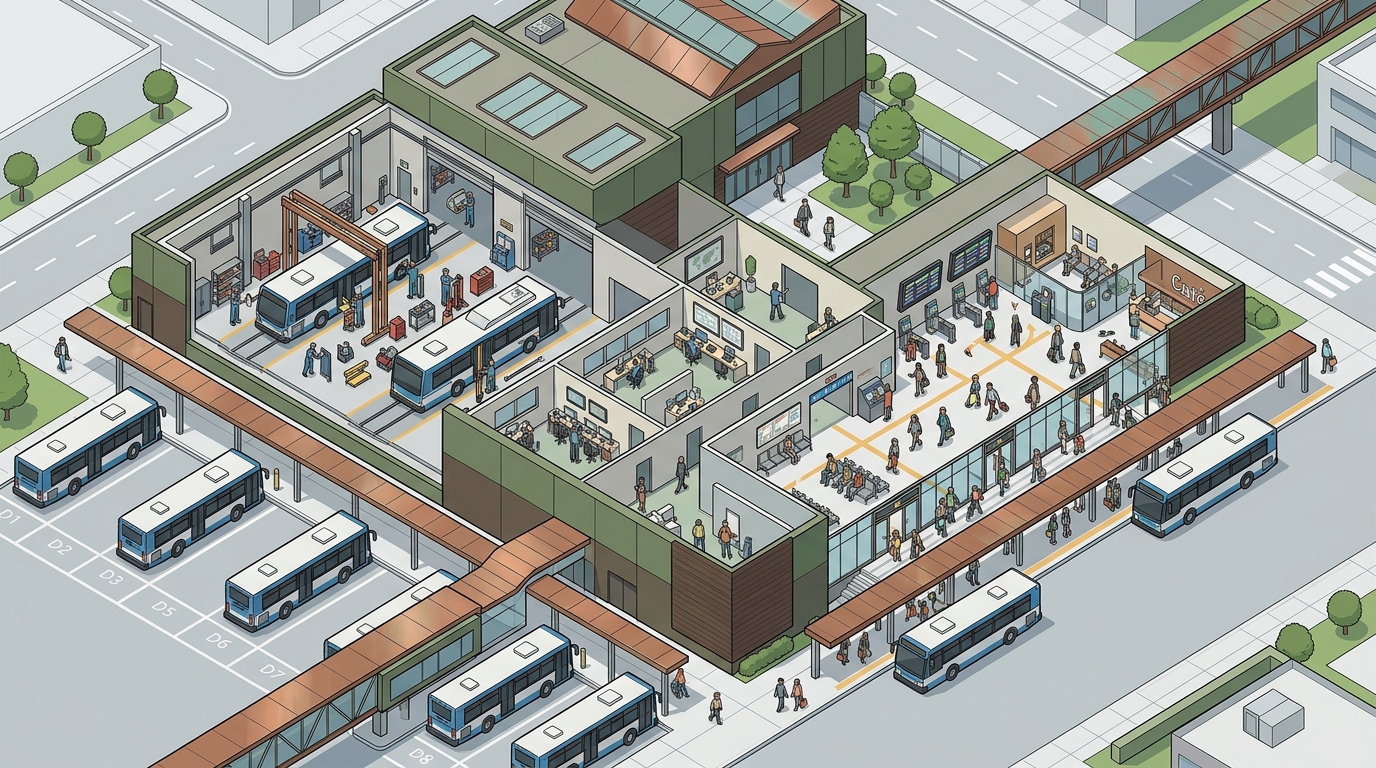
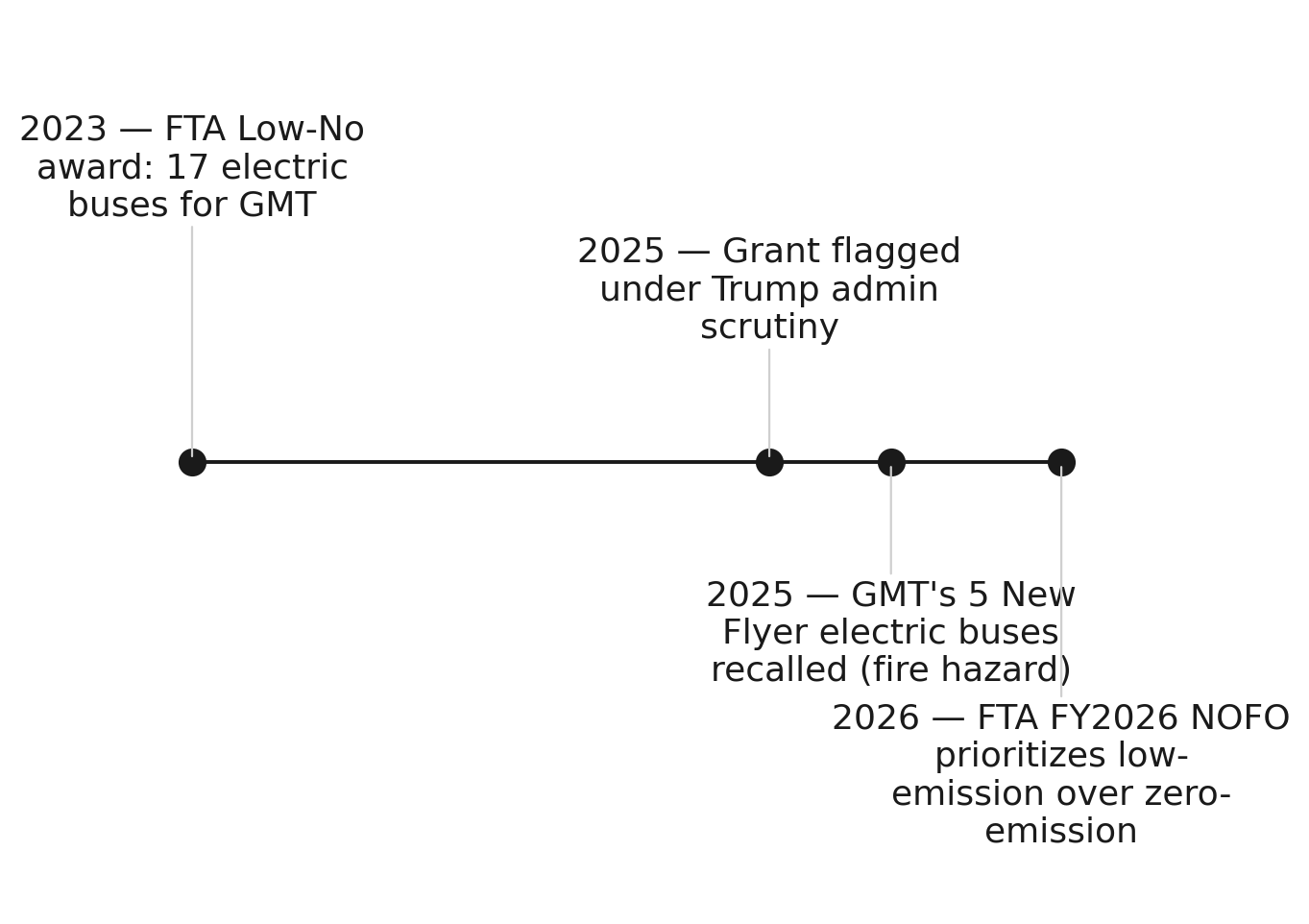
The dominant award, a $22.5 million competitive grant under the FTA's Buses and Bus Facilities and Low or No Emission Program (§5339), runs from August 31, 2026 through September 2029. It funds 17 new buses for Green Mountain Transit, the state's largest transit provider, plus garage fire-suppression upgrades. The catch: those buses will run on diesel-hybrid powertrains. The original 2023 grant award, won competitively by the Vermont Agency of Transportation, was written for 17 fully electric buses and charging infrastructure. The Trump administration changed that.
Beginning in May 2025, the FTA placed the Vermont award under scrutiny as the administration moved to deprioritize zero-emission bus procurement. VTrans renegotiated, swapping the propulsion type to hybrid-diesel to preserve the funding. The revised grant cleared federal review and started August 31. A separate $6 million formula grant under §5311, released August 11 under the Full-Year Consolidated Appropriations Act of 2026 (P.L. 119-75), funds routine statewide rural transit operations and intercity bus service. These are two distinct federal programs serving different purposes: the §5339 award is a renegotiated competitive grant; the §5311 money is formula-apportioned and flows to Vermont's rural sub-recipients on a predictable annual basis. Together they account for 99% of the trailing-90-day total.
Source: NationGraph.
The FTA's FY2026 notice of funding opportunity, released July 27, 2026, made the administration's direction explicit: the $589 million Low-No program will "prioritize low-emission projects over zero-emission projects, to the maximum extent permitted by law." Transportation for America described the approach as taking "$2 billion intended to lower bus emissions and instead maximizing the purchase of dirtier buses."
Vermont's situation was already complicated before the renegotiation closed. Green Mountain Transit had received five New Flyer electric buses under an earlier Low-No round, and in November 2025 those vehicles' batteries were recalled as a fire hazard, pulling the fleet out of service at a moment when the agency was already short on buses. WCAX reported in January 2026 that GMT was running with reduced capacity as a result. The garage fire-suppression infrastructure included in the new $22.5 million award reflects, at least in part, the hard lessons from that recall.
The policy context matters for Vermont more than it might for most states. Transportation is Vermont's largest source of greenhouse gas emissions, and the state has pursued transit electrification funding steadily since 2020. The EV-to-hybrid substitution is the first major federal reversal of that strategy, and it arrives through a program that was specifically designed to accelerate clean propulsion. VTDigger reported in April 2026 that GMT leadership was caught off guard by the scope of the policy shift, having invested planning time and staff capacity in the electric procurement before the federal rules moved.
For riders across the state, the practical near-term effect is straightforward: 17 aging diesel buses at Green Mountain Transit get replaced, and rural communities continue to receive operational funding for the services they depend on. The §5311 formula grant sustains intercity bus routes and RTAP training for Vermont's rural sub-recipient agencies, which have no alternative federal funding stream. VTrans currently holds more than $50 million in active DOT transit grants running through 2027 to 2030, including a $9.2 million §5339 buses grant and $18.7 million in §5311 rural grants that started in September 2025, so the agency is not starting from scratch.
What the trailing-90-day surge does not represent is a new federal commitment to Vermont's transit goals. The $22.5 million exists because VTrans made a pragmatic choice to accept a different bus than it asked for rather than lose the funding entirely. The question now is whether that trade holds as a template. The FTA's FY2026 NOFO is the first formal codification of the low-over-zero preference, meaning every future competitive Low-No application from Vermont, or any other state, will face the same calculus. States that entered the current grant cycle with zero-emission projects already selected will need to decide, as Vermont did, whether to renegotiate or walk away.
Vermont's next signal will be how VTrans structures its applications under the new NOFO rules, and whether Green Mountain Transit can rebuild an electrification plan around whatever federal program, if any, still supports it.