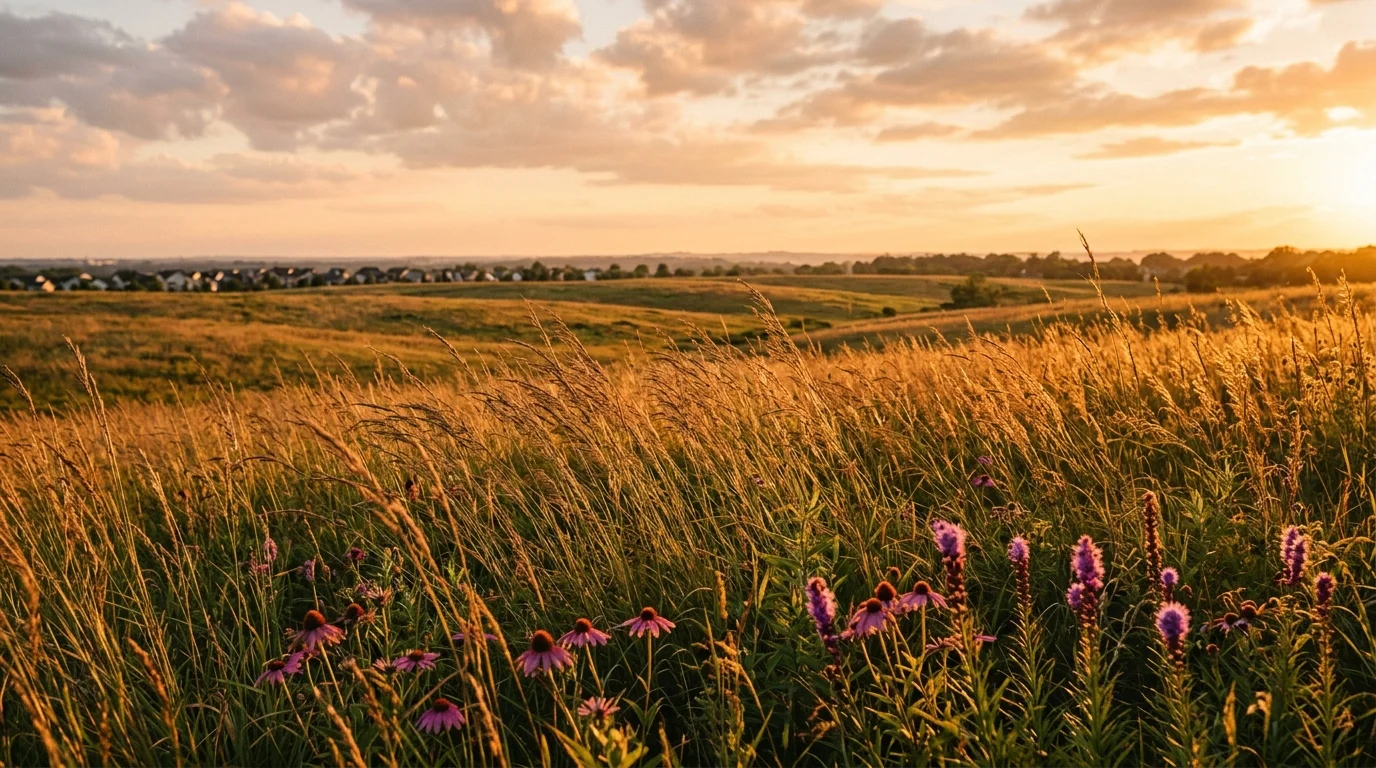
Hennepin County, Minnesota's most populous county, is moving to restore native prairie habitat at Prairie Bluff Conservation Area, hiring ecological contractors to rebuild grassland that has nearly vanished from the state over the past two centuries.
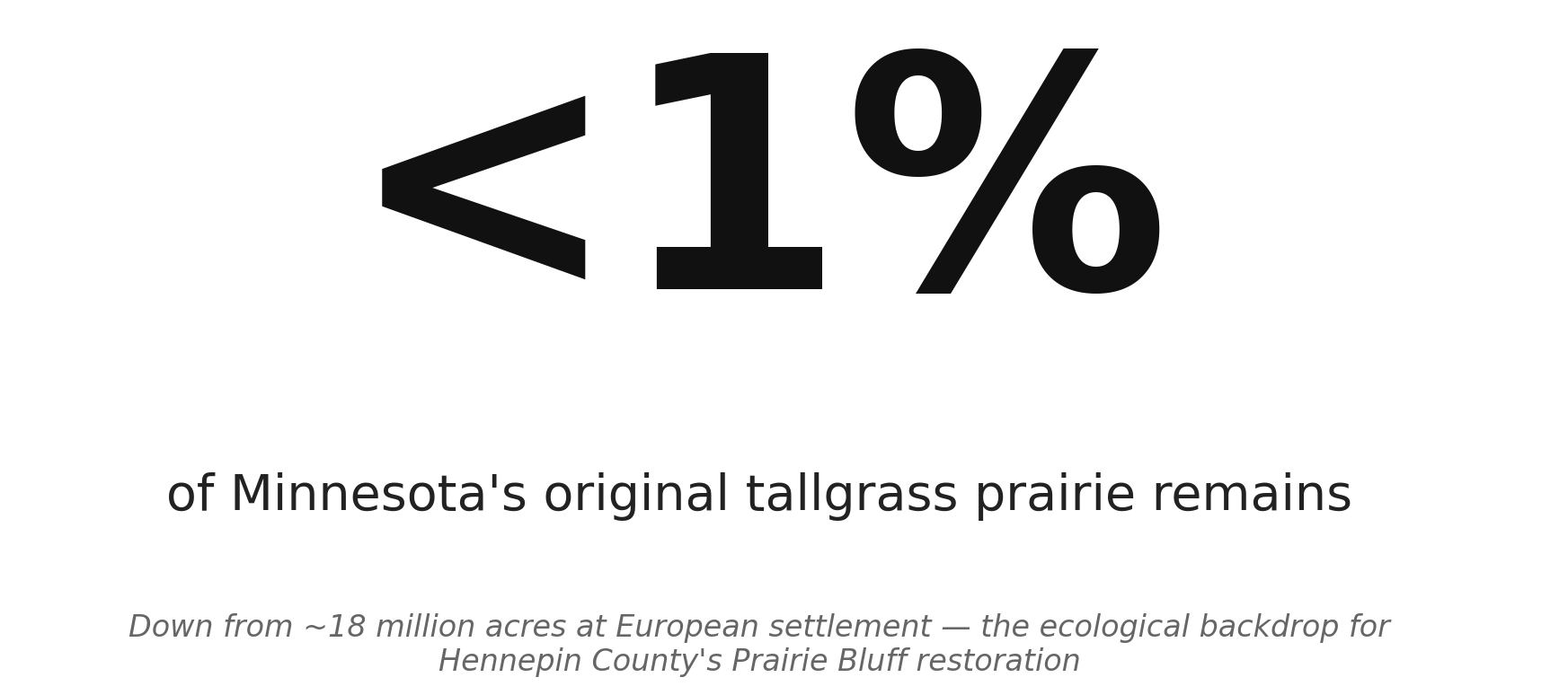
The work reflects an urgent reality: before European settlement, roughly 18 million acres of tallgrass prairie covered Minnesota. Less than 1% remains today, making it one of the most dramatic habitat losses of any North American ecosystem. Restoration typically involves clearing invasive species like buckthorn and reed canary grass, reseeding with native forb and grass mixes, and conducting prescribed burns over several years.
Prairie Bluff sits on Hennepin County's western edge, a suburban-rural transition zone where the county has been racing to acquire and restore degraded farmland before housing developments claim it. The pressure is real: the county's western half is among the fastest-urbanizing landscapes in the region, and each acre converted to subdivision is effectively gone from the conservation portfolio.
Source: NationGraph.
The stakes go beyond scenic open space. Grassland birds like bobolinks and eastern meadowlarks have declined sharply as prairie fragments disappear. The rusty patched bumble bee, named Minnesota's state bee in 2019, is federally endangered. And as the region faces more intense rainfall, deep-rooted prairie systems are increasingly valued for absorbing stormwater and storing carbon in ways that manicured lawns and crop fields cannot.
Hennepin County has built its conservation area network partly on funding from Minnesota's 2008 Clean Water, Land and Legacy Amendment, a constitutional sales tax that voters approved with 56% support and that has channeled roughly $300 million per year into conservation, parks and clean water ever since. That funding stream, along with the county's own tax base, has allowed it to assemble a network of conservation sites including Crow-Hassan Park Reserve and Pierce Lake as development encroaches.
The county posted the restoration solicitation on July 7, 2026. Specific dollar values, acreage targets and contract duration were not publicly disclosed in the posting. Once a contractor is selected and work begins, Prairie Bluff will join a growing list of county sites undergoing the slow, multi-year process of becoming prairie again.