Five Maryland institutions issued solar energy RFPs in the last 30 days after more than a year of silence, the highest single-month new-entrant count in the trailing 18-month dataset. The City of Rockville, the City of Frederick, Howard County, the Maryland Clean Energy Center, and the Maryland-National Capital Park and Planning Commission all entered competitive procurement for the first time since before mid-2025. July 2026 overall logged nine Maryland institutions issuing solar-related solicitations, the most active month since last summer, and Maryland now ties New Jersey for the most solar-active state in the Mid-Atlantic region over the past 30 days.
The trigger is specific: Governor Moore signed the Utility RELIEF Act (HB 1532) in May 2026, directing $100 million from the Strategic Energy Investment Fund into an annual competitive bidding process for local clean energy projects, administered by the Maryland Energy Administration. That first bidding cycle is now open. Local governments that are not shovel-ready when the window closes will wait another full year for the next one.
The math is straightforward for municipal finance officers. BGE raised electric distribution rates on January 1, 2026, steepening the cost of doing nothing. Maryland's state solar compliance burden reached $616.9 million in 2024, including $362.3 million in alternative compliance payments, a signal that the market has been running behind pace and that regulators are now using procurement dollars to force acceleration. Cities that can put together a credible project file in the next few weeks are competing for state money that did not exist twelve months ago.
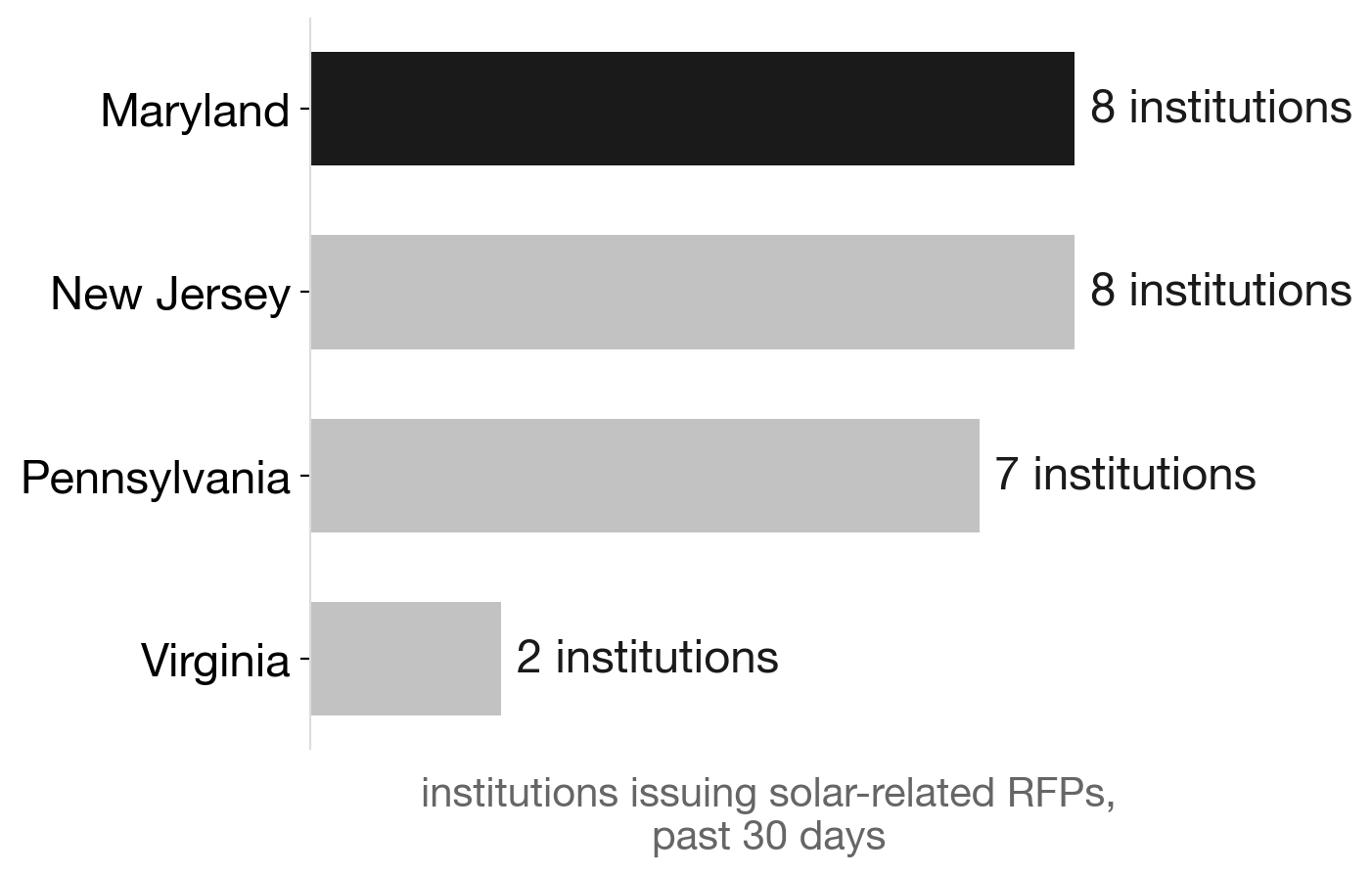
Source: NationGraph.
The geography of the surge is telling. Rockville, Frederick, Howard County, and the MNCPPC (which spans Montgomery and Prince George's Counties) are all part of the suburban county belt ringing Washington. These jurisdictions have relatively high energy costs, municipal credit capacity, and planning staff capable of issuing competitive solicitations quickly. Rural Maryland is not driving this month's numbers.
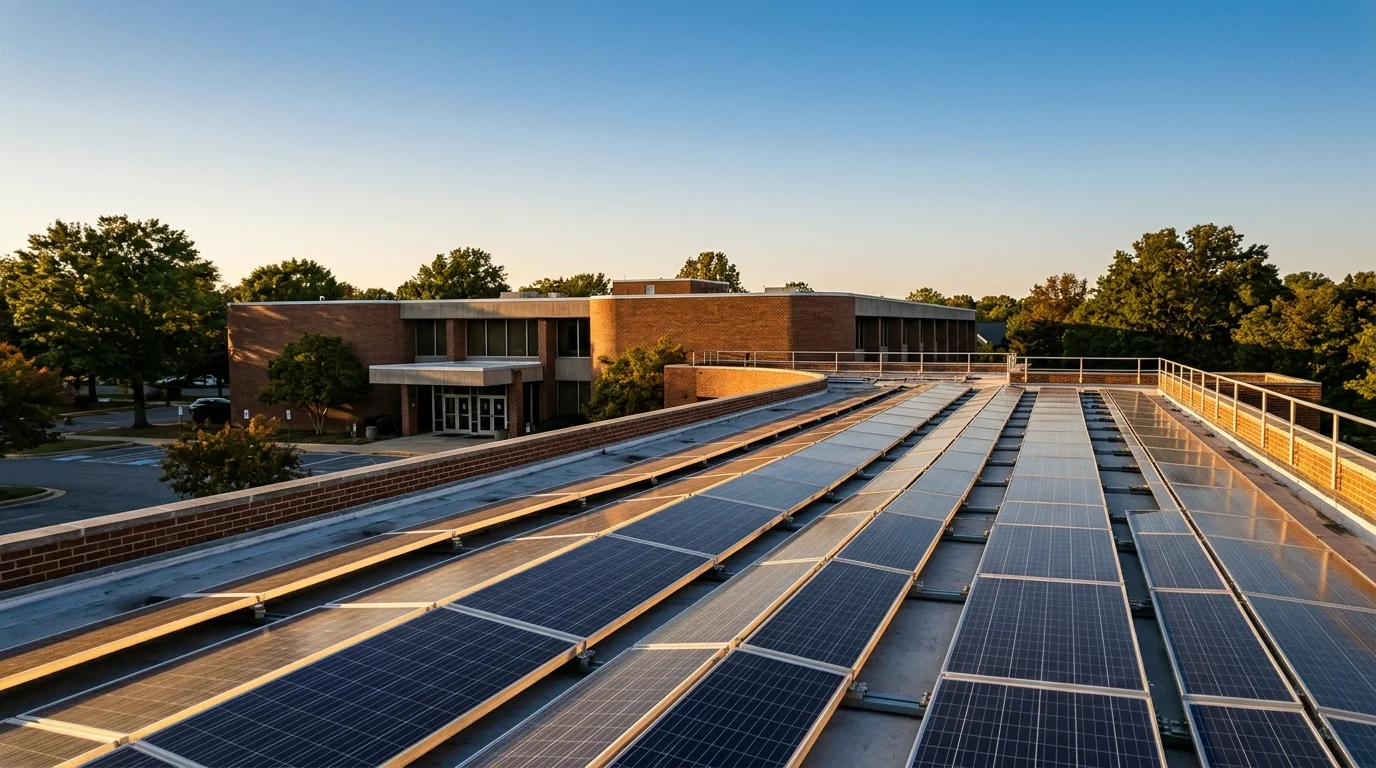
The projects themselves span a range of readiness. Rockville's RFP is the most developed: a 2.25 MW DC turn-key solar photovoltaic installation across seven city facilities, one of the largest municipal solar solicitations in Maryland this year. The City of Frederick's solicitation is earlier-stage, a feasibility study for solar at Frederick Airport, the kind of foundational work that positions a jurisdiction for a future funding application. Howard County's RFP targets community solar subscriber coordination, a function that became newly viable on January 1, 2026, when the utility consolidated billing mechanism required under Maryland's permanent Community Solar Program went live. The Maryland Clean Energy Center, meanwhile, issued a residential solar financing RFI and is separately supporting a 1.0 MW community solar project in Chestertown, deploying its Climate Catalytic Capital (C3) Fund. The MNCPPC solicited design-build services for rooftop solar PV at three park facilities.
The range matters. These are not all the same kind of project, which suggests the Utility RELIEF Act deadline is pulling in institutions at different stages of solar readiness, not just the ones that were already close to ready.
A second procurement pipeline is also forming in the background. The Affordable Solar Act (SB 341), introduced on the opening day of the 2026 legislative session by Sen. Benjamin Brooks and Delegate Lorig Charkoudian, targets 4,000 MW of new solar on the Maryland grid by 2035 through competitive procurement funded through the renewable portfolio standard. Maryland's existing RPS requires 50% renewable energy by 2030 with a solar carve-out. Institutions that build a procurement track record now, through a completed RFP process, a signed contract, or a feasibility study, will be better positioned to enter that second pipeline if SB 341 advances.
For Maryland residents, the near-term consequence is more municipal solar capacity coming online over the next two to three years in jurisdictions that had essentially stopped moving. For ratepayers in BGE territory, municipal self-generation at scale has a modest but real effect on distribution system load, which factors into future rate cases. For anyone watching Maryland's progress toward its 2030 RPS target, the question is whether a single competitive funding deadline can sustain momentum or whether July 2026 will look like a one-month spike when the next dataset arrives.
The Maryland Energy Administration has not publicly announced the application deadline for the first Utility RELIEF Act funding cycle. That date, when it is published, will determine whether the institutions that just issued RFPs can convert solicitations into executed contracts in time to qualify. Jurisdictions that move slowly through vendor selection risk missing the cycle entirely.