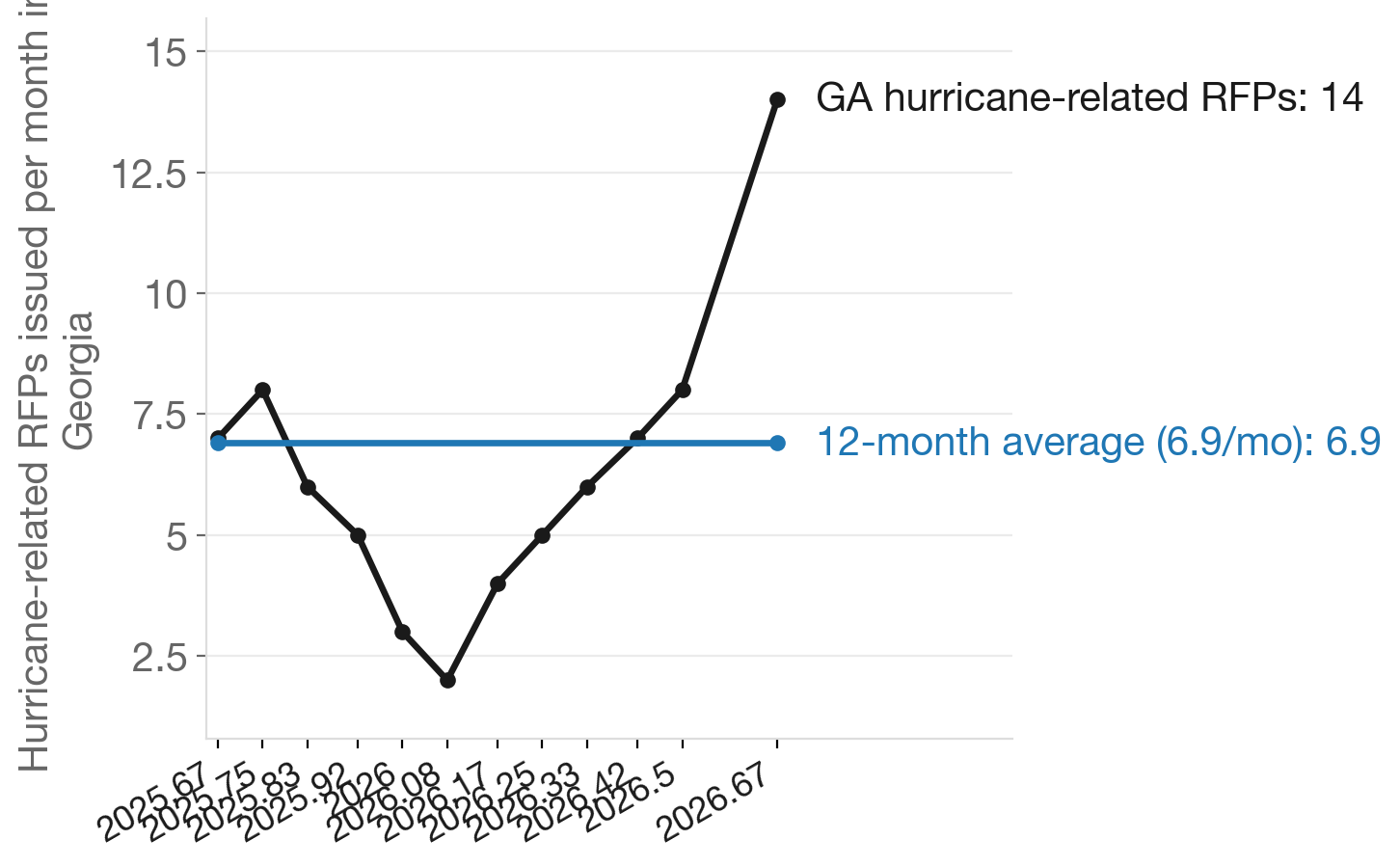
Hurricane-related procurement in Georgia has hit 14 RFPs in the last 30 days, roughly double the 12-month monthly average of about 7, and the two agencies driving that spike are operating on completely different timelines for the same disaster.
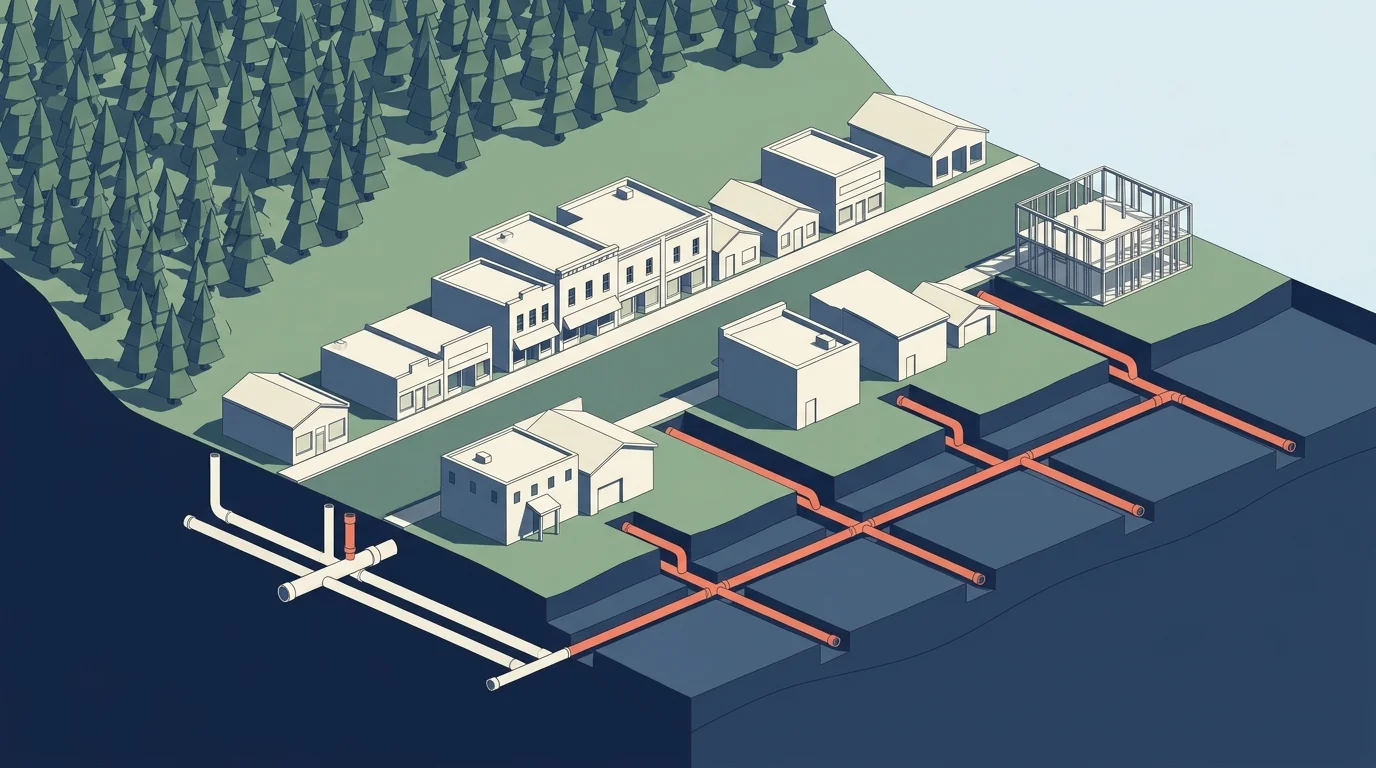
Macon-Bibb County issued 10 debris removal and monitoring RFPs due September 10, 2026, all structured as standby contracts that can be activated immediately before or after a major storm. The Georgia State Financing and Investment Commission issued 4 RFPs on August 30, 2026, explicitly to repair damage at Georgia State Prison in Reidsville that Hurricane Helene caused in September 2024. The county is preparing for a storm that hasn't happened yet. The state is still fixing one from nearly two years ago.
That split is the clearest signal yet of how unevenly FEMA's Major Disaster Declaration DR-4830 has moved through Georgia's bureaucracy. FEMA has obligated approximately $2.78 billion in Public Assistance grants to the Georgia Emergency Management Agency across two large tranches, $1.61 billion starting April 2025 and $1.17 billion starting April 2026, with more than $2.2 billion already outlayed. Incremental project approvals have continued almost every month through mid-2026: $51 million in June, $36.6 million in July, more than $75 million in late August. The money has been flowing. The procurement has not always kept pace.
Source: NationGraph.
Macon-Bibb's approach reflects what a well-prepared county looks like when federal reimbursement rules drive local planning. The county's Emergency Management Agency ran a formal tabletop exercise in February 2026 simulating a tropical storm scenario and walking contractors, utilities, and public works staff through post-disaster debris procedures. The August RFPs are the direct procurement follow-through. Because FEMA's Public Assistance program reimburses eligible debris removal costs only when contracts meet 2 CFR § 200.324 procurement standards, counties that pre-position compliant standby contracts before a storm are faster to activate and faster to get reimbursed. Macon-Bibb, a landlocked county in Middle Georgia with no coastline, has learned that lesson, partly from Helene, and partly from Hurricane Irma in 2017, which also generated significant debris removal activity in the county.
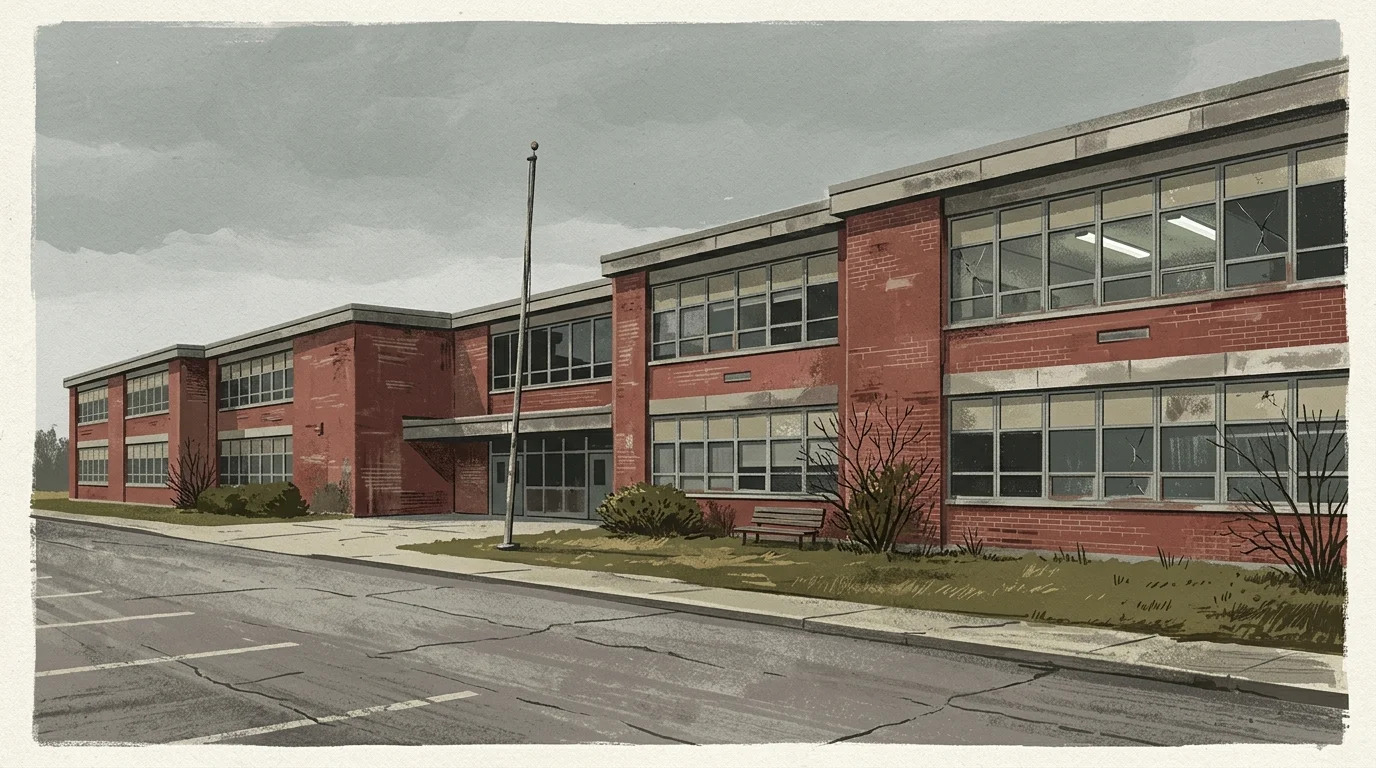
The Georgia State Prison track tells a different story about institutional speed. The GSFIC RFPs issued August 30 explicitly attribute facility damage to Hurricane Helene and describe state-funded repair work, not FEMA reimbursement. That distinction matters: state-owned correctional facilities go through a separate procurement process using state appropriations, which means a different budget calendar, different contracting authority, and a longer queue. The contract values have not yet been published, but the fact that competitive bids are only now being solicited for storm damage from September 2024 illustrates how far back the institutional repair pipeline stretches. These are not slow-moving projects because of inattention; they reflect the structural difference between a county running FEMA-compliant standby contracts and a state commission repairing a prison through standard capital procurement.
Georgia's geography makes the gap sharper. Helene made landfall as a Category 4 storm on September 26, 2024, and its most severe damage fell on inland south and central Georgia counties, Lowndes, Coffee, Jeff Davis, Augusta-Richmond, far from any coast. Governor Kemp declared a state of emergency for all 159 counties. For a state whose disaster planning has historically centered on coastal storm surge, the scale of inland flooding and wind damage from Helene forced a reckoning with preparedness infrastructure that wasn't built for that scenario. The FEMA DR-4830 page lists the disaster as still active through at least September 2026, meaning reimbursement claims are still being processed while the next season is already here.
The procurement spike also reflects a seasonal forcing function that is easy to miss. The time-series shows a clear trough from January through March 2026, when monthly RFP counts ran between 1 and 4, followed by the August resurgence. That pattern is consistent with counties waiting until late spring and summer to lock in standby contracts before Atlantic hurricane season peaks in September. The doubling of activity in a single month is less a sign of emergency than of calendar-driven procurement, agencies that delayed even slightly now face bids due in the same window.
The open question heading into fall is how many more state-facility repair RFPs are still in the queue. The GSFIC prison procurements suggest that Georgia's institutional repair backlog has not been fully surfaced in public contracting data yet. Whether additional state-funded projects emerge in the next 60 days, or wait until a 2027 budget cycle, will indicate how much of Helene's damage to state-owned infrastructure is still being absorbed inside agency procurement pipelines rather than visible in the public market.