Six California institutions issued their first mental health-related RFP in over a year during the 30 days ending September 13, 2026, a pattern with no direct precedent in the prior 12 months and a clear cause: Proposition 1's Behavioral Health Services Act took legal effect in all 58 counties on July 1, 2026, requiring performance contracts to begin the same day.
The institutions entering the market are not traditional county behavioral health agencies. They are a rural Northern California county with fewer than 24,000 residents, a mid-sized Los Angeles suburb running a tiny home village, and a state health department procuring hospice and mental health services under a five-year contract. What they share is that none of them had to think about mental health procurement a year ago, and now they do.
The why is structural. The BHSA, the operating side of Proposition 1, funded by restructured millionaire's tax revenue, mandates that counties allocate 30% of their behavioral health funds to housing interventions starting in 2026. That single requirement pushed cities running shelter programs into clinical services procurement. The City of Torrance, which operates a 40-unit tiny home village in LA County, issued its first mental health and substance use disorder treatment RFP in more than a year to staff that program. Siskiyou County, a sparsely populated rural district in Northern California, issued its first specialty Medi-Cal behavioral health RFP in the same window, flagging a service gap that county plans had not previously required it to fill directly. The California Department of Public Health added a five-year HIV hospice and mental health services contract to the queue.
Source: NationGraph.
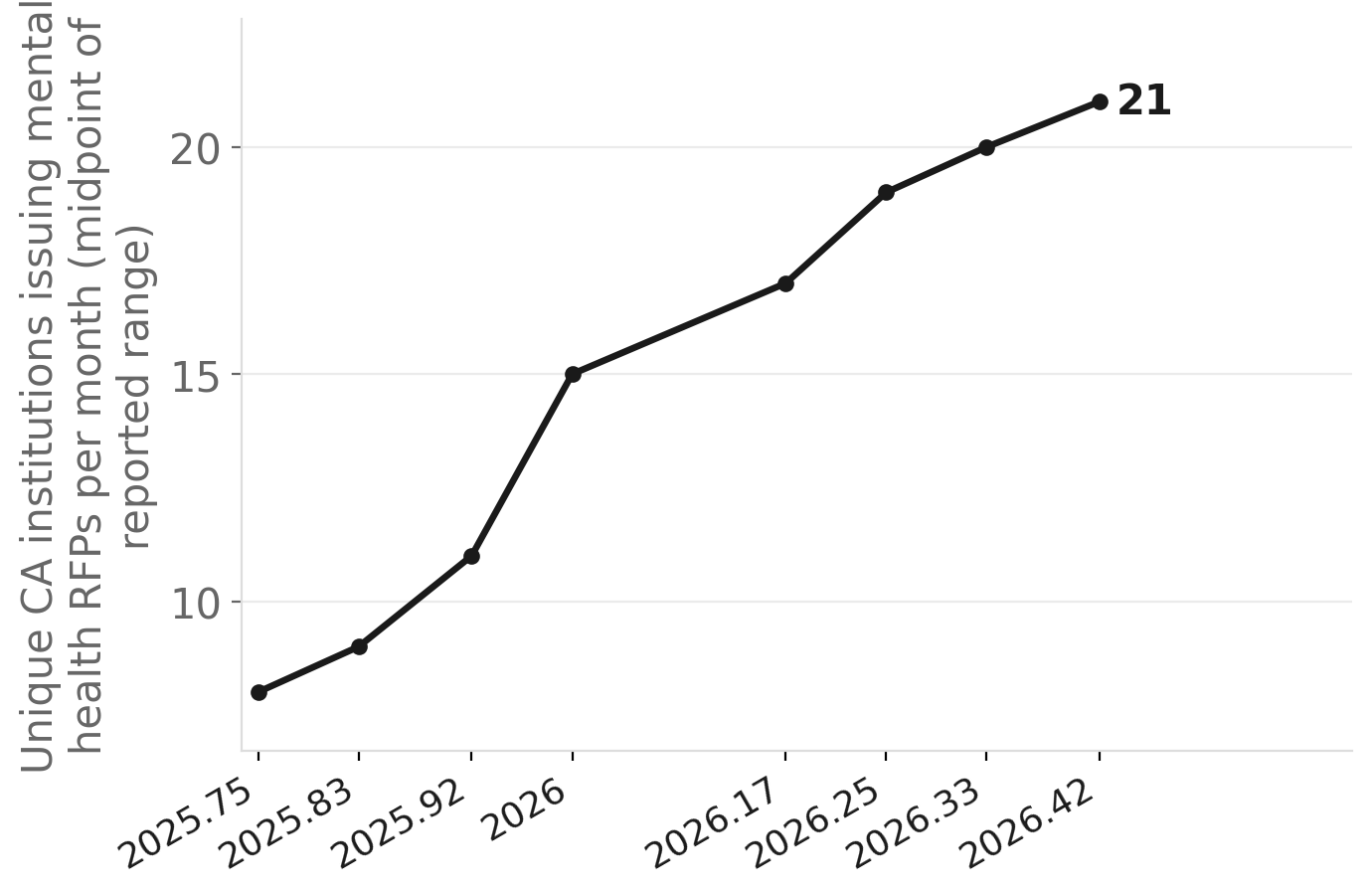
These individual procurements are legible only as part of a broader institutional shift. Monthly RFP volume from unique California institutions ran between 15 and 21 per month from January through May 2026, compared to 6 to 12 per month in the fall 2025 quarter, exactly the period when counties were building their BHSA Integrated Plans ahead of the June 30, 2026 hard deadline. Missing that deadline risked losing state behavioral health funds entirely, which concentrated planning and contracting activity into a short window. Governor Newsom announced on July 2, 2026 that all 58 counties had completed the transition, but the procurement activity those plans require is only now hitting the street.
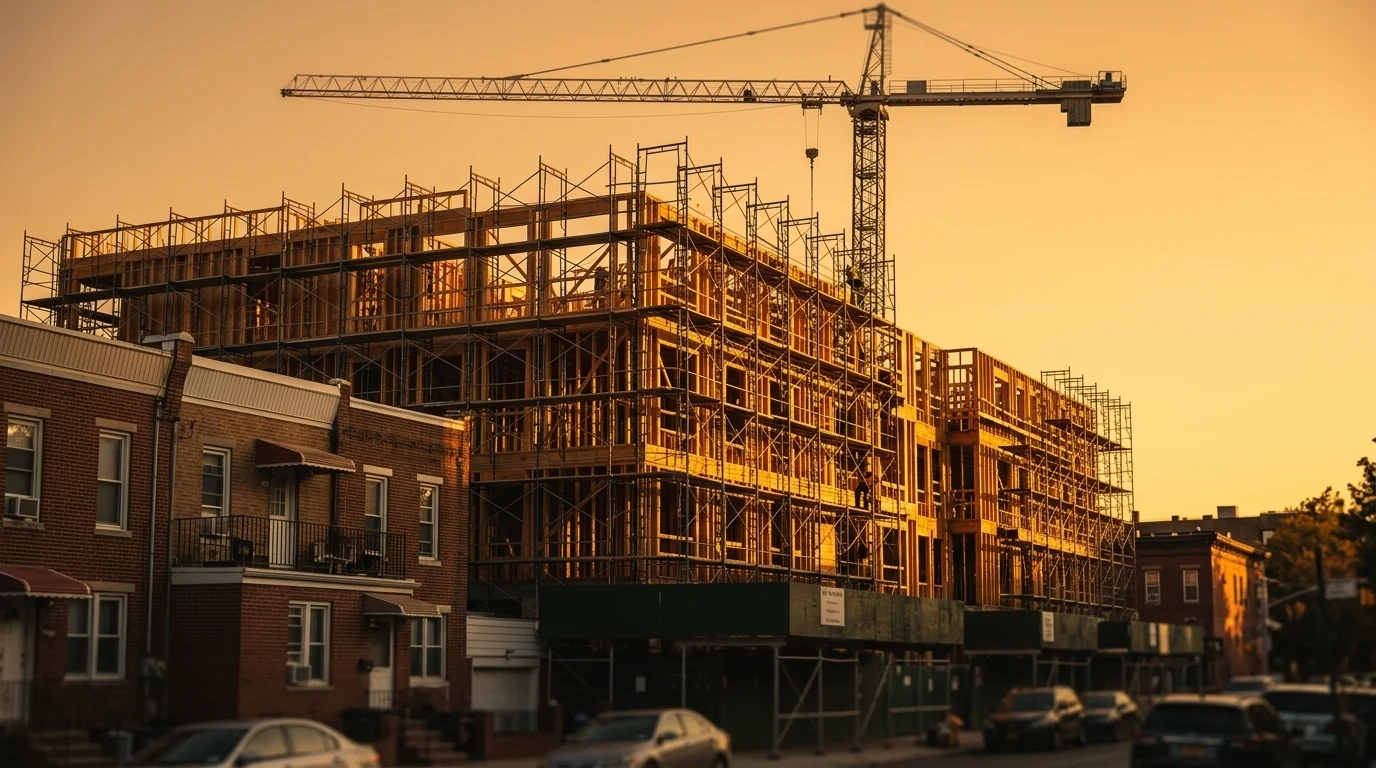
The capital side of Proposition 1 is producing a separate but related procurement wave. The Bond BHCIP program, distinct from the BHSA operating funds, has awarded $5.8 billion in infrastructure grants since 2021 across 177 projects, with a $1.18 billion Round 2 announced in March 2026 covering 66 new facilities. Those grants build beds. The beds require clinical service contracts. Kaweah Delta Health Care District in Visalia illustrates the lag: the district received an $8.8 million BHCIP infrastructure grant in 2022, but state plan approvals took years, and only now is it issuing construction RFPs for a new 12,800-square-foot wing adding 22 pediatric and adolescent psychiatric beds to its existing 63-bed facility. The San Joaquin Valley, where Kaweah Delta operates, was identified in a 2022 RAND study as having among the largest projected growth in psychiatric bed need in the state, making it a flashpoint for both infrastructure expansion and new service contracting at the same time.
A third funding stream runs in the background. The California Department of Health Care Services holds more than $120 million in active federal Community Mental Health Block Grants from SAMHSA for fiscal years 2025 through 2027. That money flows through DHCS to counties and predates Proposition 1 entirely. It is not the driver of new first-time RFPs, but it forms part of the financing ecosystem that institutions are now learning to navigate for the first time.
For residents of the counties and cities entering this market, the near-term effect is that services that previously did not exist locally, mobile mental health teams, specialty Medi-Cal providers, adolescent inpatient beds, are now being actively procured. Whether providers exist in sufficient numbers to fill those contracts, particularly in rural counties like Siskiyou, is the open question the RFP wave itself cannot answer.
The next signal to watch is contract award activity in Q4 2026. BHSA performance contracts began July 1, and counties that have not yet awarded service agreements face the prospect of reporting gaps to the state under the new accountability framework. For institutions procuring for the first time, the hard part is just beginning.