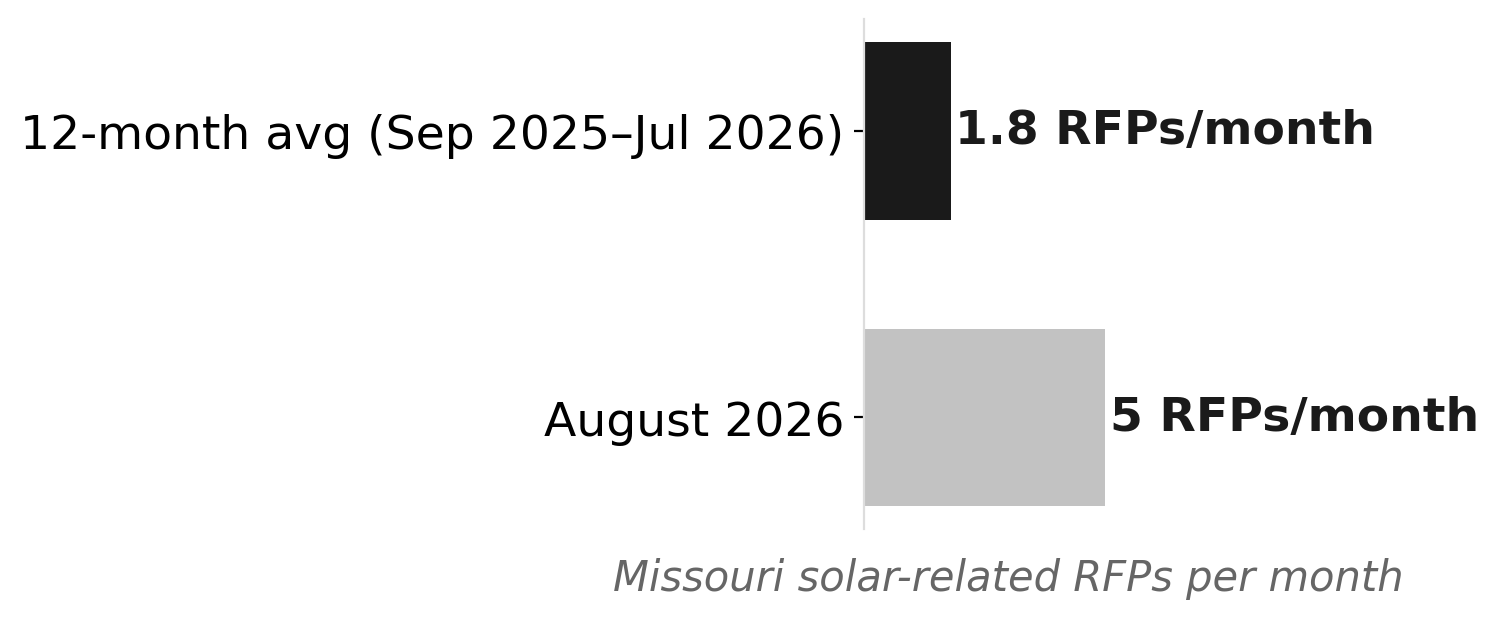
Missouri logged five solar-related RFPs in August 2026 against a 12-month monthly average of roughly 1.8, a 2.7x spike that has nothing to do with rooftop incentives or utility-scale wind corridors. Three of the five are military construction contracts, and the force behind them is a federal statute most Missourians have never heard of.
10 USC §2911 requires that every National Guard readiness center and armory receiving military construction funding be capable of operating completely off the commercial grid for at least 14 days. That mandate has existed on paper for years. What changed is money: the Pentagon's Energy Resilience and Conservation Investment Program, known as ERCIP, carries a $722.9 million Defense-Wide MILCON appropriation in FY2026, up from $636 million the year before. When that budget increase hit contracting calendars this summer, Missouri's pipeline moved.
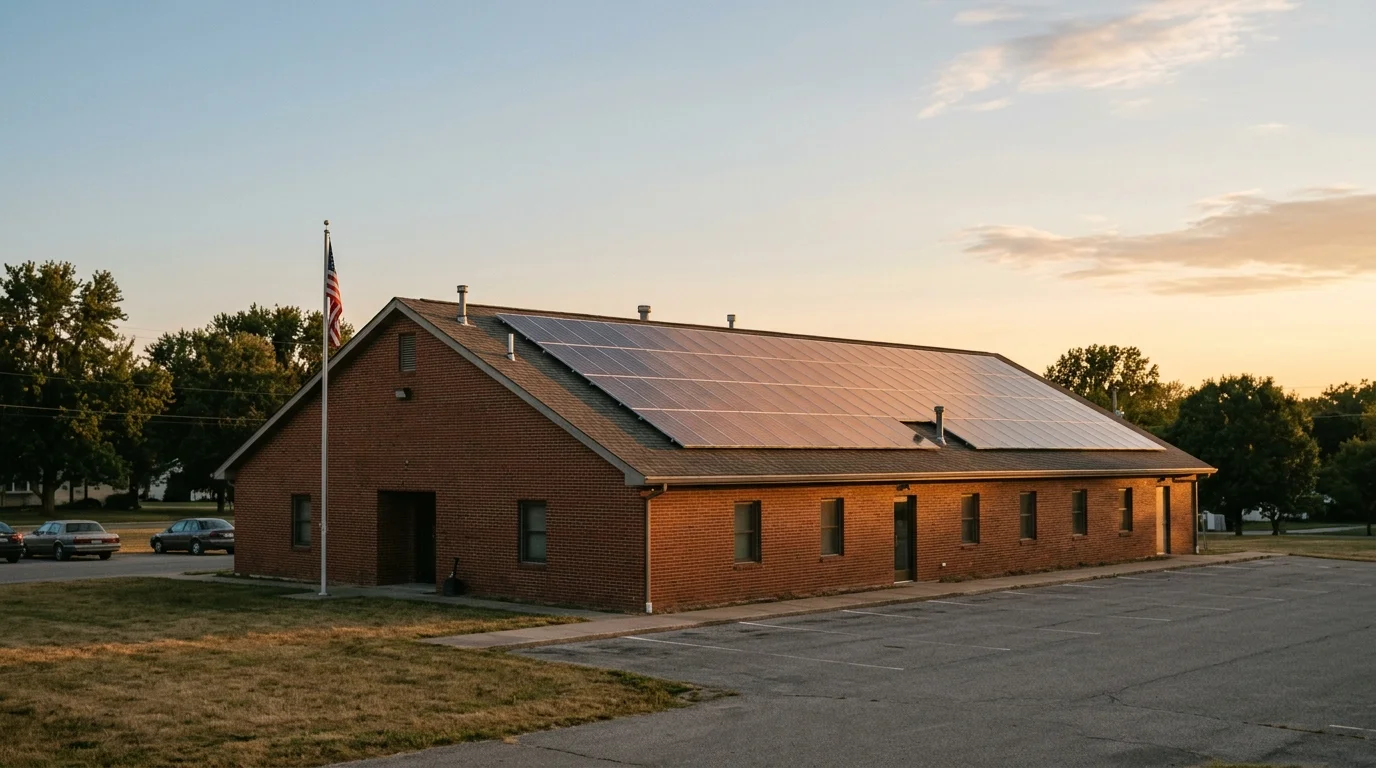
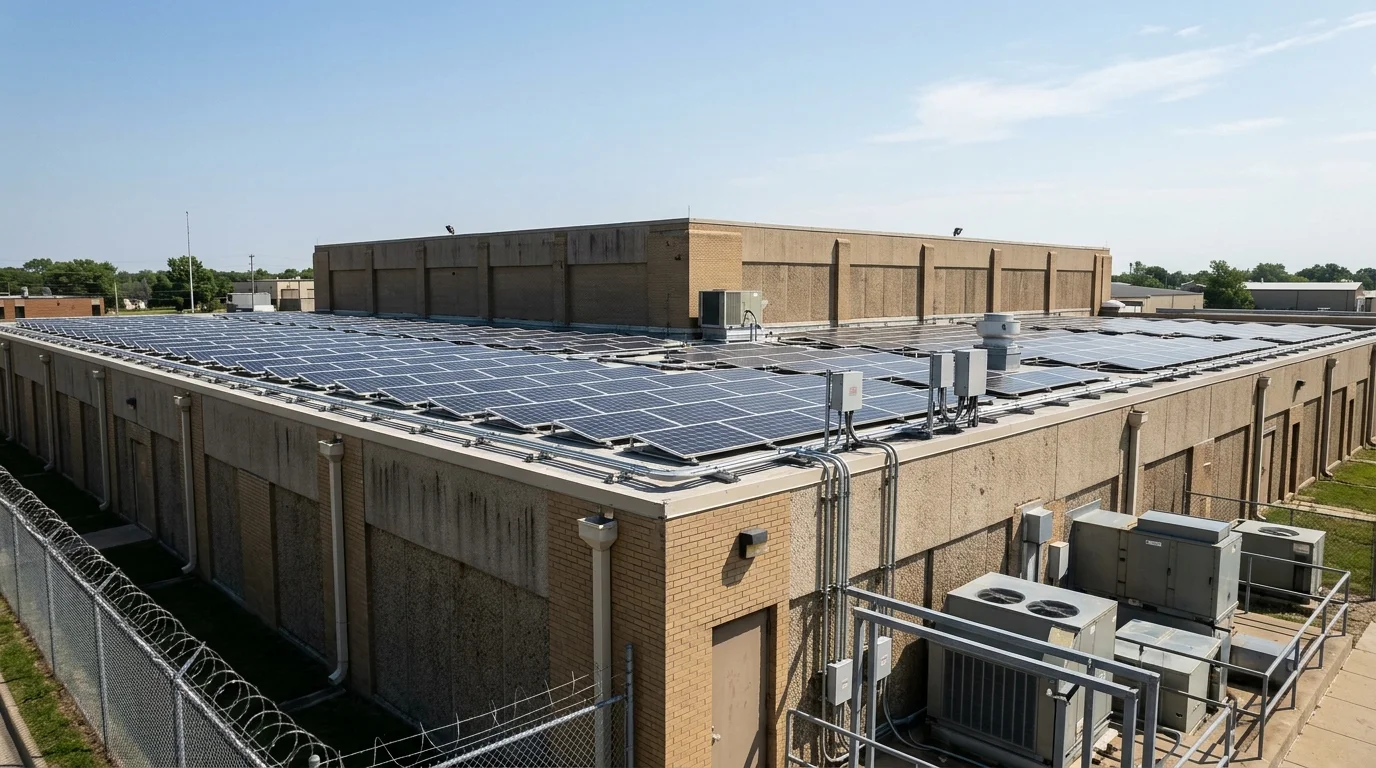
Two of the August RFPs are successive iterations of the same Whiteman Air Force Base project: a 60-kilowatt solar array paired with EV charging infrastructure at the base's Readiness Center, issued August 12 and updated August 30. Whiteman is already a high-dollar priority. Senator Josh Hawley's FY2026 NDAA wins for Missouri included $33.6 million in base construction funding, and the Readiness Center solar contract is drawing directly from that authorization. The third military project is a storm-damage repair at Camp Crowder Training Site that requires disassembling and reassembling existing solar PV arrays, a maintenance project, but one that illustrates how deeply solar infrastructure has already embedded itself in Guard facility design.
Source: NationGraph.
The August spike is not a one-month event. Missouri National Guard solar RFPs stretch back to at least September 2025, when the Jefferson City LAASF Readiness Center and Fort Leonard Wood Building 1029 both entered active procurement for roof-replacement projects that bundled solar generation as a required component. The August numbers are the visible crest of a pipeline that has been filling since the FY2026 appropriations cycle opened.
The contracting mechanism explains why these projects show up in state databases rather than on federal SAM.gov. The Missouri Office of Administration's Division of Design and Construction serves as the state contracting vehicle for federally funded Guard projects, so what looks like a Missouri state procurement is actually a federal ERCIP project executing through a state intermediary. That routing is standard practice for Army National Guard MILCON, but it means the federal origin of the requirement can disappear from the headline.
The ERCIP program's own language makes the mission logic explicit. According to DoD FY2026 budget documents, ERCIP "ensures mission readiness by improving utility infrastructure, constructing microgrids, leveraging on-site energy generation, and deploying technology that supports increased optionality." In plain terms: if the grid goes down during a mobilization, the armory stays operational. Solar PV with islanding capability is now a standard line item in new Guard construction for exactly that reason.
The national procurement machinery is scaling up to match. In May 2026, the U.S. Army Corps of Engineers awarded a $2 billion MATOC contract, to firms including Parsons, specifically for ERCIP design-build work across the country. The Louisville District, which covers Missouri, is running an active solicitation for microgrid work at the Lake City Army Ammunition Plant in Independence. That project has not yet appeared in Missouri's RFP count, but it is moving through the same pipeline.
Missouri absorbs more of this spending than most states because of its facility density. Whiteman AFB hosts the B-21 Raider and the 442nd Fighter Wing. Fort Leonard Wood is the Army's Maneuver Support Center of Excellence. Jefferson Barracks and Lake City Ammunition Plant add further concentration. The Missouri National Guard also received more than $57 million in new DoD Operations and Maintenance grants in FY2026 (separate from MILCON construction dollars, which fund capital projects under ERCIP), a baseline that keeps the state's Guard facilities in continuous federal investment rotation.
For Missouri residents, the practical effect is construction activity at armories and readiness centers across the state over the next 12 to 18 months, as projects that entered RFP in late 2025 and mid-2026 move through design-build award and execution. The work looks like solar installation. The requirement driving it is grid resilience for military mobilization scenarios.
The next signal to watch is whether the Louisville District's Lake City microgrid solicitation closes with a Missouri award before the end of calendar year 2026. If it does, the August spike in the RFP count will look like an early chapter rather than a peak.